
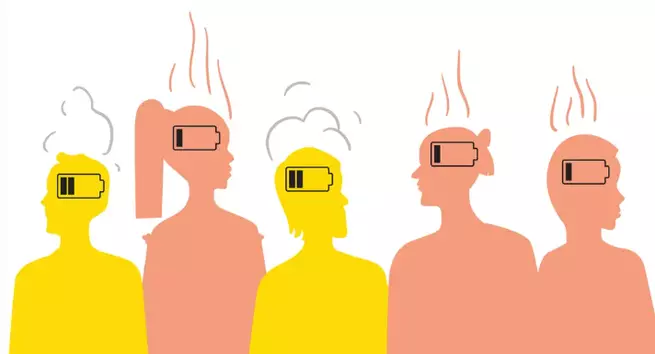
Generation Numb is a newly identified workforce phenomenon affecting employees across all age groups who share one defining characteristic: they're emotionally checked out, profoundly overwhelmed, and retreating into self-preservation mode. This isn't about millennials or Gen Z—it's what Josh Cardoz, Chief Creative and Learning Officer at Sponge, calls a "period effect" of surviving chronic upheaval, economic instability, pandemic aftershocks, and relentless digital saturation over the past decade. Workers experiencing Generation Numb display inertia, apathy, defensiveness, and underlying numbness that whispers, "Just don't give me any more than I'm already dealing with." As business leaders approach 2026 with rising optimism—95% of CEOs report feeling optimistic about the year ahead according to International Workplace Group's State of the U.S. C-Suite Report—the workforce they're counting on to execute ambitious plans is increasingly cynical, fatigued, and searching for new identity and meaning at work. The disconnect between executive enthusiasm and employee exhaustion creates a critical leadership challenge that demands immediate attention.
The emergence of Generation Numb stems from multiple converging forces that have fundamentally altered how people experience work. Chronic upheaval over the past decade has left workers in perpetual reactive mode, never fully recovering from one disruption before the next arrives. Economic instability has eroded the psychological safety that once came with stable employment, replacing it with persistent anxiety about layoffs, inflation, and financial security. The insidious after-effects of the pandemic continue reverberating through workplaces as people grapple with changed relationships to work, health concerns, and loss of community. Perhaps most damaging is prolonged digital saturation—the relentless barrage of notifications, virtual meetings, and always-on accessibility that leaves no mental space for recovery or reflection. Olivia Haywood, Chief Marketing Officer at Sponge, emphasizes this represents a post-pandemic, AI-driven world effect rather than generational differences. The result is workers of all ages who've collectively endured too much for too long without adequate support or acknowledgment, leading them to emotionally withdraw as a survival mechanism.
This pervasive numbness isn't exclusively an employee issue—leaders are experiencing identical symptoms while simultaneously being expected to guide others through the overwhelm. Haywood explains that every leader they speak with admits, "This is how I feel too," creating a concerning feedback loop throughout organizations. Many senior leaders were historically rewarded and developed to manage projects, product lines, and strategies rather than to lead with authentic viewpoint or develop people. This creates workplaces that default to reactive rather than proactive approaches, with stressed leaders transferring fear-based energy down through their teams. Employees then react to their leader's reactions instead of being informed, mindful, and strategic in their own responses. The challenge for leaders managing Generation Numb becomes guiding people through unprecedented times while drowning in the same symptoms themselves. Yet Haywood identifies opportunity here: "In today's world, any plan you're investing in is likely outdated before you even hit the green button. But if you focus on equipping your people to handle change, even thrive in it, you will yield dividends for years to come."
Breaking through Generation Numb requires leaders to abandon outdated notions that professionalism means detaching from humanness and instead lead with vulnerability. Cardoz emphasizes the most powerful first step is simply acknowledging what's happening: "Call out what's real and say, 'I see it too.'" Employees need to see their leaders as real people facing similar challenges, which fosters genuine connection and empathy rather than the polished professionalism that stifles authenticity. When leaders pretend everything is fine while everyone struggles, the disconnect deepens worker cynicism and fatigue. The chasm between desire for human connection and the reality of virtual interactions has created teams that cannibalize each other versus support one another. Acknowledging shared reality doesn't mean wallowing in negativity—it means creating space for honest dialogue about challenges while building trust that leaders understand what their people are experiencing. This authenticity becomes the foundation for moving from survival mode to genuine engagement, but only if leaders are willing to show up as fully human themselves rather than hiding behind corporate personas.
High performance for Generation Numb isn't about grinding harder or maximizing productivity—it's about rekindling creativity, imagination, flow states, and a sense of play that's been systematically crushed. These "soft skills," dismissed in previous decades as nice-to-haves, have become essential capabilities in an AI-driven workplace. Haywood emphasizes that imagination matters more than ever in this particular moment as technology increasingly handles tangible, black-and-white tasks. Leaders must actively create conditions that unlock creative capacity, which might mean something as simple as banning technology from meetings to encourage physical presence and micro breakthrough moments. Many adults were forced to let their creative muscles atrophy in preference for certainty, productivity, and accuracy—exactly the capabilities AI now excels at. Rekindling that dormant creativity will become a premium capability for workers competing with automation. This isn't about frivolous team-building exercises but about fundamentally rethinking what work environments need to provide for humans to contribute what only humans can: imagination, creativity, and innovative thinking that emerges from play and exploration rather than grinding repetition.
Generation Numb emerged partly from workplace mandates that destroyed belonging, loyalty, and commitment—and continuing to lead through mandates will only deepen the crisis. Cardoz warns, "The era of expecting everyone to conform to a single way of working or interacting is fading. We've hit the death of mandates." Overt and implied mandates demanding 24/7 productivity and accessibility fostered the infamous trends of quiet quitting and soft quitting as workers protected themselves from unreasonable expectations. Leaders must instead cultivate environments that inspire, similar to early Silicon Valley where people tapped into belonging and excitement about being part of something meaningful. This requires understanding and valuing diverse perspectives while fostering inclusive culture where every voice feels empowered to contribute. The goal is creating meaning and caring that makes processes secondary and supportive to what the collective is inspired to achieve. Haywood suggests the workplace could offer monoculture again in a positive sense—"that sense of 'everybody shares this' is a positive part of community-building that the workplace could offer us, if it's done right." Meaning and purpose can't be mandated; they must be co-created through genuine engagement.
Cardoz and Haywood recommend a sequential framework to guide transformation: start with Me, move to Us, then address It. Me First means leaders begin with personal clarity about their own priorities, values, and knowledge, building the internal trust needed to lead authentically. Haywood clarifies, "Unless you've developed it from the inside out, you can't trust yourself"—and workers sense immediately when leaders lack self-awareness. Then Us involves understanding the needs and priorities of your team—what genuinely matters to them, what challenges they face, and how you can support their wellbeing and growth rather than just extracting productivity. Finally, It addresses the job to be done, organizational goals, and innovation mandates, but only after establishing the Me and Us foundation. Without self-awareness and team understanding, Cardoz highlights that organizations merely survive and react rather than reaching new heights. This framework prevents leaders from jumping straight to tasks and deliverables while ignoring the human foundation required for sustainable high performance. Generation Numb won't be engaged by leaders who skip straight to "it" without doing the harder work of "me" and "us."
Leadership has been conflated with managing processes and delivering widgets for too long, creating the reactive, dehumanized workplaces where Generation Numb emerged. The real art of leading humans involves bringing out human capability, fostering dialogue, and creating environments where high performance thrives through creativity, connection, and shared purpose. What was once dismissed as a "soft skill" has become premium and mandatory for leaders at all levels as AI handles the hard skills. Leaders must lean into and develop their human interaction capabilities, understanding that unlocking human potential requires different competencies than project management. This means having difficult conversations, creating psychological safety for authentic expression, recognizing when people are struggling, and adapting approaches to meet people where they are rather than where you wish they were. The challenges of Generation Numb are real and won't be solved with superficial solutions or ignoring the underlying numbness. But the immense potential for re-engagement exists when leaders shift mindset, embrace authenticity, foster imagination, and prioritize human connection over productivity metrics. Breaking through apathy and building vibrant, resilient, high-performing workplaces isn't easy, but it represents the essential work of leadership for tomorrow—and the only path forward for organizations that want engaged workers rather than emotionally checked-out bodies filling seats.

𝗦𝗲𝗺𝗮𝘀𝗼𝗰𝗶𝗮𝗹 𝗶𝘀 𝘄𝗵𝗲𝗿𝗲 𝗽𝗲𝗼𝗽𝗹𝗲 𝗰𝗼𝗻𝗻𝗲𝗰𝘁, 𝗴𝗿𝗼𝘄, 𝗮𝗻𝗱 𝗳𝗶𝗻𝗱 𝗼𝗽𝗽𝗼𝗿𝘁𝘂𝗻𝗶𝘁𝗶𝗲𝘀.
From jobs and gigs to communities, events, and real conversations — we bring people and ideas together in one simple, meaningful space.


Comments