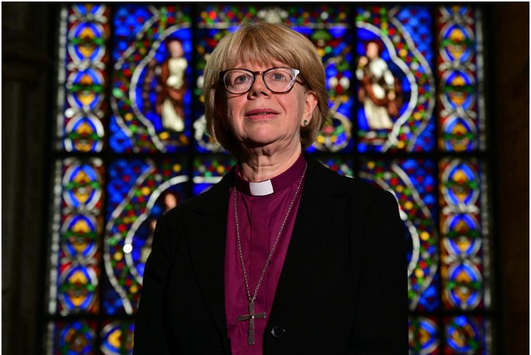
For the first time in its 1,400-year history, the Church of England will be led by a woman. Sarah Mullally, previously the first female Bishop of London, will now serve as the first female Archbishop of Canterbury — marking a historic moment not just for Anglicans, but for women in leadership around the world.
This milestone breaks what many call the “stained-glass ceiling” — a term describing the invisible barriers women face in rising to top leadership roles within religious institutions. Just as women have battled glass ceilings in corporate offices, they have long faced similar challenges within faith communities where tradition and gender roles often dictate who leads and who follows.
The Meaning of the “Stained-Glass Ceiling” in Religion
The stained-glass ceiling refers to the systemic barriers preventing women from attaining senior positions in religious organizations. In many faiths, leadership has historically been male-dominated — not necessarily because women lack ability, but because tradition often dictates otherwise.
For instance, Roman Catholicism and Eastern Orthodoxy prohibit women from serving as priests, citing Biblical interpretation and the example of Jesus’ male apostles. Meanwhile, traditions in Tibetan Buddhism have led to all Dalai Lamas being male, even without explicit prohibitions.
Yet, women have still made history in faith leadership: Katharine Jefferts Schori once served as the Presiding Bishop of the Episcopal Church in the U.S., while Mary Baker Eddy founded The Church of Christ, Scientist. These examples show that when women do lead, faith itself evolves.
Why Sarah Mullally’s Appointment Matters
Sarah Mullally’s new role as Archbishop challenges centuries of belief that spiritual authority is inherently male. Her leadership symbolizes progress — not just for the Anglican Church, but for all women seeking equality in faith and leadership.
However, her appointment has not been without controversy. GAFCON, a network of conservative Anglican churches, has argued that female episcopacy goes against Biblical principles, calling her selection “divisive.” Some bishops in Africa have also voiced strong opposition, reflecting how deep the theological divide remains.
Despite this, Mullally’s historic appointment sends a clear signal: faith and leadership should not be limited by gender. It reshapes how both women and men view spiritual authority — and inspires the next generation of girls to see themselves as capable of leading, teaching, and transforming religious life.
Breaking Barriers Beyond the Pulpit
While gender inequity in business or politics can often be addressed through policy and advocacy, religion presents a deeper challenge — one rooted in centuries of doctrine and divine interpretation. Yet, movements like the Women’s Ordination Conference and Roman Catholic Women Priests continue to push for equality.
Even the Vatican has shown small signs of change — in 2021, Pope Francis allowed women to serve as lectors and acolytes. These steps, though limited, reflect a growing awareness that inclusivity strengthens, rather than weakens, faith.
The stained-glass ceiling may not shatter overnight, but every appointment like Sarah Mullally’s brings a crack of light — a reminder that faith, at its core, is about compassion, service, and shared humanity, not hierarchy or exclusion.














Comment