
Alerts
-
3 minutes, 0 seconds
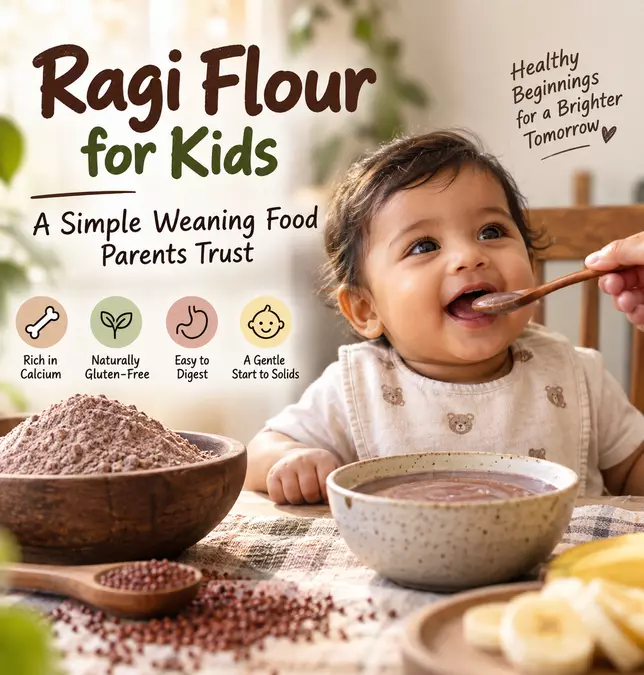
Ask any grandmother in South India what a baby's first solid food should be, and there's a decent chance she'll mention finger millet before anything else. This isn't a recent trend dressed up as tradition — it's genuinely been the go-to weaning food in many households for generations, long before anyone was writing articles about superfoods.
The reason it's stuck around this long comes down to a few practical things. It's naturally gluten-free, which matters for a baby's developing digestive system. It carries a solid amount of calcium, more than most other everyday grains, which is useful during a stage when bones and teeth are developing rapidly. And it has a mild enough taste that most babies accept it without much fuss, especially compared to some of the stronger-tasting alternatives parents sometimes try first.
For a first introduction, the classic approach is a thin porridge — just the flour cooked with water or milk until it reaches a smooth, runny consistency, thinner than what an adult would eat. Most parents start this somewhere around the six-month mark, though timing should always be discussed with a pediatrician rather than following a general guideline blindly, since every baby's readiness for solids varies.
As babies get a bit older and more comfortable with solids, the porridge can gradually thicken. A common next step is mixing in mashed banana or a small amount of jaggery for sweetness, though many parents introduce it completely plain first, before adding any flavoring, to see how the baby responds to the taste itself.
One thing worth mentioning honestly: not every baby takes to it immediately. The texture can feel unfamiliar at first, and it sometimes takes a few attempts before a baby accepts a new food consistently. This is completely normal and not a sign that something's wrong with either the food or the baby.
For toddlers past the initial weaning stage, this flour becomes easier to work into regular meals. A soft, slightly thicker version can work as a simple breakfast, and it blends well into pancake-style batters that toddlers often find more appealing than a plain porridge. Some parents mix it into regular wheat dough for a portion of the family's rotis, which lets a toddler eat something structurally similar to a roti while sneaking in extra calcium and fibre.
Introducing any new food to a baby should happen one at a time, with a few days' gap before trying another new ingredient, so it's easier to identify a reaction if one occurs. This applies here just as it would with any new grain or food group, regardless of how traditional or widely used it is.
Freshness matters more with this flour than parents might assume, especially for baby food. Since it has no added preservatives, it doesn't keep as long as processed baby cereals do, and using a stale batch means losing some of the nutritional benefit that made it worth choosing in the first place. Buying smaller quantities more frequently, rather than one large bag that sits around for months, tends to work better for households making baby food regularly.
Ragi flour that's milled closer to purchase holds its quality noticeably better for this kind of use, which matters when you're making something for a baby rather than just a regular family meal. 10on10Foods mills its stone-ground version only after an order is placed, which is worth checking for regardless of which brand a parent eventually goes with.




Comment