
-
4 minutes, 37 seconds
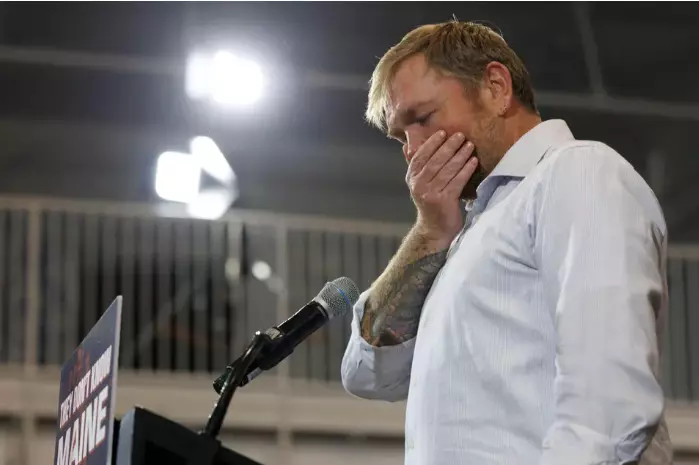
Exactly ten years after Gretchen Carlson filed her historic sexual harassment lawsuit against Fox News Chairman Roger Ailes, a woman publicly accused Maine Senate candidate Graham Platner of rape. This timing highlights how far the #MeToo movement has come—and how much work remains. The Platner case shows that while survivors are more likely to be believed, political loyalties can still block accountability.
Carlson’s lawsuit and the allegations from over 20 other women against Ailes helped bring down one of the most powerful men in media. The next year, about 60 women publicly accused Harvey Weinstein of sexual misconduct. These cases were seen as a turning point. Many believed women who came forward would finally be believed, and powerful men would face consequences.
But a decade later, #MeToo is still a work in progress. The rape accusation against Platner came after months of controversy, including earlier allegations from another former partner involving nonconsensual condom removal and physical abuse (which Platner denied). Days after the rape allegation, Platner dropped out of the Maine Senate race, denying all misconduct claims.
Similarly, in April, Congressman Eric Swalwell dropped out of California’s gubernatorial race after sexual misconduct accusations he denied.
Looking back on #MeToo’s tenth anniversary, Carlson believes the Platner and Swalwell cases tell a hopeful story. She argues that #MeToo has fundamentally changed how survivors come forward and how the public responds to sexual misconduct allegations. Yet political leaders often struggle when allegations involve members of their own party.
Carlson and fellow Roger Ailes accuser Julie Roginsky co-founded Lift Our Voices, a nonprofit that works to eliminate workplace silencing mechanisms like nondisclosure agreements and forced arbitration. They have advocated for reforms to make it easier for employees to speak up about misconduct.
“There has been a cultural shift,” Carlson says. “We would not be where we are today without all these survivors—the Epstein survivors, the Weinstein survivors, the people we don’t know about who work at McDonald’s. It’s because of their bravery.”
The Platner case also exposed a major challenge: political leaders often apply different standards when allegations involve someone on their own side. The first woman to publicly accuse Platner, Lyndsey Fifield, was a Republican. Carlson believes that made it easier for some Democrats to dismiss her allegations as politically motivated.
“I’m not saying it’s right,” Carlson said. “I just think that’s what happened.”
Roginsky was more direct: “She was dismissed because she was a Republican, and as a Democrat, I am ashamed.” She criticized Democratic leaders who continued supporting Platner after Fifield’s allegations, including Senators Elizabeth Warren and Bernie Sanders, and Representative Ro Khanna. None of them called for Platner to leave the race until a second woman, who identified as a Democrat, accused him of sexual misconduct.
When asked why he didn’t respond sooner, Representative Khanna said by email, “I have always said the line was sexual violence and assault, and as soon as there was an allegation of that, I was the first to withdraw.” Senators Sanders and Warren did not respond to requests for comment.
Despite these shortcomings, Carlson believes the movement’s biggest changes have happened outside elected office. Survivors now come forward differently, and the public responds differently than a decade ago.
Carlson is the first to admit progress has been uneven. Some powerful political figures remain in office despite serious allegations. President Trump returned to the White House after decades of allegations, which he denied. Pete Hegseth was confirmed as secretary of defense after denying a sexual assault allegation.
“We’re not naive enough to say everything’s perfect,” Carlson says, but adds that #MeToo has achieved “immense success.” She believes both positive cultural change and political setbacks can coexist. “Both things can be true at the same time.”
For Carlson, the movement’s success is measured less by the men it has failed to remove than by the women it has empowered to speak. Women coming forward is how progress happens.
“I can tell you right now there are other people out there who have gained courage from listening to these women’s stories,” Carlson says, referring to the women who came forward about Platner. “I just want these women to know that they’re now part of the team, and they have inspired other people to do the same thing. That is how we make lasting change.”

7.8K articles

1.4K articles

34 articles

28 articles














Comment