
Alerts
-
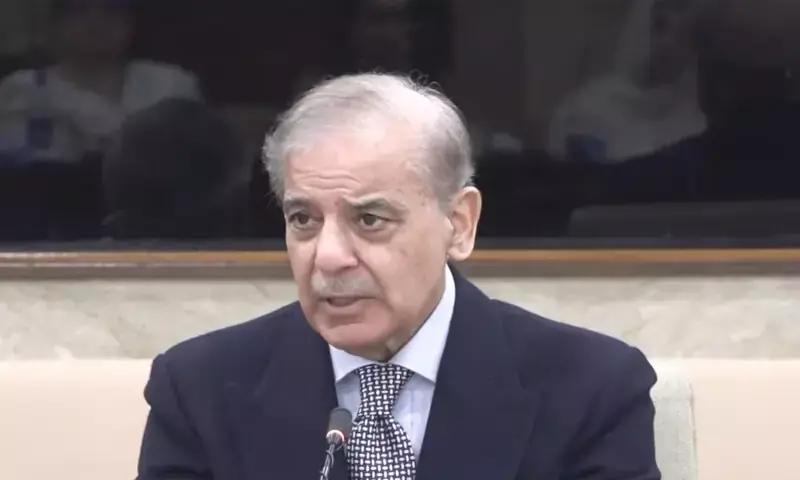
ISLAMABAD: Prime Minister Shehbaz Sharif on Tuesday lamented the poor performance of the PTI-led Khyber Pakhtunkhwa government, particularly in countering terrorism, and contended that the Centre had no other “path” but to impose governor’s rule in the province. Addressing a parliamentary meeting of his PML-N, PM Shehbaz said, “When terrorism is spreading, sacrifices are being made day and night, and this party (PTI) is exhausting all its resources and time round the clock to create instability.” The premier emphasised that the people of KP had been “thirsting for projects of development and prosperity for the past 13 years”, such as schools, universities, hospitals, better law and order, end to corruption. However, he contended, there was “not zero, but negative attention” towards these matters, and “all attention and resources” were instead diverted towards long marches and protests. “Can any respectable society tolerate this? Even the question does not arise. So what other path did we have?” he asked, quipping if the Centre should have remained as “silent spectators”. PM Shehbaz asserted that terrorism had been eradicated in most parts of the country several years ago, but had resurged recently. The prime minister lamented that law enforcers were being martyred daily in KP and Balochistan. “If this bloodshed is not brought to an end like it was in 2018, then the journey of development made in the past 2.5 years… this journey is continuing gradually.” “If one provincial government is not only determined to end that journey […] but that party is determined on destruction and comes to thinking that if they make progress, what will be our value; how regrettable it is.” The prime minister recalled the November 2024 protests by the PTI in Islamabad, as well as its 2013 and 2014 rallies at the federal capital’s D-Chowk. “When someone is bent on ending the country’s progress, they are engaged in sit-ins, verbal abuse and allegations, instead of standing with the Centre and the armed forces and empowering the police and CTD,” he said. PM Shehbaz remarked that even an enemy would not make the remarks made by Afridi in recent weeks. He criticised the PTI leader for not expressing sympathies with the martyrs’ families and for “not willing to say a single word” against terrorists. He highlighted his government’s efforts to cooperate with the PTI-led governments in KP. The premier recalled his meeting with former KP chief minister Ali Amin Gandapur, saying, “We told him in every way that we will cooperate with them … combatting terrorism is our shared responsibility.” He noted that he also met with Gandapur’s successor, Sohail Afridi, and asserted that the Centre tried its best to work with the KP government. At one point, the premier said the International Monetary Fund (IMF) chief recently told him, “This is a new Pakistan”, as she praised the country’s economic reforms. He recalled his meetings with international financial institutions and stressed that praise from such independent firms for Pakistan “restored” his faith in the country’s progress. PM takes parties into confidence Earlier in the day, PM Shehbaz met with a parliamentary delegation comprising representatives of PML-Q, Balochistan Awami Party (BAP), Istehkam-i-Pakistan Party (IPP) and PML-Zia. The prime minister took the delegation into confidence regarding the situation in KP and explained the reasons behind the federal government’s decision to take constitutional measures, state-run APP reported. He said the conduct of the PTI-led KP government in the province and its failure to adopt an unequivocal stance against terrorism had posed risks to Pakistan’s growing economy. The premier highlighted that the federal government had provided more than Rs800 billion to KP under the National Finance Commission (NFC) arrangements to support efforts against terrorism. However, he said, the provincial government had failed to take effective measures to strengthen the capacity of its Counter-Terrorism Department (CTD) and establish Safe City projects to improve its counterterrorism capabilities. According to the PM Office, the parliamentary delegation expressed its support for the federal government amid the prevailing situation and appreciated the prime minister’s leadership during what it described as difficult circumstances. The delegation also said the people of KP had remained deprived of adequate development in health, education and infrastructure during the PTI’s tenure in the province. It expressed confidence that, with the federal government’s cooperation, development and prosperity in KP would advance in line with other parts of the country. The delegation included BAP President and Science and Technology Minister Khalid Magsi; former Senate chairman Sadiq Sanjrani of BAP, senators Manzoor Kakar, Abdul Qadir Baloch, Dinesh Kumar and Samina Mumtaz Zehri; PML-Q President and Human Resource Development Minister Chaudhry Salik Hussain; and representatives of the IPP and PML-Zia. Deputy Prime Minister and Foreign Minister Ishaq Dar, Defence Minister Khawaja Asif, Law Minister Azam Nazeer Tarar, Parliamentary Affairs Minister Dr Tariq Fazal Chaudhry and PM’s Adviser on Political Affairs Rana Sanaullah also attended the meeting. PTI seeks production orders for 9 MNAs The PTI requested the National Assembly speaker to issue production orders for its nine “detained” MNAs ahead of NA and Senate sessions on Tuesday. In a letter to NA Speaker Ayaz Sadiq, Chief Whip Amir Dogar claimed that the nine MNAs were “currently detained” and requested him to issue production orders for them to enable them to attend the 30th session starting today. The lawmakers comprised Haji Imtiaz Ahmad Choudhry (ΝΑ-68), Muhammad Jamal Ahsan Khan (NA-89), Mian Ghous Muhammad (ΝΑ-170), Sanaullah Khan Mastikhel (NΑ-91), Dawar Khan Kundi (NA-43), Junaid Akbar (NA-09), Amjad Ali Khan (NA-02), Fazal Muhammad Khan (ΝΑ-25) and Adil Khan Bazai (NA-262). “As the speaker of the National Assembly of Pakistan, the impartiality of your esteemed office requires that production orders be issued for all detained members, irrespective of their political affiliation, to ensure that no constituency remains unrepresented during the proceedings of the House,” the letter read. It requested Sadiq to issue the production orders under Rule 108 of the 2007 Rules of Procedure and Conduct of Business in the National Assembly. When the NA session began at around 7pm, Speaker Sadiq administered the oath of membership to PML-N’s Malik Munir Iqbal Channar, who won the Bahawalpur polls last month held to fill the seat of his late father Malik Muhammad Iqbal Channar. Lawmakers then offered prayers for late MNA Chaudhry Mahmood Bashir Virk, who died last month after a prolonged illness. As MNAs from various parties took their turns to recall the services of Virk, there was slight commotion, which prompted the speaker to urge PTI Chairman Gohar Ali Khan to respect the late MNA. Gohar remarked that sessions are usually adjourned after prayers for a deceased member. Referring to the governor’s rule in KP, he said the “funeral of this house was also held on Oct 11”. “We tried to give you very much in dialogue, but you (PTI) were not ready to take what we had offered,” the speaker replied, then switched off Gohar’s mic. The speaker said political discussion will not be allowed today, but tomorrow (Wednesday). PPP’s Syed Naveed Qamar also urged the PTI chairman to acknowledge the services of Virk, who had stood by the Constitution. He said the PTI could raise its issues later as well. Lawmakers then continued to pay tribute to Virk, with Defence Minister Khawaja Asif and Planning Minister Ahsan Iqbal among those who highlighted his professional life. The proceedings were then adjourned till 11am on Wednesday. President Asif Ali Zardari had summoned the sessions after he and Prime Minister Shehbaz Sharif agreed on it during their weekend meeting on the country’s political and security situation. The sessions also follow the imposition of governor’s rule in Khyber Pakhtunkhwa and emergency in 12 of its districts, for which the Centre cited the PTI-led provincial government’s “deliberate disengagement” from the fight against terrorism. Earlier in the day, the NA Secretariat had shared the orders of the day for today’s session. Parliament approval for governor’s rule President Zardari had on Sunday issued proclamations of emergency and governor’s rule under Articles 232 and 234 of the Constitution, respectively. According to Article 232, in case the president “acts on his own” — which was not the case for KP as he acted on PM Shehbaz’s advice — the proclamation of emergency is to be placed before both houses of Parliament for approval by each house within 10 days. It also empowers Parliament “to make laws for a province, or any part thereof, with respect to any matter not enumerated in the Federal Legislative List” during emergency. Meanwhile, a proclamation for governor’s rule issued under Article 234 “shall be laid before a joint sitting and shall cease to be in force at the expiration of two months, unless before the expiration of that period it has been approved by resolution of the joint sitting and may by like resolution be extended for a further period not exceeding two months at a time”. In the upper house, Senator Kamran Murtaza of the Jamiat Ulemai-i-Islam–Fazl (JUI-F) had submitted a resolution on Monday opposing the imposition of governor’s rule in KP.






Comment