Alerts

-
9 minutes, 14 seconds
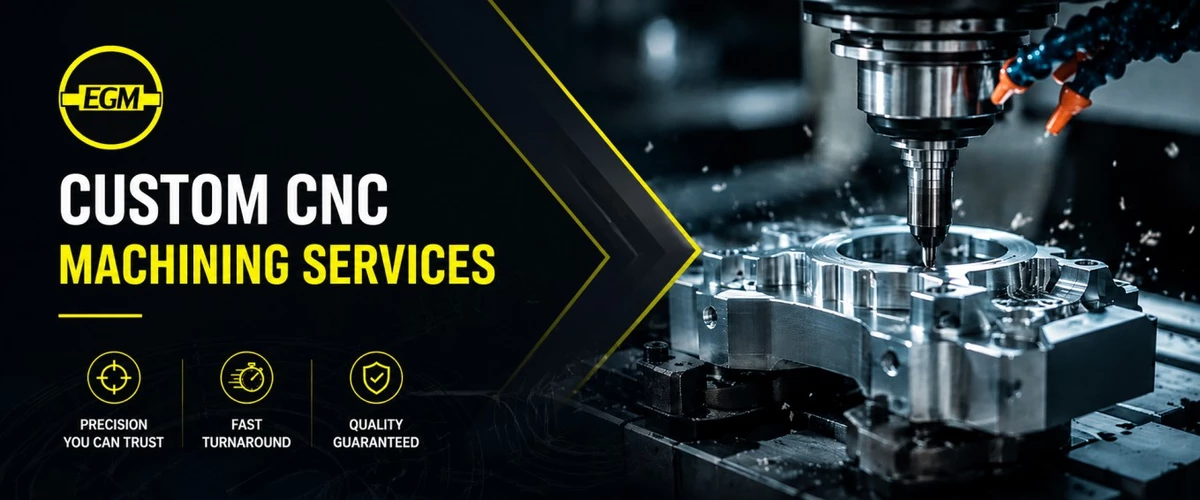
Finding the right manufacturing partner for defense, aerospace, or government-related parts is not like picking any regular vendor. If your project touches controlled technical data, you need an ITAR registered machine shop — full stop. Skip this step, and you could be looking at compliance headaches, project delays, or even legal trouble.
In this guide, we will break down what ITAR registration actually means, why it matters so much for precision machining, and how a shop's multi axis CNC milling services can make or break your project timeline. We will also look at real-world scenarios, common mistakes buyers make, and why EGM Manufacturing has built a reputation as a trusted name in this space.
Grab a coffee. This one is worth the read if you are sourcing machined parts for defense, aerospace, or any controlled program.
ITAR stands for International Traffic in Arms Regulations. It is a set of U.S. government rules that control the export and handling of defense-related articles and technical data.
If a company works with parts, drawings, or data tied to defense or military applications, that company needs to be registered with the U.S. Department of State's Directorate of Defense Trade Controls (DDTC). This registration is not optional. It is the law.
Here is the simple version:
So when you hear "ITAR registered machine shop," it means that shop has gone through the process to legally handle sensitive defense-related manufacturing work — and has the internal controls to prove it.
Defense and aerospace supply chains have gotten more strict, not less. Prime contractors are under pressure to verify every link in their supply chain. If your machine shop is not ITAR registered, you simply cannot be part of many programs, period.
Understanding the process helps you know what to actually look for when vetting a supplier. Here is how it typically plays out on the shop floor.
The company registers with the State Department, renewing every year. This is the baseline requirement.
A compliant shop sets up:
Everyone who touches a controlled job — programmers, machinists, quality inspectors — needs to understand what they can and cannot share, print, or send.
Once a job is confirmed to be ITAR-controlled, it gets tagged and routed through the secure workflow from quote to final shipment. This includes how the part is machined, inspected, packaged, and even how paperwork is filed.
Reputable shops audit their own processes regularly, not just when a customer asks. This keeps small gaps from turning into big problems.
According to you, most buyers assume ITAR compliance is just a checkbox on a form. In reality, it touches nearly every part of daily shop operations, from how a file is emailed to who is allowed to walk past a certain workstation.
Let's look at a few situations where this actually plays out.
Example 1: A Defense Subcontractor Needs a Prototype Fast A defense contractor needs a rush prototype for a guidance component. The drawing includes technical data that falls under ITAR. Only a registered shop can legally receive that file, quote it, and machine it. A non-registered shop has to turn the job away, no matter how good their equipment is.
Example 2: Aerospace Supplier Switching Vendors An aerospace company wants to add a backup supplier for a critical part. During vendor vetting, the new shop's ITAR status is one of the first things checked, right alongside AS9100 certification. No registration means no consideration.
Example 3: A Small Startup Working on a Government Contract A startup lands its first government-adjacent contract. They assume any local machine shop can help. They quickly learn that most general commercial shops are not registered, which forces them to search specifically for an ITAR registered machine shop with the right multi axis CNC milling services to hit their tolerances.
These scenarios repeat constantly across the industry. The lesson is always the same: check credentials before you send a single drawing.
Choosing a properly registered and certified partner is not just about following rules. It comes with real, practical advantages.
ITAR registration covers the compliance side. But compliance alone does not machine your part. That is where multi axis CNC milling services come in.
Modern aerospace and defense components often have complex geometries — angled faces, deep pockets, tight tolerances on multiple planes. A basic 3-axis mill simply cannot cut these shapes efficiently or accurately in one setup.
For industries like aerospace, defense, and medical devices, these are not nice-to-haves. They are requirements.
Even experienced buyers slip up here. Watch out for these.
Here are a few tips from years of watching this industry evolve.
EGM Manufacturing, based in Sunrise, Florida, has spent years building a reputation as a full-service precision machine shop that defense, aerospace, and commercial clients can rely on.
Here is what sets EGM apart:
If your project involves sensitive drawings, tight tolerances, or complex geometries, EGM Manufacturing checks every box you need checked.
Choosing a machine shop for defense-related or aerospace work is not something to rush. Working with an ITAR registered machine shop protects your company legally, keeps you eligible for high-value programs, and gives you peace of mind that your technical data is handled correctly.
Pair that with real multi axis CNC milling services, and you get a partner capable of both compliance and precision — which is exactly what complex, high-stakes parts demand.
Do not wait until a project deadline is looming to figure out whether your supplier is qualified. Vet early, ask the right questions, and choose a shop with the credentials and equipment to back up their promises.
Ready to work with a machine shop that takes compliance and precision seriously? EGM Manufacturing is ITAR registered, AS9100 and ISO 9001:2015 certified, and equipped with 3, 4, and 5-axis CNC machines built for demanding aerospace, defense, and commercial projects.
Reach out today for a free quote and see how EGM can support your next controlled or precision machining project.
1. What does it mean for a machine shop to be ITAR registered?
It means the shop has registered with the U.S. Department of State to legally receive, handle, and manufacture parts involving defense-related technical data, following strict security and access control rules.
2. Is ITAR registration the same as ISO 9001 or AS9100 certification?
No. ITAR registration is a legal requirement tied to defense trade controls, while ISO 9001 and AS9100 are quality management certifications. A shop can hold one without the other, so it is smart to confirm both separately.
3. Why do I need multi axis CNC milling services for complex parts?
Multi axis milling allows a machine to reach multiple sides or angles of a part in a single setup. This reduces handling errors, improves tolerance accuracy, and speeds up production for parts with complex geometries.
4. How often does a machine shop need to renew its ITAR registration?
ITAR registration must be renewed annually. Always ask a potential supplier for proof of current, active registration rather than assuming it is still valid.
5. What industries typically require an ITAR registered machine shop?
Defense contractors, aerospace suppliers, government agencies, and any company working on programs involving controlled technical data typically require their machining partners to be ITAR registered.


Comment