Alerts

-
11 minutes, 55 seconds
If you are considering a hair transplant, you may already know about FUE, grafts, donor areas, and hair growth timelines. But one question many patients still have is: What actually happens on the day of a hair transplant?
A typical hair transplant day involves several stages, including consultation and final planning, preparation of the donor and recipient areas, extraction of grafts, graft preparation, implantation, and post-procedure instructions. The exact process can vary depending on the number of grafts, technique used, donor characteristics, and the individual treatment plan.
For patients researching hair transplant doctor in Delhi, understanding the surgery-day process can make the experience less stressful and help set realistic expectations.
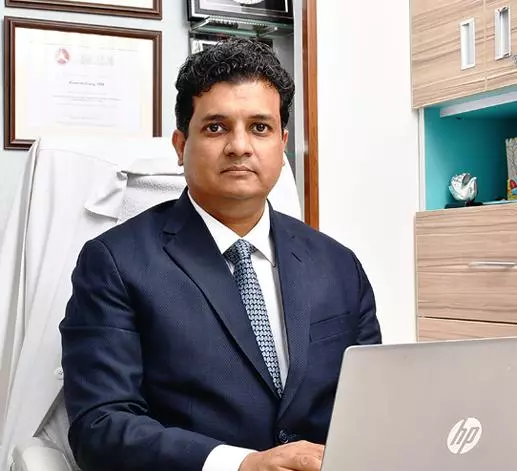
At Dermalife, hair restoration procedures are performed under the direction of Dr. Gaurav Garg, a dermatologist and hair transplant surgeon with more than 18 years of experience. Dermalife also offers FUE-based procedures, including its Boosted FUE approach.
Quick Answer: What Happens on Hair Transplant Day?
On the day of surgery, the patient generally goes through these stages:
Final consultation and treatment confirmation
Hairline and graft planning
Preparation of the donor and recipient areas
Local anaesthesia
Extraction of follicular grafts
Graft examination and preparation
Implantation of grafts into the recipient area
Final inspection of the transplanted area
Post-procedure instructions and discharge
The duration depends largely on the number of grafts and the complexity of the procedure. A small procedure and a large graft session should not be expected to take the same amount of time.
1. What Should You Do Before Arriving at the Clinic?
The surgery day begins before you enter the clinic.
Your surgeon or clinic team should provide specific instructions before the procedure. These may include guidance regarding hair washing, medications, alcohol, smoking, meals, and other personal preparations.
Do not assume that instructions given to another patient will necessarily apply to you. Your preparation should follow the advice provided by your treating medical team.
It is also sensible to wear comfortable clothing that does not require you to pull a tight collar over your head after the procedure.
If you take regular medication or have an existing medical condition, tell the doctor before the procedure rather than making medication changes yourself.
A simple checklist for the morning
Before leaving for your appointment, make sure you have:
Followed the clinic's pre-procedure instructions
Taken only medications approved by your doctor
Had the recommended meal or breakfast
Avoided anything specifically restricted by your medical team
Worn comfortable clothing
Arranged transportation if your clinic recommends it
Carried your previous medical or hair-loss records if requested
The goal is simple: arrive prepared rather than trying to solve logistical issues at the last minute.
2. What Happens When You Reach the Hair Transplant Clinic?
When you arrive at a professional hair transplant center in New Delhi, the first stage is usually confirmation of your treatment plan.
Even if you have already had a detailed consultation, the medical team may reassess important details before beginning.
This can include:
The planned recipient area
Donor area condition
Hairline design
Number of grafts planned
Areas requiring the greatest density
Existing native hair
Any changes since the consultation
This final assessment is important because hair transplantation is not simply about putting as many grafts as possible into a bald area.
The surgeon needs to think about the available donor supply and how it can be distributed strategically.
3. How Is the New Hairline Designed?
One of the most important parts of the surgery day is hairline planning.
A natural-looking hairline is not normally a perfectly straight horizontal line. Its position and shape need to take into account factors such as:
Facial proportions
Age
Existing hairline
Pattern of hair loss
Donor hair availability
Hair characteristics
Future hair-loss considerations
The objective should not simply be to create the lowest possible hairline.
A hairline that looks appropriate immediately after surgery also needs to remain aesthetically sensible as the patient ages.
This is one reason why choosing a qualified and experienced hair transplant surgeon in Delhi matters. Hairline design involves both medical planning and aesthetic judgment.
4. Are the Donor and Recipient Areas Prepared?
Once the treatment plan is confirmed, the areas involved in the procedure are prepared.
The donor area is the region from which follicular grafts are obtained. In many FUE procedures, individual follicular units are extracted rather than removing a strip of scalp.
The recipient area is where the extracted grafts will ultimately be placed.
Depending on the procedure, the preparation may involve trimming or shaving certain areas. However, options such as unshaven or long-hair FUE may be suitable for selected patients.
Dermalife also describes an unshaven FUE/long-hair transplant option for patients who do not want the conventional shaved appearance, although suitability depends on the individual case.
5. Is Hair Transplant Surgery Painful?
A hair transplant is generally performed using local anaesthesia, meaning the scalp is numbed during the procedure.
Patients may notice sensations during different stages, particularly during the administration of anaesthesia or while the scalp is being handled.
The experience varies between individuals.
Rather than assuming that a hair transplant will be completely sensation-free, it is better to discuss pain management and anaesthesia with your surgeon before the procedure.
If you are particularly anxious about needles, medical procedures, or discomfort, tell the medical team in advance.
Good communication can make the experience more comfortable.
6. How Are Hair Grafts Extracted?
For an FUE procedure, individual follicular units are carefully extracted from the donor region using specialised instruments.
A follicular unit may contain one or several hairs.
This distinction is important because patients sometimes confuse hair count with graft count.
For example, 2,000 grafts do not necessarily mean 2,000 individual hairs. Each graft can contain a different number of hairs.
The surgeon and clinical team need to balance:
Number of grafts required
Quality of available donor hair
Donor density
Recipient-area requirements
Future donor preservation
The goal is not simply maximum extraction.
Donor hair is a limited resource, so responsible planning is essential.
7. What Happens to the Grafts After Extraction?
After extraction, grafts need to be handled carefully and prepared for implantation.
This is an important but often overlooked part of the procedure.
The grafts need to remain in appropriate conditions while the surgical team works on the transplantation process.
The way grafts are handled, organised, and implanted forms part of the overall surgical workflow.
Dermalife's Boosted FUE approach is presented by the clinic as a technique focused on reducing the time grafts remain outside the body and limiting direct root handling. These are clinic-specific technique claims and should be discussed with the treating surgeon rather than interpreted as a guarantee of outcome.
8. How Are the Grafts Implanted?
After the grafts have been prepared, they are placed into the recipient area.
The surgeon needs to consider more than simply filling empty spaces.
Important factors can include:
Direction
Hair should be positioned in a direction that is compatible with the surrounding native hair.
Angle
The angle of implantation contributes to how the transplanted hair sits against the scalp.
Distribution
Grafts may need to be distributed strategically rather than placed uniformly across every area.
Density
The required density can differ between the hairline, frontal scalp, mid-scalp, and crown.
Existing Hair
If native hair is still present, transplanted grafts may need to be positioned around it.
This is why hair transplantation is not simply a matter of "adding hair." It is a surgical planning process involving donor management and recipient-area design.
9. How Long Does a Hair Transplant Take?
There is no single number of hours that applies to every hair transplant.
The duration can depend on:
Number of grafts
Size of the treatment area
Donor density
Surgical technique
Hair characteristics
Complexity of the case
Individual surgical workflow
A smaller procedure may be completed more quickly than a large session involving thousands of grafts.
Patients should therefore be cautious about clinics that give an identical surgery time to everyone without assessing the actual procedure required.
During your consultation, ask the surgeon how long your particular procedure is expected to take.
10. What Happens Immediately After the Transplant?
Once the implantation stage is completed, the surgical team checks the treated areas.
You may receive instructions regarding:
Scalp care
Sleeping position
Washing
Medication
Physical activity
Sun exposure
Follow-up appointments
Warning signs that require medical attention
The exact instructions should come from your treating doctor because aftercare can vary depending on the procedure and individual patient.
You should also know whom to contact if you have a question after leaving the clinic.
A good treatment experience does not end when you walk out of the operating room.
11. Can You Go Home the Same Day?
Hair transplantation is generally performed as an outpatient procedure, meaning patients commonly return home after the procedure rather than staying overnight.
However, your clinic should provide individual instructions regarding transportation and post-procedure activities.
If you are travelling from Noida, Gurgaon/Gurugram, or another part of Delhi NCR, consider arranging your travel in advance.
You may prefer to have someone accompany you, particularly if you feel tired after a lengthy procedure.
12. What Should You Ask Before Leaving the Clinic?
Before going home, make sure you understand your instructions.
Ask your medical team:
How should I sleep tonight?
When can I wash my scalp?
Which medicines should I take?
When should I return for follow-up?
What symptoms are normal?
Which symptoms require immediate contact?
When can I resume exercise?
How should I protect the recipient area?
Who should I contact if I have a problem?
Writing these instructions down or keeping them on your phone can be useful.
You do not want to rely on memory after spending several hours undergoing a procedure.
13. Does the Surgery Day Determine the Final Result?
The surgery day is important, but it does not independently determine the final result.
Hair transplantation is a process that continues after surgery.
The eventual appearance depends on multiple factors, including:
Appropriate patient selection
Diagnosis of the cause of hair loss
Donor availability
Surgical planning
Graft handling
Implantation technique
Post-operative care
Natural hair-growth cycle
Future progression of hair loss
This is why responsible clinics should avoid promising an identical result for every patient.
The aim is to create a realistic treatment plan based on the individual's anatomy, donor resources, hair-loss pattern, and expectations.
14. What Makes a Good Hair Transplant Experience?
When comparing a top hair transplant clinic in Delhi with another clinic, do not judge the facility only by advertisements or package prices.
Instead, consider questions such as:
Who evaluates you?
Ideally, you should understand which qualified medical professional is assessing your hair loss and planning treatment.
Who performs the important surgical steps?
Ask about the surgeon's role during the procedure.
Is the treatment individually planned?
A good plan should consider your donor area, existing hair, hairline, and future needs.
Are realistic expectations discussed?
A trustworthy consultation should include limitations and potential risks, not just benefits.
Is follow-up available?
Hair transplantation is a long-term process, so follow-up and communication matter.
Can you see relevant before-and-after cases?
Look for results that resemble your own hair-loss pattern rather than relying only on celebrity cases.
15. Why Choosing the Right Hair Transplant Surgeon Matters
Hair transplant surgery combines medical diagnosis, donor management, surgical technique, and aesthetic planning.
At Dermalife, Dr. Gaurav Garg is listed as the clinic's director and is described as an MBBS and MD Dermatology graduate from Seth GS Medical College and KEM Hospital, Mumbai. The clinic also states that he has more than 18 years of experience and has performed more than 10,000 hair transplant procedures.
These credentials should be considered alongside your own consultation, diagnosis, treatment plan, and expectations.
The best clinic for one patient is not automatically the best choice for another. A personalised assessment remains important.
Hair Transplant Surgery Day: A Simple Timeline
For a patient searching for a quick overview, the process can be summarised like this:
Arrival → Final assessment → Hairline planning → Donor/recipient preparation → Local anaesthesia → Graft extraction → Graft preparation → Implantation → Final inspection → Aftercare instructions → Discharge
The exact sequence and duration can vary according to the technique and individual case.
Frequently Asked Questions
How many hours does a hair transplant take?
The duration varies according to the number of grafts, treatment area, technique, donor characteristics, and complexity of the procedure. Your surgeon should provide an estimated timeframe after evaluating your case.
Do I need to shave my head for a hair transplant?
Not necessarily. Conventional FUE may involve trimming or shaving certain areas, while selected patients may be candidates for unshaven or long-hair FUE. Suitability depends on your hair characteristics and treatment plan.
Is hair transplant surgery painful?
Local anaesthesia is commonly used to numb the treatment area. Patients can experience sensations during parts of the procedure, so discuss pain management with your surgeon beforehand.
Can I return home after the procedure?
Hair transplantation is commonly performed as an outpatient procedure. Your clinic will advise you about transportation and post-operative precautions.
How many grafts will I need?
There is no universal graft number. The requirement depends on the extent of hair loss, recipient area, donor density, hair characteristics, and treatment goals.
Is a larger number of grafts always better?
No. Donor hair is limited, so grafts need to be planned strategically. Extracting or implanting more grafts than necessary is not automatically better.
What should I bring to my hair transplant appointment?
Bring any requested medical records, previous treatment details, medication information, and identification or appointment documents. Follow your clinic's specific instructions regarding food, medication, and clothing.
How should I choose a hair transplant center in Delhi?
Look beyond price. Consider the surgeon's qualifications, experience, consultation process, treatment planning, surgical involvement, facility standards, follow-up care, and whether the clinic provides realistic expectations.
Final Thoughts
Knowing what happens on hair transplant surgery day can remove much of the uncertainty surrounding the procedure.
From the initial assessment and hairline design to graft extraction and implantation, each stage contributes to the overall treatment plan. The number of grafts alone does not define a successful procedure; careful donor management, appropriate planning, surgical technique, and realistic expectations all matter.
If you are researching hair transplant in Delhi, Delhi NCR, Noida, or Gurgaon/Gurugram, start with a proper consultation rather than choosing a clinic solely on advertisements or the cheapest package.
A qualified hair transplant surgeon can assess your hair-loss pattern, donor area, goals, and suitability before recommending whether transplantation is appropriate for you.
Medical Disclaimer: This article is intended for general educational purposes. Hair transplant procedures, suitability, risks, preparation, and aftercare can vary between individuals. Always consult a qualified dermatologist or hair transplant surgeon for personalised medical advice.


8.4K articles

2.7K articles

1.6K articles

34 articles







Comment