
Alerts
-
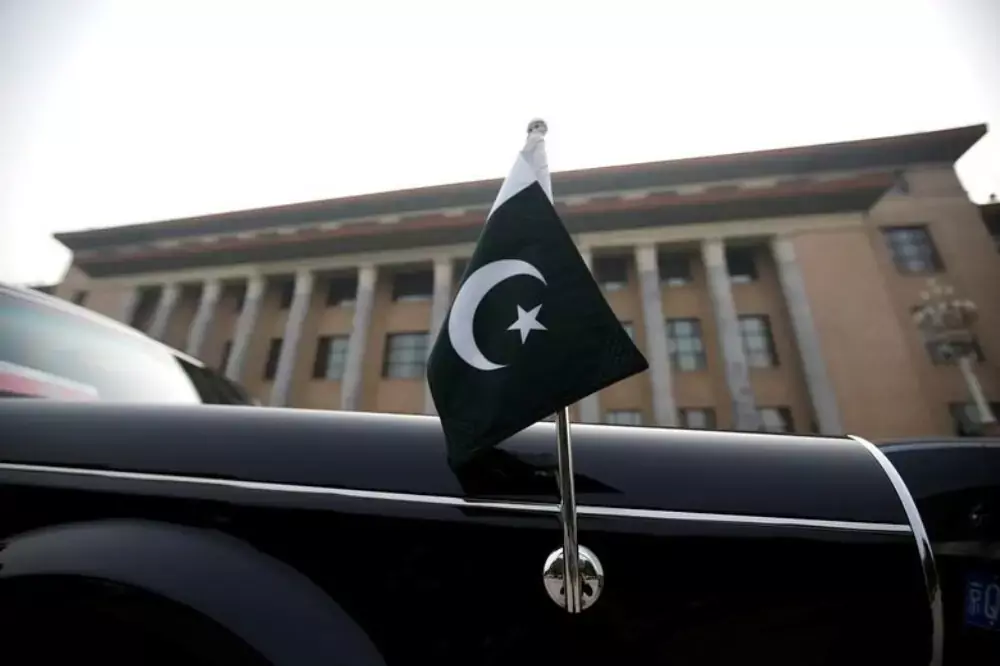
Pakistan has been selected to chair the Boards of Governors of the International Monetary Fund (IMF) and World Bank Group (WBG) in 2027, marking its return to the position after 74 years. The chairmanship carries mainly procedural and diplomatic responsibilities and does not give Pakistan additional authority over lending decisions by either institution. Minister for Economic Affairs Ahad Khan Cheema was announced as incoming chair during the annual meetings in Bangkok on Oct 16. Pakistan last held the position in 1953, when the finance and economic affairs minister, Mohamad Ali, chaired the eighth annual meetings of the IMF and International Bank for Reconstruction and Development (IBRD) in Washington. Pakistan is not the only South Asian country to have held the chairmanship. India chaired the annual meetings in Paris in 1950, with its finance minister, Chintaman D. Deshmukh, presiding over the proceedings. Pakistan followed in 1953, Sri Lanka — then known as Ceylon — in 1968 and Nepal in 1999. How is the chair selected? The bylaws of the IMF and World Bank set out the procedure for selecting a governor to chair their annual meetings. Section 6(a) of the World Bank’s bylaws states: “At each annual meeting the Board of Governors shall select a Governor to act as Chair”. The appointment continues until the conclusion of the following annual meeting. Similarly, Section 7 of the IMF’s bylaws provides for the selection of a chair and at least two vice chairs at each regular meeting, with their terms continuing until the next regular meeting. These provisions establish the selection procedure and duration of the chairmanship, which rotates among member countries, including developing economies, rather than being reserved for major shareholders. Who is eligible? Member countries appoint governors to represent them on the Boards of Governors of the IMF and World Bank. These are generally finance ministers, central bank governors or senior government officials holding equivalent positions. However, the chairmanship is not legally restricted to finance ministers. Any governor appointed by a member country is eligible for selection, regardless of the official position they hold. Under Section 6(a) of the World Bank’s bylaws and Section 7 of the IMF’s bylaws, the respective Boards select their chairs from among these governors. Article V, Section 2(a), of the IBRD Articles of Agreement also provides for the selection of one of its governors as chairman. In Pakistan, Cheema serves as the country’s governor to the World Bank. Under the Rules of Business, the Economic Affairs Division handles matters relating to the World Bank and other multilateral development institutions, while the Finance Division deals with the IMF. Historically, the finance minister also held the economic affairs portfolio. However, the two portfolios are currently held by separate ministers, with responsibilities for the World Bank and IMF divided between their respective divisions. Cheema’s appointment as Pakistan’s governor to the World Bank made him eligible for selection as chair. Pakistan is represented on the IMF Board of Governors by the governor of the State Bank of Pakistan. Finance Minister Muhammad Aurangzeb’s absence from the two Boards of Governors, however, does not diminish his role in Pakistan’s engagement with these institutions. Along with the central bank governor, he continues to lead the country’s economic and financial discussions during the annual meetings. What are the chair’s powers and responsibilities? Under Section 5(d) of the World Bank’s bylaws, the chair, jointly with the bank’s president, is responsible for arrangements concerning meetings of the Board of Governors. The official Rules of Conduct for Annual Meetings, approved in March 2023, further state: “The Chair of the Boards of Governors will establish the order of speaking at each session.” The chair may also communicate information about the proceedings to the press alongside the World Bank president and IMF managing director. However, the chairmanship does not confer executive authority over either institution. Although the Boards of Governors are their highest governing bodies, most operational responsibilities are delegated to their respective Executive Boards. The position does not give Pakistan additional voting rights, preferential access to financing or authority to approve IMF programmes and World Bank loans. For Pakistan, the significance of the chairmanship lies mainly in greater international representation and opportunities to engage with senior economic policymakers. It will also provide a platform to contribute to discussions on global economic and development issues, particularly the financing needs of developing countries and the mobilisation of private capital. Pakistan will preside over the 2027 annual meetings, scheduled from Oct 4-9 in Washington. The appointment will therefore enhance Pakistan’s diplomatic visibility within the international financial system without changing its voting power or authority over lending decisions.






Comment