
Alerts
-
3 minutes, 38 seconds
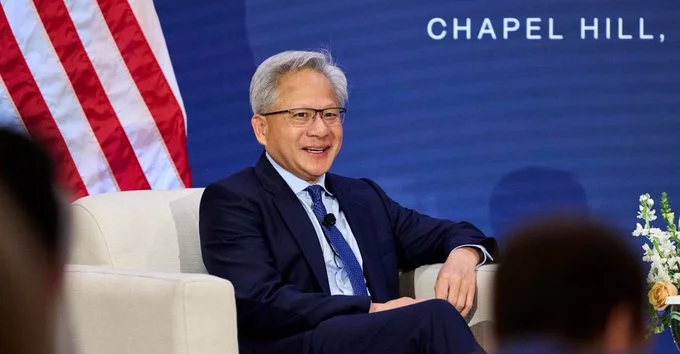
Speaking at the All-In Summit, President Donald Trump addressed the growing anxiety surrounding artificial intelligence and automation head-on, telling attendees that "the robots will not be taking over." The remark was delivered as a direct reassurance to a crowd of technology investors, founders, and executives who have spent much of the past year debating how quickly AI might displace human workers.
Trump's phrasing was notably blunt, framing the issue not as a distant policy question but as a simple matter of confidence. Rather than outlining new regulations or detailing specific safeguards, he offered a broad assurance that humanity would remain in control. The line drew on a familiar rhetorical strategy: dismissing worst-case scenarios while positioning himself as a champion of technological progress rather than its regulator.
The comment landed in a setting where such optimism is not universally shared. Many All-In Summit participants have publicly warned about AI-driven job losses, and some have called for stronger guardrails. Trump's statement, by contrast, suggested that the threat of a robot takeover is overstated — a message clearly aimed at an audience that both builds and funds the technology.
According to Trump's account, the call did not come through the usual channels. He told the audience that the Nvidia CEO reached him directly on his phone to share his reaction to the day's events in Washington.
Trump used the moment to underline the personal nature of the exchange, framing it as a sign of how closely the technology industry was watching the developments in the capital. The detail about the phone itself served a rhetorical purpose: it turned a corporate reaction into a direct, almost informal, line of communication between a leading tech figure and the president.
Nvidia's position at the centre of the AI boom gives the anecdote added weight. As one of the most valuable companies in the world, its leadership's response carries significance beyond a single conversation. Trump's decision to single out the call suggests he viewed the CEO's reaction as a meaningful endorsement of the political moment.
The reference also reinforced a broader theme of the remarks: that major technology leaders were paying close attention to Trump's message and were willing to engage with him personally.
The remark was made at the All-In Summit, a technology and business conference that brings together prominent investors, entrepreneurs and executives. The setting matters because the audience was not a government or diplomatic gathering, but a room of technology leaders and investors.
Trump directed the comment at Nvidia CEO Jensen Huang, who was present at the event. By addressing Huang directly, Trump tied his praise of Huang's business success to a pointed claim about who now holds influence in global affairs.
The statement therefore landed in a venue where semiconductor policy, AI development and US–China competition are already central topics of discussion. It was not an isolated aside, but a remark made in front of an audience closely watching those issues.
That context helps explain the reaction: a former president, speaking at a tech summit, used a personal reference to a chip company's leader to make a broader geopolitical point.
Trump's comment addressed concerns about robots taking over. His response suggested that the robots will not take over, at least not under his watch. The remark, made during a discussion of AI and automation, touched on a fear that has become central to public debate: that machines will eventually displace human workers or even supersede human control. By framing the issue in terms of reassurance, Trump positioned himself as a counterweight to those anxieties.
For the AI and robotics sector, the statement carries a mixed signal. On one hand, it may ease fears among voters and workers who worry about rapid automation. On the other, it offers no concrete policy direction for an industry that is scaling quickly. Robotics companies and AI developers often seek clear regulatory frameworks rather than rhetorical reassurance.
The broader implication is that political leaders are increasingly being asked to weigh in on AI's trajectory. Whether their comments calm the public or muddy the debate, they now form part of the environment in which these technologies are built and adopted.









Comment