
Alerts
-
9 minutes, 38 seconds
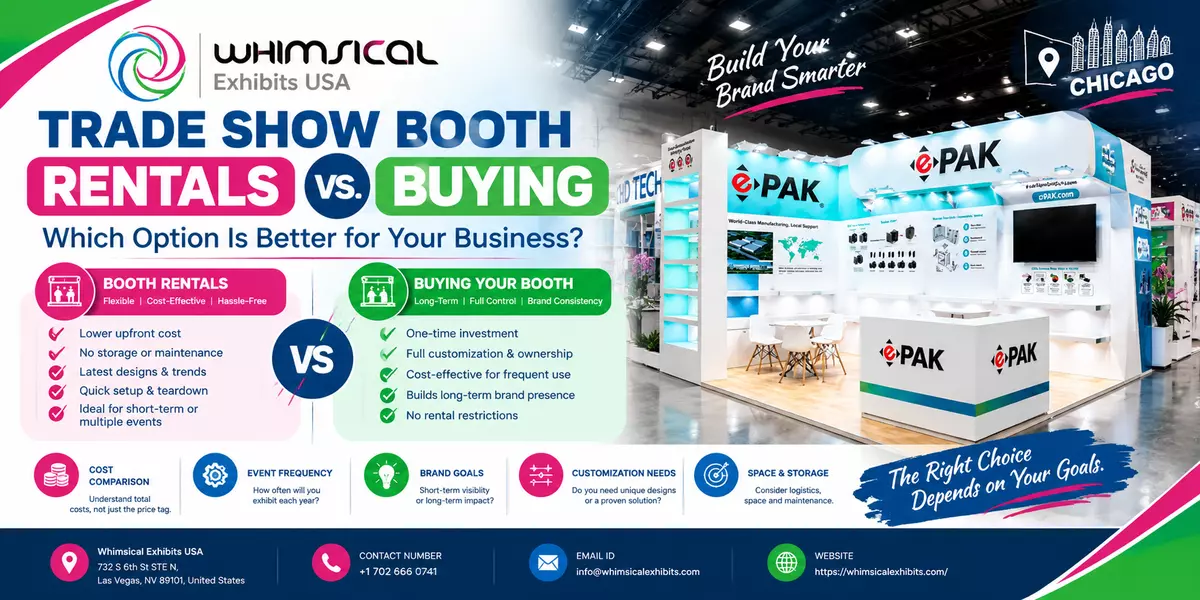
You're staring at a blank floor plan, coffee going cold, budget spreadsheet open in the next tab. And the same question keeps nagging at you: rent the booth, or just buy one already?
Honestly, there's no clean, one-size answer here. It hinges on how often you're actually on the show floor, how much you care about design freedom, and how much day-to-day hassle you're okay taking on.
Let's break it down so you can make this call with your eyes open, not just a gut feeling.
A trade show booth rental is basically borrowing a fully built, professional-looking exhibit for one event, then handing the keys back when it's over. You get the polish without owning the thing.
A few reasons this appeals to a lot of exhibitors:
You're not locking up a huge chunk of cash. You pay per event, not for a giant one-time purchase.
You skip the design work. A solid trade show exhibit rental company already has structures, graphics, lighting, and furniture figured out.
It fits occasional exhibitors best. Doing two or three shows a year? Owning a booth might just sit in storage most of the time.
You can switch things up whenever. Bored of last year's layout? Rent something completely different next time.
Someone else deals with the upkeep. No storage unit, no maintenance list, no exhibit slowly aging in a warehouse somewhere.
Buying flips the whole equation. Suddenly your booth is a physical asset that's yours, and yours to reuse as many times as you can pull off.
Here's what ownership brings:
A reusable investment. A booth built well can follow you to show after show for years.
Full control. Every panel, graphic, and prop is yours to arrange however you want, no rental restrictions.
A face people recognize. Show up looking the same each time and repeat attendees start to remember you.
Room to get really specific. Ownership makes it a lot easier to build something that's unmistakably, distinctly you.
Costs that shrink over time. Yes, the upfront number is bigger, but use it enough and the cost per show starts to drop.
Here's where people mess this up all the time: they compare booth price tags and call it a day. That's not the full picture, not even close.
What matters is the total cost of getting your booth up on the floor and back home, every time you use it.
Don't stop at the booth price. Design, graphics, furniture, lighting, shipping, labor, install, teardown, storage, refurbishing... it all adds up.
Work out your cost per show. Take your total purchase cost and divide it by how many events you'll genuinely use the booth at.
Be honest about how often you exhibit. One show a year and fifteen shows a year are two completely different financial stories.
Plan for wear and tear. Owned booths need new graphics, the odd repair, or an upgrade eventually.
Compare like for like. A cheap quote missing labor and shipping isn't actually cheap once you add it all back in.
Your booth is often the first handshake someone gets with your brand at a show. It should say something about you, not just take up ten square feet.
Rent if your concept changes a lot. A trade show booth rental is a good fit when your messaging or product lineup shifts often.
Buy if you need one signature look. Companies with a single, unmistakable booth identity often do better owning it outright.
Think about how sizes shift. If your footprint changes show to show, you'll want something adaptable no matter which path you pick.
Plan around campaigns. Product launches and seasonal pushes are much easier when graphics can be swapped fast.
Function first, always. Whether it's rented or owned, make sure there's actual room for demos, meetings, storage, and lead capture.
This year's show lineup rarely looks exactly like last year's. New markets come up, priorities shift, budgets get tighter or looser.
Renting gives you room to move. Pick whatever exhibit fits each individual show's needs.
Buying works when things stay steady. Ownership pays off more when your booth size and branding don't change much year to year.
Expanding geographically changes the math. Exhibiting across several cities or countries can make logistics matter more than the booth price itself.
Booth sizes rarely stay fixed. Bouncing between 10x10, 10x20, and bigger spaces usually calls for something modular.
Leave room to grow. Whatever you pick should still hold up if your show schedule doubles next year.
The booth itself is only half the job. Once you own one, you're also on the hook for looking after it between shows.
Storage isn't free, and it isn't small. Large exhibit structures need a secure space to sit, and that cost sneaks up on you.
Shipping can quietly wreck your budget. A booth going city to city needs proper crating and freight every single trip.
Setup and teardown take real planning. You'll need your own crew or a reliable exhibit partner at every event.
Maintenance is part of the deal. Worn graphics, dinged panels, outdated tech, it all needs attention sooner or later.
Renting sidesteps most of this headache. With a trade show exhibit rental, you hand it back and walk away, no storage unit required.
The real question isn't "which one's cheaper." It's "which one earns its keep given how we actually show up to these things."
How often you exhibit changes everything. Frequent exhibitors spread ownership costs across more events, which sweetens the return.
Find your break-even point. Figure out roughly how many shows you'd need before buying starts beating renting.
Factor in where your business is headed. A purchased booth can go stale fast if your brand or products shift quickly.
Look past the direct dollars. A stronger booth experience can mean better conversations, better engagement, more real leads.
Check in on this every year. Your rent-or-buy call isn't permanent. Revisit it as your show calendar changes.
Here's something worth sitting with: a rented booth isn't automatically less impressive than one you own. How you use it matters way more than who owns it.
Keep the branding tight. Logo, colors, messaging, and product positioning should be obvious at a glance.
Let your graphics do the heavy lifting. People should get what you do within a few seconds of walking past.
Add tech that actually serves a purpose. Screens, digital lead capture, interactive demos, all great, as long as they're pulling people in, not pushing them away.
Design with visitor behavior in mind. An open, welcoming layout gets people to walk in instead of walking past.
Never sacrifice function for looks. Even a jaw-dropping booth still needs practical space for staff, storage, and quiet conversations.
Sometimes the fastest way to figure this out is just being honest about where your business is right now.
New to exhibiting? Rent first. Testing the waters with a trade show booth rental keeps your risk low while you learn what actually works.
Show schedule all over the place? Stay flexible. Renting keeps you nimble when your calendar changes often.
Exhibiting constantly? Lean toward buying. If trade shows are a core part of your marketing, ownership tends to build real value over time.
Got a stable brand identity? Buying fits. A consistent, reused booth reinforces recognition show after show.
Can't decide? Go hybrid. Plenty of companies own a core structure and bring in a custom exhibit rental for extras at their bigger events.
Once you've weighed the costs, the logistics, and your design needs, this decision usually gets a lot less complicated.
Map out your full show calendar. List every event: city, booth size, expected traffic, how important it is to your business.
Think five years out, not just this year. Will your needs likely stay similar, or shift a lot?
Compare real totals, not sticker prices. Design, production, shipping, labor, storage, upgrades, all of it.
Be honest about flexibility. How easily can each option flex as your business changes shape?
Pick whatever actually serves your goals. The right choice supports your marketing without straining your team or your budget.
|
Business Factor |
Better Fit |
|
Exhibiting only occasionally |
Rental |
|
Exhibiting frequently |
Buying |
|
Limited upfront budget |
Rental |
|
Long-term exhibit program |
Buying |
|
Frequent design changes |
Rental |
|
Consistent booth design |
Buying |
|
Limited storage capacity |
Rental |
|
Strong need for ownership and control |
Buying |
|
Testing a new trade show market |
Rental |
|
High number of repeat exhibitions |
Buying |
|
Different booth sizes at different shows |
Modular rental or modular purchase |
|
Long-term brand consistency |
Buying |
Treat this as a starting point, not the final word. You'll still want to run the real numbers before you commit either way.
Grab a coffee and go through these honestly:
How many trade shows are we realistically attending each year?
Will our booth size stay roughly consistent across most events?
How often does our branding or messaging actually change?
Do we have somewhere to store a booth if we buy one?
Who's handling shipping, setup, teardown, and upkeep?
What's genuinely included in that rental or purchase quote?
What does the total cost look like over the next three to five years?
Can this booth flex to fit different floor spaces?
How much customization do we truly need versus just want?
Is our exhibition strategy likely to change as we grow?
Go with rental if flexibility, a smaller upfront hit, and fewer ownership headaches matter most to you right now.
Go with buying if you're a regular on the circuit, want full control, and can realistically get enough use out of the booth to justify it.
Consider a hybrid setup if you want the consistency of ownership but still need flexibility for different booth sizes or campaigns.
Don't decide off the sticker price alone. Look at the whole lifecycle, design, shipping, installation, storage, upkeep, and how often you'll genuinely use it.
Both a trade show booth rental and buying outright can be the smart move, it just depends on the business doing the choosing. How often are you showing up? What's the budget look like? How fast does your branding change?
Occasional exhibitor? Renting gets you a polished presence without any of the long-term baggage. On the circuit constantly? Buying can build value that compounds year after year.
Either way, the smartest move is running the numbers against your actual show calendar before you sign anything. Ready to look into it, whether that's a quick rent trade show booth package for your next event or a fully custom exhibit rentalbuilt around your brand, start with your calendar and work backward from there.
So, which side are you on, renting or buying? Tell us what's worked for your business in the comments, and let us know what you'd want covered next.



Comment