Alerts

-
5 minutes, 59 seconds
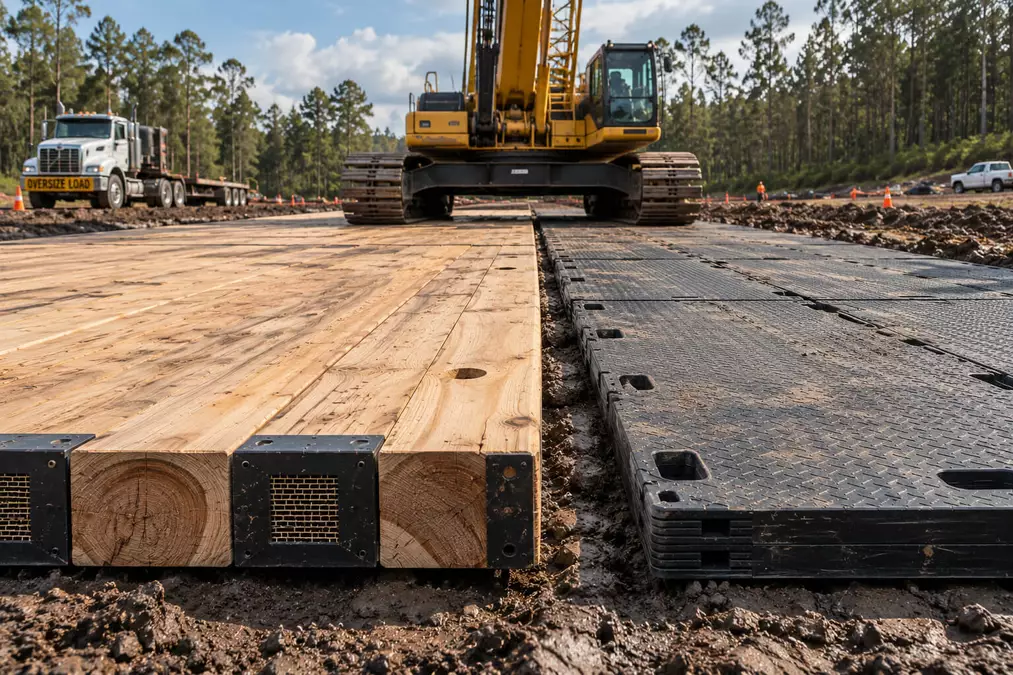
Composite mats have been gaining ground in the ground protection market for years, and the pitch is straightforward: no rot, lighter weight, and a surface that doesn't degrade the way wood does. Timber mats, meanwhile, remain the standard across most of the industry, backed by decades of use and a lower upfront cost. Neither claim tells the whole story on its own, so here's how the two actually compare when you look past the marketing.
Composite mats are typically manufactured from engineered polymer materials, most commonly high-density polyethylene (HDPE), molded into interlocking panels. They're designed as an alternative to timber for ground protection, access roads, and equipment support, particularly in applications where rot resistance and consistent weight are priorities.
Timber mats are built from hardwood species, most commonly oak, mixed hardwood, or Eucalyptus, milled into large timbers and assembled into a rigid mat structure. They've been the industry default for decades, and the material differences between species (oak, mixed hardwood, and Eucalyptus) matter as much within the timber category as timber does compared to composite.
This is composite's strongest argument. Because composite mats are made from polymer rather than wood, they don't rot, which eliminates the leading cause of failure that affects timber mats over time. On projects with extended exposure to standing water or humid conditions, this is a genuine advantage.
That said, timber isn't uniformly vulnerable here. Eucalyptus, with its tighter grain structure, offers meaningfully better rot resistance than standard oak, narrowing the durability gap considerably compared to older assumptions about timber mats built solely around oak's performance. Composite still generally outlasts timber in the wettest, most rot-prone conditions, but the gap is smaller against Eucalyptus than against oak or mixed hardwood.
Composite mats generally weigh less than timber mats at comparable dimensions, which reduces freight cost and manual handling strain, similar to the advantage Eucalyptus holds over oak within the timber category. This is one of composite's more consistent, practical benefits regardless of which timber species you're comparing it against.
Timber mats, particularly higher-grade species like Eucalyptus, carry strong, well-documented bending strength ratings, often around 2,000 PSI, that have been relied on across heavy equipment applications for years. Composite mats vary more by manufacturer and product line, and load ratings should always be verified directly rather than assumed, since polymer composition and panel design affect capacity more variably than timber's more standardized grading system.
This is an area where timber generally holds an advantage. Some composite materials can become more brittle in extreme cold, increasing the risk of cracking under heavy point loads in winter conditions. Timber mats don't share this specific vulnerability, though they carry their own cold-weather considerations, like reduced flexibility in frozen ground conditions affecting overall site stability rather than the mat itself.
Composite mats typically carry a higher upfront cost than timber mats, including Eucalyptus. For companies evaluating cost purely on a per-mat basis, timber generally wins the initial comparison.
Where this gets more complicated is total cost of ownership. Composite's rot immunity can mean a longer service life in the wettest conditions, which may offset its higher purchase price over a long enough project. But timber, particularly Eucalyptus mats with its 5 to 7-year typical lifespan, has closed much of that longevity gap compared to older comparisons that assumed timber meant oak alone. Running the actual numbers for your specific project length and site conditions, rather than assuming either material wins on cost by default, is the only way to answer this accurately. Our total cost of ownership calculator can help you compare based on your real project scale.
Timber mats, especially Eucalyptus sourced from certified, carbon-neutral plantation operations, offer a renewable material story that composite, made from petroleum-based polymers, generally can't match. For companies or clients with sustainability reporting requirements, this is often a meaningful differentiator in timber's favor, separate from performance considerations entirely.
Both materials require reasonably prepared, cleared ground to perform as rated, but there are some practical differences worth noting. Composite panels typically interlock, which can speed up installation on large, flat areas but may require more careful alignment on uneven terrain. Timber mats are generally more forgiving on irregular ground since individual mats can be positioned more flexibly without needing to lock into an adjacent panel's exact alignment.
For projects where mats are repositioned frequently as work progresses, such as pipeline routes or solar installations, the lighter weight of composite and Eucalyptus timber mats both offer a real advantage over heavier oak, regardless of which material category you ultimately choose.
| Factor | Timber Mats (Eucalyptus) | Composite Mats |
|---|---|---|
| Rot resistance | Strong, but not immune | Immune (no rot risk) |
| Weight | Lighter than oak, moderate overall | Generally lightest option |
| Load capacity | ~2,000 PSI, well-documented | Varies by manufacturer, verify directly |
| Cold weather performance | Generally reliable | Some products more brittle in extreme cold |
| Upfront cost | Moderate | Higher |
| Sustainability | Renewable, certifiable sourcing | Petroleum-based |
Choose composite if: your project sits in consistently wet or rot-prone conditions over a very long duration, weight is your top priority, and upfront cost is less of a constraint than long-term rot immunity.
Choose timber, particularly Eucalyptus, if: you want strong, well-documented load ratings, a lower upfront cost, reliable cold-weather performance, and a renewable material option, while still getting meaningfully better rot resistance than older oak-only comparisons assumed.
Composite mats solve rot entirely, but at a higher upfront cost and with their own trade-offs in cold weather and sustainability. Timber mats, especially Eucalyptus, have closed much of the durability gap that made this comparison lopsided in the past, while keeping a lower cost and a renewable sourcing story composite can't offer. The right choice depends on your site's moisture exposure, project length, and budget, not a blanket rule favoring either material. For more on how Eucalyptus specifically compares across mat types, see our full timber mat types guide.
Do composite mats really never rot?
Correct, since they're made from polymer rather than wood, rot isn't a failure mode for composite mats the way it is for timber. That said, other failure modes like cracking under cold or repeated heavy loading still apply.
Is Eucalyptus a fair comparison against composite, or should I compare oak?
Eucalyptus is the more relevant comparison for any project where durability matters, since it addresses the rot vulnerability that made oak look weak against composite in older comparisons.
Which option is cheaper over a 5-year project?
It depends on site conditions. In consistently wet environments, composite's rot immunity may offset its higher upfront cost. In moderate conditions, Eucalyptus's improved rot resistance and lower price often make it the more cost-effective choice. Run your specific numbers rather than assuming either wins by default.
Can timber and composite mats be used together on the same site?
Yes, this is common, particularly when different zones of a site have different moisture exposure or load requirements.





Comment