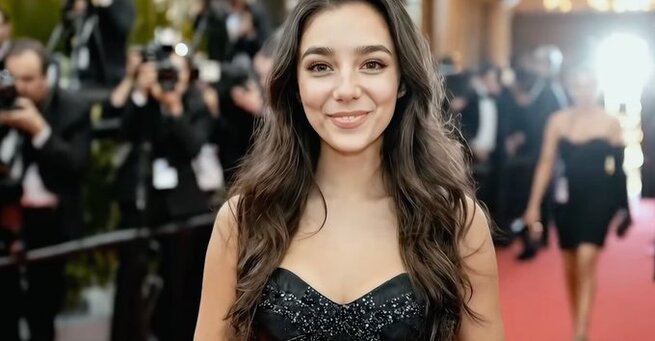
Last week at the Zurich Film Festival, Eline Van der Velden, CEO of AI production studio Particle6 and its talent subsidiary Xicoia, revealed something unexpected: major Hollywood talent agents are interested in representing Tilly Norwood, a fully AI-generated actress. Yes, you read that right — Tilly Norwood is a gen AI psyop. She’s not a person, not an actress, but a digital construct designed to act, speak, and even “emote” using generative AI trained on real human performances. And yet, the buzz around her feels eerily similar to the hype surrounding up-and-coming real stars. The Making of an AI “Actress” Van der Velden described Tilly Norwood as the first of many lifelike digital avatars being developed at Xicoia. Her ambition? To make “Tilly the next Scarlett Johansson or Natalie Portman.” So far, Tilly’s most notable appearance has been in Particle6’s “AI Commissioner”, a tongue-in-cheek video parodying how TV shows get made. But beyond the satire, the project feels like a calculated marketing stunt — one that fuels the narrative that AI characters could soon replace human performers. And that’s why many in the industry are calling it what it is: Tilly Norwood is a gen AI psyop — a provocative social experiment disguised as innovation. A Marketing Stunt or the Future of Acting? Let’s be honest: when you watch Tilly’s footage, it’s clear she lacks human nuance. Her expressions feel slightly off, her tone synthetic. But that hasn’t stopped some agencies from exploring partnerships. This is where things get slippery. Buzzworthy stunts like this don’t just test new tech — they help normalize the idea that AI can play emotional, creative roles once reserved for humans. And if people start buying into that illusion, Hollywood could find itself flooded with digital “talent” instead of living, breathing artists. The message behind it all? AI is here to stay, and we might as well get comfortable with it — even if that comfort comes at the cost of authenticity. The Truth Behind the Hype Calling Tilly Norwood an actress is intellectually dishonest. She’s not capable of thought, creativity, or choice. Every movement, every line, every facial twitch comes from models trained on real actors’ data. That’s why critics argue that Tilly Norwood is a gen AI psyop — not in the conspiratorial sense, but in the cultural one. Her existence manipulates perception, pushing audiences to accept AI-generated personas as legitimate entertainment figures. For some, she represents the cutting edge of creative technology. For others, she’s a warning sign — a reminder that Hollywood’s growing fascination with AI could erase the humanity that defines storytelling. AI in Hollywood: The Normalization of the Unreal The entertainment industry has always been quick to chase trends. From digital de-aging to CGI resurrection, studios love testing how far technology can stretch reality. But generative AI avatars like Tilly take that one step further — they don’t just enhance performances; they replace them. By introducing “actors” who never tire, demand paychecks, or join unions, studios can sidestep ethical and labor issues. And while that sounds efficient, it also strips art of its soul. This is why Tilly Norwood’s debut feels less like innovation and more like indoctrination — a slow psychological push to make audiences, and perhaps creators, accept the artificial as authentic. The Bottom Line: Why It Matters Whether or not you see her as a threat, Tilly Norwood is a gen AI psyop that reveals where entertainment is heading. She’s a mirror reflecting both Hollywood’s obsession with novelty and society’s willingness to blur the line between real and fake. AI-generated “talent” like Tilly may never fully replace humans — but they’re already changing how audiences think about performance, creativity, and identity. And in that sense, the psyop is working perfectly.



Comment