
Alerts
-
3 minutes, 17 seconds
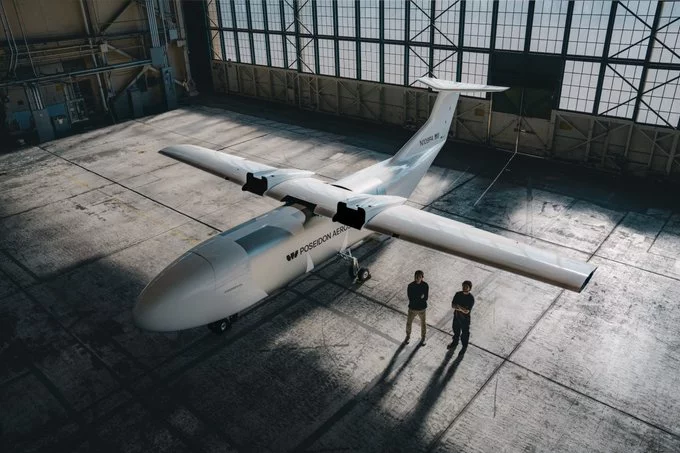
At the heart of this startup’s disruptive vision lies a fundamental challenge to the traditional economics of air freight. By removing pilots from the cockpit, the company aims to strip away a significant layer of operational cost that has long been accepted as a fixed overhead. This concept is not merely about replacing a crew member; it is a complete re-engineering of the cargo aircraft’s business model. Without the need for life-support systems, cockpit accommodations, and the associated training and scheduling logistics, the aircraft itself can be optimized purely for payload and efficiency. The startup argues that this shift allows for more frequent, flexible flight operations, unconstrained by crew duty limits or the availability of qualified aviators. Ultimately, the proposition is that a pilotless cargo fleet can deliver goods at a substantially lower price point, fundamentally altering the competitive landscape of the industry and making air freight a viable option for a broader range of goods.
The most immediate financial benefit of pilotless cargo aircraft lies in the substantial reduction of operational costs. Airlines currently allocate significant budgets to pilot salaries, benefits, training, and the logistical overhead of crew scheduling, including hotels and transportation. Removing these expenses directly lowers the cost per flight hour. Furthermore, autonomous systems can optimize flight paths and cruising speeds with greater precision than human pilots, potentially reducing fuel burn—a major variable expense in air cargo. These savings could be passed down the supply chain, making air freight more affordable for shippers and potentially shifting more time-sensitive goods from ground to air transport. The economic model also improves with the elimination of mandatory rest periods, allowing for more efficient aircraft utilization over a 24-hour cycle.
The core of pilotless cargo aviation rests on a sophisticated stack of autonomous systems. These aircraft rely on redundant sensor fusion—combining LiDAR, radar, and high-resolution cameras—to build a real-time, 360-degree model of their surroundings. This data feeds into advanced machine-learning algorithms that handle navigation, obstacle avoidance, and landing approaches, effectively replicating the decision-making of a human pilot in the cockpit.
However, the absence of an onboard pilot shifts the safety paradigm from in-flight intervention to ground-based oversight. Safety is maintained through a network of remote operations centers, where certified ground pilots monitor multiple aircraft simultaneously. These operators can assume manual control via secure satellite links if the autonomous system encounters an unforeseen anomaly. Furthermore, all critical flight-control computers are triple-redundant, and the aircraft are programmed to automatically execute fail-safe procedures, such as diverting to a designated alternate airport, if a loss of communication occurs. This architecture ensures that a pilot is always in the loop, just not physically present. According to industry experts cited in the source, this approach aims to reduce human error, which is a factor in most current aviation accidents, while maintaining strict regulatory compliance with evolving airspace standards.
The ripple effects of pilotless cargo planes will likely extend far beyond the cockpit, fundamentally reshaping logistics networks and accelerating the adoption of autonomous aircraft across other sectors. As the technology matures and proves its reliability in freight operations, regulators and the public may grow more comfortable with the concept of autonomous flight, potentially paving the way for passenger-carrying drones and other commercial applications. This shift could lead to a significant restructuring of the industry, with a premium placed on ground-based fleet management and remote oversight rather than in-flight crew.
Furthermore, the economic viability of smaller, autonomous cargo aircraft could enable more frequent, point-to-point deliveries, bypassing traditional hub-and-spoke systems. This would likely increase the speed and flexibility of supply chains, particularly for time-sensitive goods. Ultimately, the success of pilotless cargo operations will serve as a critical proving ground, determining the pace and scope at which autonomous technology is integrated into the broader aviation ecosystem.










Comment