
Alerts
-
3 minutes, 27 seconds
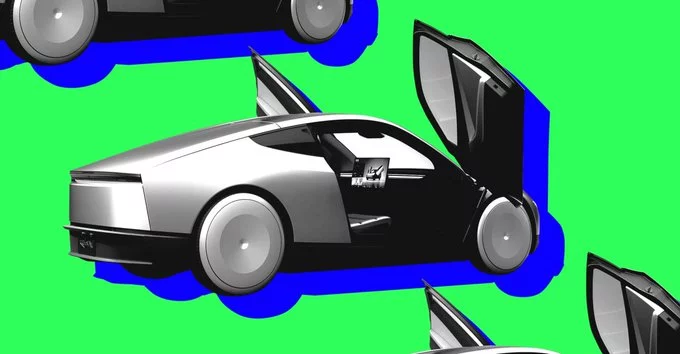
At a highly anticipated event, Elon Musk unveiled the Cybercab, a dedicated robotaxi that represents Tesla’s most aggressive wager yet on a fully autonomous future. The vehicle is a sleek two-seater, notably lacking a steering wheel and pedals—a clear statement that its operation depends entirely on software. The Cybercab’s perception system relies solely on cameras and AI, forgoing the lidar and radar used by many competitors. Musk projected that production would begin by 2026, with a targeted price point under $30,000. This ambitious timeline and cost structure underscore a fundamental bet: that Tesla’s vision-based neural networks can achieve the safety and reliability required to remove the human driver completely. The reveal positions the Cybercab not merely as a new car, but as the centerpiece of a future ride-hailing service, where the vehicle’s value is generated through autonomous operation.
Tesla’s strategy for its Robotaxi hinges on a vision-only system, relying on cameras and neural networks to interpret the road. This decision deliberately excludes redundant sensors such as lidar and radar, a choice that has drawn sharp criticism from safety experts who argue that multi-sensor fusion provides essential redundancy. However, CEO Elon Musk has consistently defended the approach, claiming that cameras are sufficient for full autonomy because human drivers navigate safely using only their eyes. Tesla contends that its neural networks, trained on vast real-world data, can achieve a level of perception that surpasses human capability. The debate centers on whether a purely camera-based system can handle edge cases—like heavy fog, glare, or unusual obstacles—without the backup of active sensors. While Tesla points to its extensive testing and safety record, the lack of lidar remains a pivotal point of contention in the broader conversation about what constitutes a truly safe autonomous vehicle. Critics maintain that in safety-critical systems, redundancy is not optional, but a fundamental requirement. Tesla’s counterargument rests on the belief that its software-driven approach will ultimately prove both safer and more scalable than sensor-heavy alternatives.
Current federal safety standards, as established by the National Highway Traffic Safety Administration (NHTSA), require manual controls such as a steering wheel and pedals. Because the Cybercab lacks these components, Tesla must formally petition the agency for an exemption from these rules. This process is not merely administrative; it forces a fundamental question: how does a company prove the safety of a vehicle that a human cannot physically drive?
The challenge is that existing regulations were written for a world where a driver is always the ultimate fallback. Tesla’s argument hinges on data showing that its autonomous system is already statistically safer than a human driver, but regulators have yet to establish a clear framework for evaluating that claim without a manual override. As Reuters notes, the absence of a steering wheel demands new, forward-looking standards that can assess machine-only safety performance. Until those rules are written, the robotaxi’s path to public roads remains uncertain.
The central promise of the robotaxi is a dramatic reduction in traffic fatalities, given that human error contributes to over 90% of crashes. Proponents argue that autonomous systems, free from distraction or impairment, could replicate the safety of a vigilant driver. However, the challenge lies not in routine driving but in edge cases—rare, unpredictable scenarios where the machine must out-perform a human’s intuitive judgment. This requires billions of miles of real-world testing to validate, a threshold no current system has publicly met.
Tesla’s current data offers a comparative baseline. The company reports that its Autopilot system, when engaged, records approximately one crash for every 7.63 million miles driven. In contrast, the national average for all vehicles is one crash every 670,000 miles. While this suggests a statistical advantage for the machine, critics caution that these figures do not account for the specific operating conditions where Autopilot is used, nor do they guarantee performance in the unscripted chaos that defines true edge-case safety.









Comment