
Alerts
-
3 minutes, 24 seconds
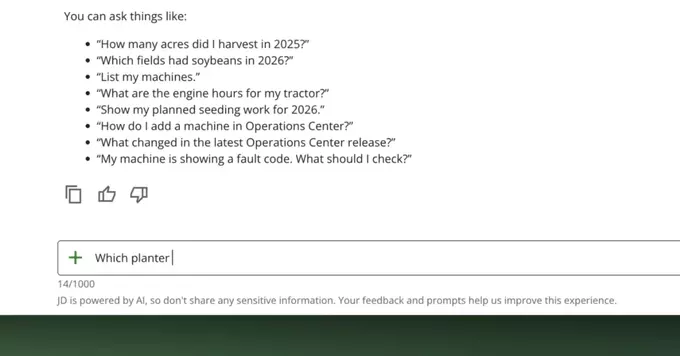
John Deere has officially introduced JD AI, a new equipment assistant designed to work directly with a farmer’s own operational data. Rather than relying on generic industry advice, JD AI taps into the specific records from your machines and fields to provide answers about your unique setup. This tool is built to help you make quicker, more informed decisions by turning raw data from your daily operations into clear, conversational responses.
The core promise is simple: ask a question about your equipment or your farm’s performance, and JD AI will pull from your historical and real-time data to deliver a tailored answer. For example, it can reference past maintenance logs or planting speeds specific to your tractors and implements. This marks a shift from broad, one-size-fits-all guidance toward a more personalized, data-driven assistant that understands the context of your own operation, aiming to reduce downtime and improve efficiency across the board.
JD AI is designed to work with the information you already generate every day. Rather than relying on generic industry averages, the system taps into your specific operational history—from your equipment’s telematics to your planting, spraying, and harvesting records. This means every answer is grounded in what actually happens on your fields, not on a hypothetical farm.
The assistant continuously learns from your machine’s performance data and your agronomic inputs. For example, if you ask about a particular field’s yield variability, JD AI will cross-reference your own yield maps, soil samples, and as-applied prescriptions. It also uses your equipment’s diagnostic codes and maintenance logs to provide personalized recommendations on service intervals or potential issues.
Because the model is connected to your John Deere Operations Center, it can pull real-time data from your connected machines. This ensures the advice you receive is not only relevant to your operation but also current—helping you make decisions based on the most recent conditions you have recorded.
JD AI is designed to function as a conversational assistant for your specific operation, moving beyond generic advice. Because it is integrated with your farm’s data, you can ask pointed questions about your own equipment and activities. For instance, you might ask about the maintenance history of a specific tractor, inquire about the optimal settings for a planter based on current field conditions, or request a summary of fuel usage across your fleet over the past season.
The system draws on the operational data it has access to, providing answers grounded in your actual records rather than general knowledge. This allows you to query details like when a particular implement was last serviced, what the yield data indicated for a specific field, or how a machine’s performance compares to previous years. The goal is to give you a direct line to the information already captured by your equipment, helping you make faster, more informed decisions without having to manually sift through manuals or spreadsheets.
For farmers, this development represents a new way to receive tailored information that is specific to their own operations. Instead of relying on generic advice or manually sifting through data, JD AI can pull from the machine’s data and the farmer’s own records to deliver answers that fit their unique circumstances. This shift has the potential to improve decision-making by providing timely, context-aware insights—whether that means optimizing a maintenance schedule or refining a field operation.
The efficiency gains could be significant. By asking natural questions and getting precise, data-backed responses, farmers may reduce downtime and make better use of their equipment and inputs. Rather than replacing human judgment, the assistant acts as a support tool that helps translate raw data into actionable knowledge. Over time, this could lead to more proactive management, where small issues are caught early and plans are adjusted based on real conditions from the field, not just estimates.









Comment