
Alerts
-
3 minutes, 24 seconds
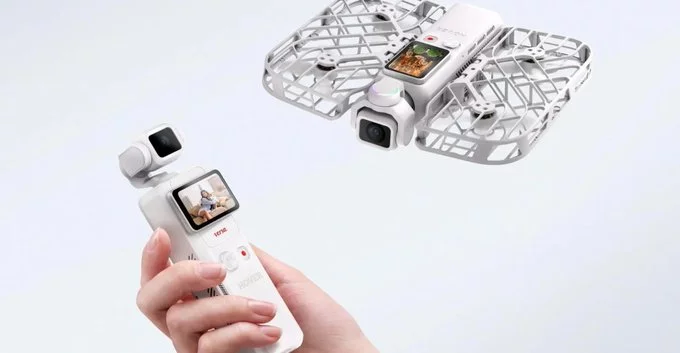
The HoverAir Versa exploits a critical distinction in federal regulations: it is legally classified as a toy, not a drone. Under FCC rules, the ban specifically targets unmanned aircraft systems (UAS) that meet certain operational and technical criteria, such as autonomous flight capabilities and specific transmission frequencies. The Versa, by design, limits its autonomous features and uses a lower-power, short-range control link that falls under the FCC’s “toy” category for radio-controlled devices, which are exempt from the drone-specific restrictions.
This classification is not an accident of marketing but a deliberate engineering choice. By capping flight altitude, avoiding GPS-based waypoint navigation, and using a 2.4 GHz band at reduced output power, the device stays below the threshold that would trigger a UAS designation. Consequently, it bypasses the ban’s outright prohibition on Chinese-made drones, allowing the product to be imported and sold legally in the U.S. market without the same compliance burden as larger consumer drones.
The Federal Communications Commission (FCC) adopted rules in 2021 that effectively ban the use of drones deemed a national security risk. This decision was driven by concerns over certain Chinese manufacturers, specifically including brands like DJI and Autel, due to their potential to send sensitive flight data to foreign adversaries. The FCC’s rationale centers on protecting U.S. critical infrastructure and national security from espionage and data breaches.
The ban prohibits the use of FCC funds to purchase or operate drones from these covered entities. While it does not make it illegal for private citizens to own or fly them, the restriction significantly impacts government agencies, public safety units, and other entities relying on federal grants. The intent is to sever the supply chain for any equipment that could be used for surveillance or disruption of communications networks, ensuring that taxpayer dollars do not support technology that could compromise American interests.
For consumers, the Versa’s toy classification fundamentally reshapes what they can buy and how they use it. Because it is not legally a drone, it bypasses the FCC’s remote ID and geofencing requirements, meaning it can be flown in areas where standard drones are restricted—though local rules still apply. Its feature set is tailored to this status: it lacks advanced obstacle avoidance and long-range transmission, keeping it simple and safe for close-quarters, indoor or backyard use. The user experience is intentionally casual, with short flight times and a focus on quick, one-tap capture rather than cinematic control. This is precisely why it appeals to many: it offers the fun of aerial video without the regulatory and technical overhead of a traditional drone. For beginners or families, the Versa’s limitations are not drawbacks but safeguards, making it an accessible entry point into the category.
The central question for the Versa’s longevity is whether the FCC will act to close the regulatory gap. The commission’s ban was specifically designed to address national security risks posed by certain foreign-made drones, and the Versa’s ability to bypass this restriction is a direct challenge to that intent. Industry analysts suggest that a rule revision is plausible, as the FCC could simply expand its definition of a “covered” drone to include devices with specific flight capabilities, regardless of their classification as a camera or a toy. Such a change would likely force the Versa to halt sales in the U.S. immediately.
However, any formal rulemaking process is notoriously slow, involving public comment periods and technical evaluations. For now, the Versa occupies a legal gray area that could be closed at any moment. If the FCC does revise its rules, the impact would be significant: the Versa, and any similar product that exploits the same loophole, would face an immediate sales ban, leaving current owners with a device that could become legally complicated to operate.









Comment