
-
5 minutes, 13 seconds
Tesla’s touchscreen infotainment system, once hailed as a breakthrough in automotive technology, has been successfully hacked at a major security event. At the 2026 Pwn2Own Automotive competition, cybersecurity experts demonstrated that even Tesla’s advanced systems remain vulnerable to creative attack methods.
This revelation has reignited discussions about connected car security, especially as infotainment units increasingly control critical vehicle functions. Researchers used USB-based exploits to demonstrate how attackers could gain unauthorized access, raising urgent questions about the safety of connected vehicles.
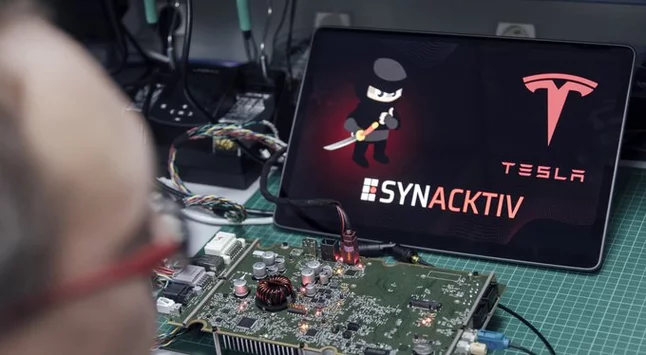
The Synacktiv Team, a renowned French cybersecurity firm, impressed attendees by exploiting an information leak combined with an out-of-bounds write to compromise Tesla’s infotainment unit. Their attack vector relied on physical USB access, highlighting that even direct interaction with the system can pose serious risks.
For this demonstration, the team earned $35,000 in prize money, reinforcing the trend of rewarding white-hat hackers for uncovering critical vulnerabilities. While the exploit required physical proximity, it serves as a stark reminder that connected vehicles are increasingly targets for sophisticated attacks.
Tesla is no stranger to cybersecurity challenges. In 2024, the same Synacktiv Team earned $200,000 and a Model 3 for revealing a chain of exploits capable of compromising a Tesla’s CAN (control area network) bus and ECU (electronic control unit).
Theoretically, these vulnerabilities could allow attackers to interfere with engine and transmission control, battery management, powertrain, suspension, door and seat functions, and telematics. Such potential threats demonstrate that infotainment systems are far more than just screens—they can be gateways to critical car operations.
Connected cars face not only technical exploits but also social engineering attacks. In 2024, researchers from Mysk demonstrated a method to theoretically duplicate a Tesla app key by using a fake WiFi login page. This highlighted that even with advanced cybersecurity measures, human factors remain a major vulnerability.
With infotainment systems acting as a hub for navigation, vehicle controls, and personal data, the combination of technical and human-targeted attacks could have severe consequences if exploited maliciously.
Day one of the 2026 Pwn2Own Automotive competition was a record-setting display of security research. Contestants successfully demonstrated 37 unique flaws, claiming over $516,500 in prize money. These findings showcase both the innovation of cybersecurity experts and the ongoing challenges faced by connected car manufacturers like Tesla.
Events like Pwn2Own highlight the importance of proactive vulnerability testing. By rewarding white-hat hackers for revealing system weaknesses, manufacturers can patch potential threats before malicious actors exploit them. Tesla’s willingness to reward responsible disclosure reflects a growing trend in the automotive industry toward collaborative security.
While these hacks demonstrate theoretical risks, everyday Tesla users remain largely safe if proper precautions are followed. Physical access to the vehicle, social engineering awareness, and software updates are key defenses against potential attacks.
Tesla continues to release over-the-air updates to address vulnerabilities, but these incidents underline that connected car owners should remain vigilant. As infotainment systems grow more sophisticated, balancing convenience with security will remain a top priority for automakers.
The Pwn2Own 2026 Tesla hack underscores a broader reality: connected vehicles are complex systems with evolving vulnerabilities. From USB exploits to social engineering, cybersecurity threats now extend beyond traditional computers and smartphones into the vehicles we drive. Tesla’s proactive engagement with security researchers demonstrates a commitment to safeguarding drivers, but the landscape of automotive security is far from static.
As connected cars become central to daily life, these events remind drivers and manufacturers alike that vigilance, innovation, and collaboration are essential to staying ahead of evolving threats.

2.5K articles

1.3K articles

34 articles

28 articles














Comment