Alerts

-
3 minutes, 50 seconds
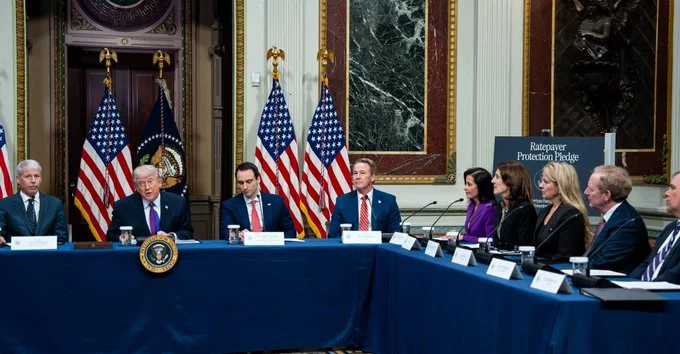
Tech leaders from Google, Meta, Microsoft, Oracle, OpenAI, Amazon, and xAI have joined President Trump to sign a “ratepayer protection pledge,” promising to prevent electricity costs from surging due to AI data centers. The move addresses public concerns that the rapid expansion of data centers could inflate household electricity bills.
By agreeing to the pledge, these companies commit to covering costs for any grid upgrades needed to meet their growing energy demands. The announcement comes amid rising scrutiny over the energy consumption of generative AI technologies and the pressure to balance tech growth with community impact.
During a White House roundtable on March 4, 2026, President Trump formally introduced the pledge, emphasizing that communities will no longer face electricity price spikes when new data centers are built. “People think that if a data center goes in, their electricity prices are going to go up,” Trump said.
The pledge ensures that tech companies will fund new power infrastructure and invest in energy resources to meet their operational needs. By taking on this responsibility, companies aim to ease public resistance and demonstrate corporate accountability.
Data centers require massive amounts of electricity to train and run AI models, especially generative AI. Household electricity bills already rose 13 percent nationally in 2025, according to advocacy reports, fueling worries that further expansion could exacerbate energy costs.
The Department of Energy estimates that electricity demand from data centers could double or triple by 2028, making proactive measures like the pledge critical for sustainable growth. By committing to cover the infrastructure costs, these tech giants aim to ensure communities are not burdened by higher energy rates.
Under the terms of the Ratepayer Protection Pledge, companies must either build, purchase, or bring new generation resources online to meet their energy needs. This includes funding all necessary upgrades to local power delivery systems that support AI data centers.
For communities, this move could mean fewer objections to new tech facilities and reassurance that electricity prices will remain stable. For companies, the pledge serves as a public relations strategy, signaling a commitment to energy responsibility while continuing rapid AI development.
As the AI industry expands, the pressure to balance innovation with environmental and economic concerns grows. The pledge represents a rare collaboration between government and tech giants aimed at addressing electricity cost concerns upfront.
By taking proactive steps, these companies not only support grid stability but also protect their reputations and maintain public trust. With AI infrastructure set to expand rapidly, the Ratepayer Protection Pledge could become a model for sustainable tech growth nationwide.










Comment