
Alerts
-
4 minutes, 18 seconds
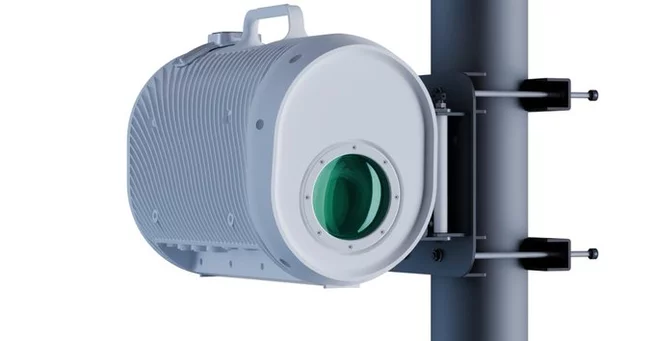
Tech companies and urban planners are asking how to achieve high-speed city-wide internet without the slow rollout of fiber. Taara Beam, spun out of Alphabet’s moonshot lab, offers a solution: delivering up to 25Gbps connectivity through invisible beams of light. Unlike traditional fiber or satellite options, this line-of-sight technology can be deployed in hours, making it a powerful choice for enterprises and telcos needing reliable “middle-mile” infrastructure.
Taara Beam is a compact, shoebox-sized device weighing just 8kg (under 20 pounds) and consuming roughly 90W. While Taara Lightbridge — its predecessor — focused on bridging communities across rivers and mountains up to 20km away, Beam is designed for urban environments. Mounted on street poles or rooftops, it connects city intersections up to 10km apart. The result is fiber-like speed without the need for trenching cables or securing radio spectrum.
Its ultra-low latency of under 100 microseconds sets it apart from space-based solutions like Starlink, making it ideal for applications where every millisecond counts. This combination of speed and quick deployment positions Taara Beam as a potential game-changer in city network infrastructure.
Unlike consumer-focused networks, Taara Beam is tailored for enterprises and telecom providers. One prominent use case involves offloading massive lidar and sensor datasets from electric vehicles such as delivery vans and robotaxis while they charge. Another is creating high-speed mesh networks linking city intersections to support low-latency Vehicle-to-Everything (V2X) communications.
Taara’s Lightbridge technology has already been adopted by T-Mobile and Airtel across more than 20 countries. Early interest in Beam suggests cities and network providers are eager to leverage light-based connectivity to handle increasingly data-intensive operations.
One of Taara Beam’s most compelling advantages is its deployment speed. Traditional fiber installation can take months or even years due to regulatory approvals and trenching. Beam can be mounted in hours, offering a practical solution for cities seeking quick connectivity upgrades. Its compact design allows flexibility in urban environments, including rooftops, street poles, and other existing structures, without heavy infrastructure work.
This ease of deployment, combined with high throughput and low latency, enables businesses and city planners to scale networks efficiently while reducing costs and minimizing disruptions.
Taara Beam is set to showcase its capabilities at Mobile World Congress (MWC) 2026 in Barcelona next week. Attendees can see first-hand how light-based internet can transform urban connectivity, from enterprise networks to intelligent city infrastructure. Tech journalists and analysts will be watching closely to see whether Beam can establish itself as a reliable alternative to fiber and satellite-based solutions for city-scale deployments.
Taara Beam represents a bold step in the evolution of urban internet networks. By combining rapid deployment, ultra-high speed, and microsecond latency, it opens new possibilities for enterprises, telcos, and smart cities seeking efficient, scalable connectivity. The shift toward light-based, city-wide networks could redefine how data flows through urban landscapes — one invisible beam at a time.










Comment