Alerts

-
5 minutes, 27 seconds
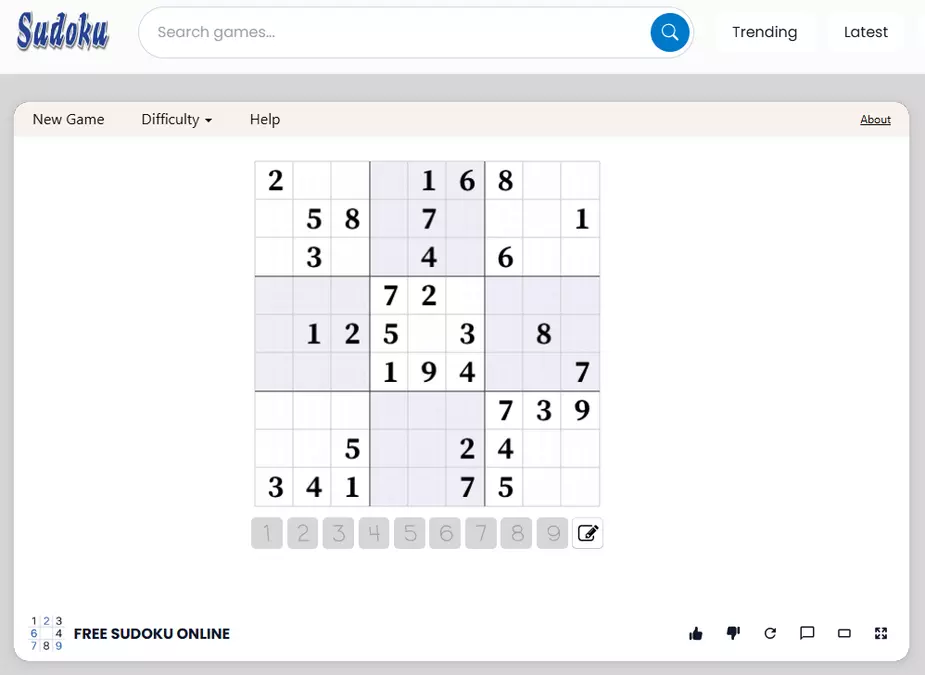
Sudoku is one of the most popular logic-based puzzle games in the world. Millions of people enjoy Sudoku every day because it combines entertainment, concentration, and problem-solving skills. Unlike many traditional puzzle games, Sudoku does not require advanced mathematics. Success depends on logical thinking, observation, and patience.
A standard Sudoku puzzle consists of a 9x9 grid divided into nine smaller 3x3 sections. The goal is simple: fill every empty cell with a number from 1 to 9. Each row, each column, and each 3x3 section must contain all numbers from 1 to 9 without repetition.
The straightforward rules make Sudoku accessible for beginners, while advanced puzzles provide a serious challenge for experienced players. This balance between simplicity and complexity has helped Sudoku remain popular across different age groups and cultures.
The roots of Sudoku can be traced back to number-placement puzzles developed many decades ago. Variations of logical number grids appeared in puzzle magazines long before the modern version became famous.
Mathematical puzzle enthusiasts enjoyed these early concepts because they encouraged deductive reasoning rather than calculation. Over time, puzzle creators refined the format into a more structured and engaging challenge.
The modern name Sudoku originated in Japan. The term means that numbers must remain single within a designated area. Japanese puzzle publishers recognized the appeal of the format and introduced it to a wider audience.
As newspapers and magazines began publishing Sudoku regularly, popularity expanded rapidly. The arrival of digital platforms accelerated this growth even further. Today, Sudoku can be found in mobile applications, websites, books, newspapers, and educational resources around the globe.
The objective of Sudoku is to complete the grid correctly by following three essential rules:
Each row must contain numbers from 1 to 9.
Each column must contain numbers from 1 to 9.
Each 3x3 section must contain numbers from 1 to 9.
No number can appear twice within the same row, column, or section.
Although the rules are simple, solving a puzzle often requires careful analysis and strategic thinking.
Most Sudoku puzzles begin with several numbers already placed in the grid. These numbers act as clues. Players use these clues to determine the correct placement of remaining numbers.
A common beginner strategy involves scanning rows and columns to identify missing values. By comparing available spaces with existing numbers, players can gradually complete the puzzle without guessing.
Sudoku encourages analytical reasoning. Players must evaluate possibilities, eliminate incorrect choices, and identify patterns. These activities strengthen logical thinking skills that can be useful in many real-life situations.
Regular practice helps the brain process information more efficiently. Many people enjoy Sudoku because it provides mental stimulation without requiring specialized knowledge.
Completing a Sudoku puzzle demands focus. Players must pay attention to details and avoid overlooking important clues.
Frequent Sudoku sessions can help improve concentration over time. This increased focus may support productivity in academic, professional, and personal activities.
Sudoku often requires players to remember potential number placements while evaluating different sections of the grid.
This mental exercise can contribute to stronger short-term memory and better information retention. Many educators and puzzle enthusiasts recommend Sudoku as a practical cognitive workout.
Despite the intellectual challenge, Sudoku can also be relaxing. Solving a puzzle creates a sense of accomplishment and satisfaction.
Many people use Sudoku during breaks, travel, or quiet moments at home. The activity offers a productive alternative to passive entertainment while remaining enjoyable and engaging.
Easy puzzles contain many starting clues and are ideal for beginners. These puzzles help new players understand basic solving techniques and build confidence.
Easy Sudoku often focuses on straightforward logical deductions rather than advanced strategies.
Medium puzzles introduce greater complexity. Players must analyze multiple possibilities and consider relationships between rows, columns, and sections more carefully.
This level serves as an excellent bridge between beginner and advanced gameplay.
Hard Sudoku presents fewer clues and requires deeper logical reasoning. Players may need to apply advanced techniques to identify correct placements.
Many experienced puzzle enthusiasts prefer hard Sudoku because of the greater intellectual challenge.
Expert puzzles represent the highest difficulty level. Solving these grids often demands extensive analysis, patience, and mastery of sophisticated solving methods.
Completing an expert Sudoku puzzle can be extremely rewarding for dedicated players.
One of the most useful techniques involves locating missing numbers within rows, columns, and sections.
By systematically reviewing the grid, players can often discover obvious placements and gradually reduce uncertainty.
Elimination is a core Sudoku strategy. When a number cannot fit in certain cells due to existing values, those cells can be excluded from consideration.
This process narrows available options and reveals correct answers more efficiently.
Many successful players solve Sudoku one section at a time. Concentrating on a single 3x3 area makes it easier to identify patterns and missing values.
After completing one section, players can use newly placed numbers to solve adjacent areas.
Rushing often leads to mistakes. A careful, systematic approach produces better results.
Experienced players understand that steady progress is more effective than random guessing. Logical deduction remains the foundation of successful Sudoku solving.
Technology has transformed the way people enjoy Sudoku. Mobile applications and online platforms provide instant access to thousands of puzzles across different difficulty levels.
Many digital Sudoku games include helpful features such as hints, progress tracking, and automatic error detection. These tools make learning easier while maintaining the core challenge of the puzzle.
Online communities also allow enthusiasts to share strategies, compete with others, and explore creative Sudoku variations. As a result, Sudoku continues to attract new generations of players.
Sudoku has achieved lasting popularity because it offers a unique combination of simplicity, challenge, and intellectual reward. The rules are easy to learn, yet the solving process can remain engaging for years.
Whether played in a newspaper, a puzzle book, or a digital application, Sudoku provides valuable mental exercise and enjoyable entertainment. Players can improve concentration, strengthen logical reasoning, and experience the satisfaction of solving increasingly complex puzzles.
For anyone seeking a fun and meaningful way to exercise the mind, Sudoku remains one of the best puzzle choices available today.



Comment