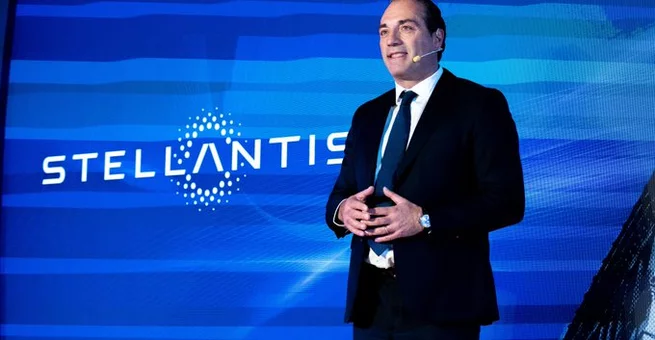
The Stellantis crisis is dominating auto headlines after the company reported a staggering $26.5 billion write-down tied to its electric vehicle push. The parent company behind brands like Jeep and Dodge is now facing serious financial, quality, and strategic challenges. While slowing EV demand is hurting the entire industry, Stellantis appears uniquely exposed due to years of missed innovation, warranty costs, and shifting market bets. Analysts say the latest losses highlight deeper issues beyond electrification.
The most immediate trigger for the Stellantis crisis is its massive financial charge related to electric vehicle investments. The write-down erased roughly a quarter of the company’s market value almost overnight, rattling investors and raising questions about its long-term EV strategy. While Stellantis hasn’t disclosed how much of the charge directly stems from EV losses, the scale alone signals a major miscalculation.
Other automakers have taken hits as well. General Motors and Ford have written off billions amid cooling EV demand. Yet Stellantis stands out for the size of its losses, suggesting deeper structural weaknesses. Analysts increasingly see the company as the most vulnerable among legacy automakers navigating the EV transition.
The Stellantis crisis cannot be viewed in isolation. Electric vehicle demand has cooled globally, with high interest rates, infrastructure concerns, and political shifts slowing adoption. Automakers that invested aggressively during the EV boom are now reassessing timelines and spending priorities.
Still, Stellantis appears particularly exposed because of how heavily it leaned into electrification without fully modernizing its product lineup. Unlike rivals that diversified investments across software, hybrids, and manufacturing innovation, Stellantis has struggled to keep pace with evolving consumer expectations. This mismatch is now becoming painfully visible in its balance sheet.
Beyond EV losses, quality concerns are amplifying the Stellantis crisis. The company booked an additional $16.7 billion charge tied to warranties and recalls, underscoring persistent reliability issues. One of the most notable examples involved a recall of more than 300,000 Jeep plug-in hybrids due to battery fire risks.
These problems highlight long-running concerns about product quality across brands like Jeep, Dodge, and Chrysler. For a company already navigating an expensive EV transition, mounting recall costs represent a dangerous double blow. Consumers are becoming more cautious, and reliability issues could further weaken demand at a critical moment.
The Stellantis crisis also reflects deeper historical patterns. The company has undergone multiple transformations over decades, from Chrysler to Fiat Chrysler and eventually Stellantis. Despite these reinventions, critics argue the core challenges remain the same: reactive decision-making and inconsistent innovation.
Industry observers often describe Stellantis as a company chasing short-term wins rather than long-term technological leadership. While competitors invested heavily in software ecosystems and next-generation platforms, Stellantis leaned on legacy strengths. That strategy worked for years but is now colliding with a rapidly changing automotive landscape.
In a twist that underscores the Stellantis crisis, the automaker is leaning back into internal combustion engines. Reports indicate plans to triple production of Hemi V8 engines in 2026 to meet ongoing demand for trucks and SUVs. Models like Ram pickups and Jeep off-roaders still attract loyal buyers who prefer traditional powertrains.
This move may provide short-term revenue relief, but it raises strategic questions. Doubling down on combustion engines could slow the company’s long-term transition and create regulatory risks in markets pushing for electrification. It also signals uncertainty about how quickly Stellantis can recover from its EV setbacks.
Company leadership is framing the crisis as a moment to adapt rather than retreat. CEO Antonio Filosa has emphasized flexibility, arguing that evolving policies could reshape the industry’s path. He has pointed to regulatory shifts and political dynamics as reasons to maintain a mix of electric and gasoline vehicles.
Comments referencing policy changes tied to Donald Trump suggest Stellantis is watching geopolitical developments closely. Automakers are increasingly factoring politics into strategy, especially as tariffs, subsidies, and emissions rules fluctuate globally. For Stellantis, adaptability may be key to survival.
The Stellantis crisis could reshape how legacy automakers approach electrification. Investors are likely to demand more disciplined spending, clearer roadmaps, and realistic timelines for EV profitability. The era of unchecked electrification budgets may be giving way to a more cautious phase.
For consumers, the impact may be mixed. Slower EV rollouts could delay new models and technological advances, but it may also push automakers to improve quality and reliability. If Stellantis learns from its missteps, the crisis could ultimately result in stronger products and smarter strategies.
Whether the Stellantis crisis becomes a temporary setback or a defining turning point remains unclear. The company still owns powerful global brands and maintains strong positions in trucks and SUVs. However, the convergence of EV losses, quality concerns, and shifting market demand presents a serious test.
Recovery will likely depend on rebuilding trust with investors and customers while crafting a more balanced strategy. If Stellantis can stabilize quality, refine its electrification plans, and adapt to changing demand, it may yet regain momentum. For now, the crisis stands as a stark reminder that even industry giants can stumble during times of technological upheaval.
Stellantis Crisis Deepens as EV Gamble Backfi... 0 0 0 2 2
2 photos





Array