Alerts

-
3 minutes, 30 seconds
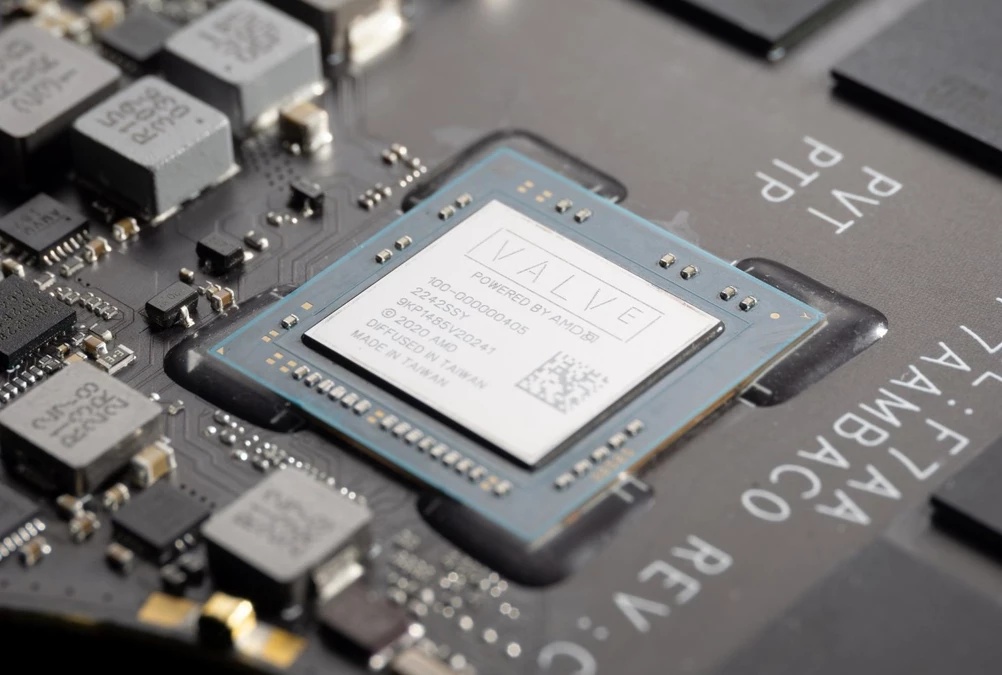
AMD's Gainsborough chip has surfaced in leaks as a potential processor for a future Steam Deck 2. According to reporting from Notebookcheck, the APU is said to feature RDNA 5 graphics and a 45 W TDP. Those two details alone make Gainsborough a notable entry in the conversation about Valve's next handheld.
The 45 W figure stands out because it is far higher than the power envelope of the original Steam Deck's APU. A chip drawing that much power would need serious thermal management and would place very different demands on battery life than the current model. The RDNA 5 graphics architecture, meanwhile, points to a generational leap over the RDNA 2 hardware inside the existing Steam Deck.
It is worth stressing how thin the information currently is. Gainsborough has not been confirmed by AMD or Valve, and the leaks do not establish a release window, a price, or a clock speed. For now, the chip is best understood as a rumoured candidate rather than an announced component, and every claim about it should be treated with caution until official details appear.
Gainsborough's appeal to Valve starts with its positioning. As an entry-level Zen 6 APU, it targets exactly the kind of low-power, cost-sensitive device the Steam Deck represents, rather than the premium handhelds that demand more expensive silicon. Valve has never chased raw performance at any cost; it has chased the right balance of efficiency, price, and battery life.
Two details make Gainsborough stand out. First, it is built on TSMC's N2P process, which should deliver meaningful gains in efficiency over the node used in the current Steam Deck. Second, it reportedly uses LPDDR6 memory, a generational jump that could lift bandwidth without inflating the bill of materials.
There is also the timing. A chip like Gainsborough, arriving in the window Valve has hinted at for a successor, fits neatly into the company's usual cadence of waiting for a mature, affordable platform before committing. For a handheld that lives or dies on battery life and price, that combination is precisely what Valve has been waiting for.
Despite the appeal of the Gainsborough name, there are good reasons to doubt it will power Steam Deck 2. For one, the Steam Deck 2 is still years away. Valve has said it wants a genuine leap in performance before committing to new hardware, and any chip available today may simply be too early to define that leap.
Gainsborough also appears tied to AMD's broader low-power roadmap, not to a specific Valve design. A chip built for a range of handhelds and embedded devices is unlikely to be tailored to the Steam Deck's exact balance of battery life, thermals and price.
There is also the question of timing. If Gainsborough ships well before Valve is ready, AMD will have moved on to newer silicon by the time Steam Deck 2 arrives. Valve has a history of choosing custom or semi-custom parts rather than off-the-shelf options, which further weakens the case.
Until Valve or AMD confirms anything, treat the Gainsborough claim as speculation, not fact.
If AMD Gainsborough is indeed destined for Valve's next handheld, it would mark a clear shift in how the company approaches the Steam Deck 2. Rather than chasing raw performance at any cost, Valve would be prioritising efficiency, battery life, and a balanced experience — the same philosophy that made the original Deck so appealing. A custom, semi-custom, or Z2-series-derived chip would let Valve tune the silicon around its own thermal and power targets instead of adapting an off-the-shelf part.
For buyers, the practical takeaway is patience. Gainsborough is still unannounced, so any Steam Deck 2 timeline built around it remains speculative. Valve has historically moved slowly, waiting for component pricing and supply to mature before committing to a launch.
What seems safe to assume:
Until Valve confirms anything, Gainsborough is best treated as a promising signal rather than a promise.










Comment