Starship Debris Sparks New Aviation Safety Concerns
Starship debris from a failed SpaceX test flight came dangerously close to commercial airplanes, raising serious questions about aviation safety and disclosure. Newly uncovered Federal Aviation Administration documents reveal that falling rocket fragments posed an “extreme safety risk” to multiple passenger flights earlier this year. The incident occurred during SpaceX’s seventh Starship test, which launched from Texas and broke apart over the Caribbean. According to reporting by The Wall Street Journal, the threat to airplanes was more severe than SpaceX initially acknowledged. Air traffic controllers were forced to make urgent decisions to protect hundreds of passengers. The revelation has intensified scrutiny of how rocket launches are coordinated with commercial air traffic. It also highlights the growing tension between rapid space innovation and public safety.
Starship Test Flight Failure Over the Caribbean
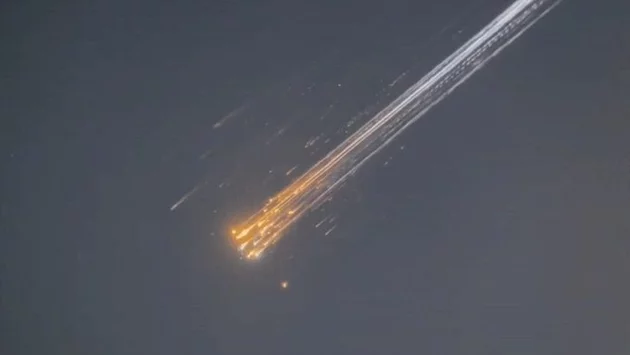
The Starship test flight launched on January 16 from SpaceX’s Starbase facility in Texas. Shortly after liftoff, Starship’s upper stage experienced an engine malfunction that triggered an early shutdown. The failure caused the spacecraft to disintegrate mid-flight, sending debris raining down over Turks and Caicos. Videos shared online showed fiery fragments streaking across the sky, alarming residents and travelers alike. While SpaceX described the incident as part of routine testing, the debris field extended far beyond initial expectations. The breakup occurred in a region frequently used by commercial airlines. This unexpected overlap set the stage for a high-risk aviation scenario.
FAA Documents Reveal “Extreme Safety Risk”
Internal FAA records paint a more troubling picture of the Starship debris incident. According to the documents, three commercial airplanes carrying approximately 450 passengers were placed at serious risk. Officials classified the situation as an “extreme safety risk,” a rare and severe designation. Air traffic controllers had only minutes to react as debris entered controlled airspace. The risk was not theoretical, as debris was actively falling near established flight paths. These findings contradict earlier public statements suggesting minimal danger. The FAA’s assessment underscores how close the situation came to becoming a major aviation disaster.
Passenger Flights Forced Into Dangerous Maneuvers
To avoid the falling Starship debris, air traffic controllers rerouted multiple passenger flights mid-air. One JetBlue flight heading to San Juan, Puerto Rico, was among those affected. Some planes were directed through a temporary debris avoidance zone to prevent fuel shortages caused by longer detours. In an especially alarming development, two aircraft were flown unusually close to one another. This created a secondary risk of mid-air collision while trying to escape the debris field. Controllers had to balance fuel limits, aircraft separation, and falling rocket fragments simultaneously. The episode highlights how thin the margin for error became during the crisis.
Why Starship Debris Was a Bigger Threat Than Expected
The danger posed by Starship debris stemmed from both its size and its unpredictable descent. Unlike smaller space debris that burns up quickly, fragments from Starship were large enough to survive reentry. The test flight’s failure also occurred later than anticipated, shifting the debris zone into active airspace. Commercial airlines rely on precise launch timing and debris forecasts to plan safe routes. When those forecasts change suddenly, pilots and controllers have limited options. The FAA documents suggest the debris zone expanded faster than expected. This miscalculation magnified the risk to civilian aircraft.
Growing Scrutiny of SpaceX and Commercial Spaceflight
The incident has renewed debate over how commercial space launches are regulated. SpaceX’s rapid testing schedule has been praised for accelerating innovation, but critics argue safety coordination must improve. Aviation experts warn that as launch frequency increases, so does the risk of airspace conflicts. The FAA now faces pressure to tighten oversight and transparency requirements. Lawmakers and industry observers are calling for clearer communication between space companies and aviation authorities. Public trust depends on ensuring passenger safety is never compromised. The Starship debris incident may become a turning point in how spaceflight and air travel coexist.
What This Means for the Future of Space and Air Travel
As space launches become more common, incidents like this could shape future policy. The close call involving Starship debris demonstrates the real-world consequences of launch failures. Airlines, regulators, and space companies must adapt to a more crowded sky. Improved real-time tracking, larger safety buffers, and stricter accountability may become standard. For passengers, the incident is a reminder that space exploration can have Earth-bound risks. Transparency will be key to maintaining confidence in both industries. The Starship episode shows that innovation must move forward without leaving safety behind.






Comment