Sony Ping-Pong Robot Stuns Top Players With AI Precision
The Sony ping-pong robot is drawing global attention after showcasing its ability to challenge and even outperform top-ranked table tennis players. Built with advanced artificial intelligence, ultra-fast vision systems, and precision robotics, the machine—called Ace—is more than a tech demo. It represents a major leap in sports robotics, AI motion control, and human-machine collaboration. For anyone wondering how good AI robots have become or whether robots can compete in elite sports, this breakthrough offers a clear answer.
Sony Ping-Pong Robot Pushes Sports AI to New Heights
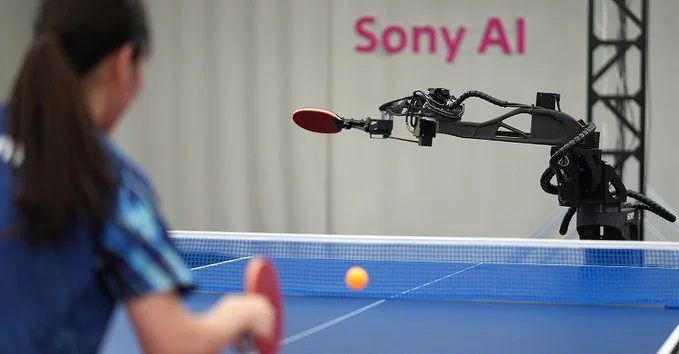
Sony’s elite ping-pong robot is redefining what artificial intelligence can achieve in fast-paced physical competition. Unlike traditional robots programmed for repetitive industrial tasks, Ace reacts in real time, reading spins, predicting trajectories, and responding with remarkable speed.
At the heart of the robot’s performance is a sophisticated system powered by 12 high-speed cameras. These cameras continuously track the ball, opponent movement, and court position, feeding live data into AI models that calculate the next shot in milliseconds. That allows the Sony ping-pong robot to return powerful smashes, deceptive spins, and rapid volleys once thought too complex for machines.
Observers have been especially impressed by the robot’s consistency. While human players can fatigue under pressure, the AI-powered system maintains precision throughout long rallies, creating an entirely different kind of opponent.
How the Sony Ping-Pong Robot Beats Elite Players
What makes Ace stand out is not brute force, but intelligent adaptation. The robot doesn’t just return balls—it learns. During matches, it analyzes player tendencies and adjusts strategy, much like a seasoned competitor studying an opponent.
Its articulated robotic arm mimics advanced human movement, delivering forehands, backhands, and spin-heavy returns with startling accuracy. Combined with machine vision and predictive AI, the Sony ping-pong robot can anticipate shots before the ball even crosses the table.
That predictive capability is where many see the true breakthrough. Rather than simply reacting, the robot appears to “read the game,” something once reserved for elite human athletes.
Why This AI Robot Matters Beyond Table Tennis
The excitement around Sony’s ping-pong robot goes far beyond sports entertainment. Many experts see it as a glimpse into broader robotics innovation that could impact healthcare, manufacturing, and human training systems.
High-speed motion tracking, precision response, and adaptive AI could eventually support rehabilitation devices, collaborative industrial robots, or intelligent assistants working safely alongside people. What happens on a ping-pong table may influence technologies far outside sports.
There is also growing interest in how robots like Ace could help train athletes. Instead of replacing human coaches, advanced systems could become tireless practice partners, simulating countless playing styles and helping professionals sharpen technique.
Sony Ping-Pong Robot Shows Human and AI Collaboration
One of the most intriguing aspects of Ace is that it highlights collaboration as much as competition. Sony has positioned the project not simply as a robot designed to beat people, but as an experiment in how humans and machines can push each other further.
Watching top-ranked players rally against the machine reveals a fascinating dynamic. Athletes adapt to the robot’s precision while the AI responds to human creativity. That exchange makes the demonstration feel less like man versus machine and more like a preview of future teamwork.
It also shifts the conversation around AI. Instead of focusing solely on automation replacing people, projects like the Sony ping-pong robot show how intelligent systems can elevate human performance.
What the Sony Ping-Pong Robot Signals for the Future
The rise of the Sony ping-pong robot signals a broader moment for embodied AI—artificial intelligence that doesn’t just think, but acts in the physical world. That is where many believe the next wave of innovation is heading.
From elite sports to real-world robotics, Ace offers a striking glimpse of what’s coming. A machine capable of competing with top table tennis players was once science fiction. Now it’s rallying at championship speed.
And that may be what makes this story so captivating. It isn’t just about a robot winning points. It’s about watching the future serve first.










Comment