
Alerts
-
4 minutes, 49 seconds
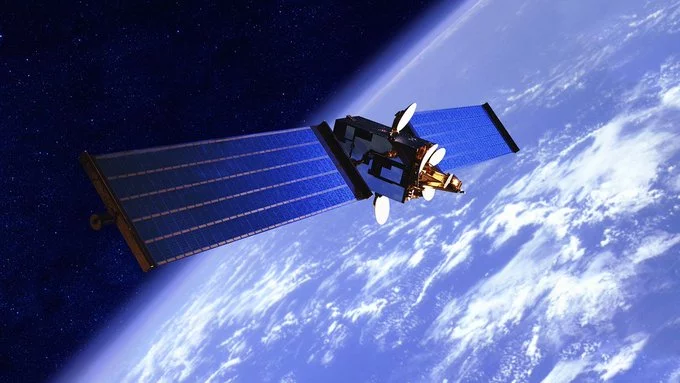
You may not think about it, but Earth is under a constant bombardment of solar radiation shooting through space. This radiation is a stream of charged particles and electromagnetic energy emitted by the Sun, traveling millions of miles to reach our planet. While our planet's magnetic field does an excellent job of blocking it, sometimes concentrated bursts of radiation known as solar flares are strong enough to interfere with our ground infrastructure via secondary magnetic field ripples. A solar flare is a sudden, intense release of energy from the Sun's surface, often associated with sunspots. The magnetic field ripples they create can induce currents in long conductors on Earth, such as power lines and pipelines, potentially causing operational issues. This protective magnetic field, called the magnetosphere, acts as our first line of defense, but extreme events can overwhelm its shielding capacity.
Writing in Geophysical Research Letters, researchers from the US have documented the damage done by a solar 'superstorm' that erupted from the Sun on November 11, 2025. This peer-reviewed journal is a prominent publication for research on the physics of the Earth and its environment in space. This event hit the maximum level on the scale used to measure these storms, causing an unprecedented level of disruption in Earth's upper atmosphere, specifically the ionosphere. The scale in question is the geomagnetic storm index, which ranges from G1 (minor) to G5 (extreme); reaching the maximum level means this was a G5-class event. The ionosphere is a layer of the atmosphere filled with charged particles, and it plays a critical role in reflecting radio waves and enabling long-distance communication. According to the researchers, the storm's effects were also unusually widespread, stretching coast to coast across the US for hours. This meant that the entire continental United States, from the Atlantic to the Pacific, experienced the storm's influence simultaneously. This extreme solar activity had tangible consequences on the ground, as it threw GPS positioning systems off by as much as 10 meters (33 feet) in some areas and interrupted satellite communications. A 10-meter error is not a minor discrepancy; for any application requiring precise location data, it is a massive deviation. The severity of this event underscores the potential for significant technological vulnerability during peak solar activity, which follows an approximately 11-year cycle of highs and lows.
The storm's effects were unusually widespread, the researchers report, stretching coast to coast across the US for hours. This geographic breadth meant that disruptions were not isolated to a single region but impacted infrastructure from one side of the country to the other over an extended period. The duration of the event, lasting for hours, compounded the problem, as systems could not quickly recover or reroute around the affected signals. During this time, the storm's impact on the ionosphere caused significant technological interference. When solar particles disturb the ionosphere, they alter its density and composition, which in turn distorts the radio signals that pass through it. It threw GPS positioning systems off by as much as 10 meters (33 feet) in some areas, a substantial margin of error for navigation and location-based services. For a standard car navigation system, an error of this size could place a vehicle on the wrong road or instruct a driver to make an incorrect turn. Furthermore, the event interrupted satellite communications, affecting the transmission of data and signals.
This disruption can impact everything from television broadcasting to internet connectivity and military communications. The combination of these factors highlights how a major solar event can disrupt the foundational technologies that modern systems rely on, creating cascading challenges for users across various sectors. The duration and scale of the disruption underscored the storm's strength and its potential to affect daily operations nationwide. This serves as a reminder that our modern technological infrastructure, while advanced, is still susceptible to natural phenomena from space.
The GPS disruption documented in the study was not merely an inconvenience for navigation apps. According to the researchers, the glitch was serious enough to crash self-driving cars. These vehicles rely on highly precise positioning data to operate safely, and the storm’s effects threw GPS systems off by as much as 10 meters (33 feet) in some areas. Autonomous vehicles use a combination of sensors, cameras, and GPS to determine their location, but GPS provides the foundational coordinate system that ties everything together. Such a significant margin of error is dangerous for autonomous systems that need to know their exact location within centimeters to navigate lanes, avoid obstacles, and follow traffic rules. A discrepancy of 10 meters could mean the difference between staying in a lane and drifting into oncoming traffic.
When the GPS signal became unreliable, the self-driving cars’ core navigation logic could not function correctly, leading to system failures and crashes. This incident highlights a critical vulnerability: autonomous vehicles depend heavily on a technology that can be disrupted by space weather. The findings from this study are essential for developers and manufacturers of autonomous driving systems. While the storm on November 11, 2025, was an extreme event, the findings underscore the need for more robust backup systems in self-driving technology to handle such widespread GPS glitches. This might include inertial navigation systems, which measure motion and rotation, or more sophisticated ground-based reference systems that are not affected by ionospheric disturbances. For readers interested in the future of transportation, this research signals that as we move toward greater automation, we must also consider how to make these systems resilient to environmental factors beyond our control. The next step is for engineers to prioritize redundancy in navigation, and for regulators to consider these risks when setting safety standards for autonomous vehicles.










Comment