Alerts

-
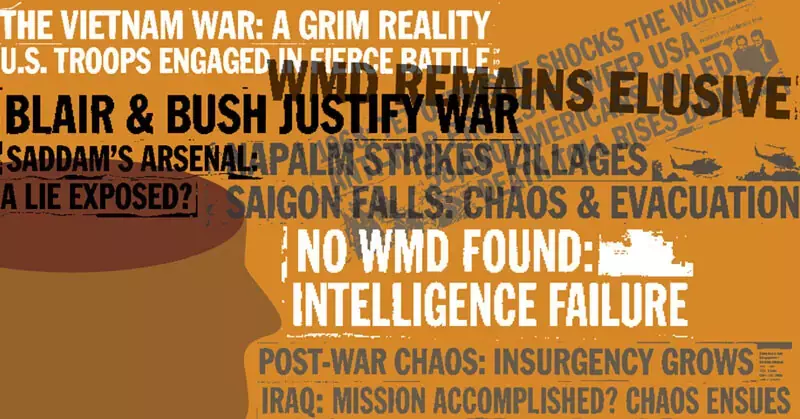
Illustration by Abro Last week, reports emerged that an Israeli plumber had thwarted an alleged attempt by the co-pilot of a FlyDubai flight from Dubai to Tel Aviv to hijack/crash the aircraft. Interestingly, as further details were made public, social media platforms were flooded with thousands of posts alleging that the incident was a false flag operation orchestrated by the far-right Israeli government and its allied countries’ intelligence agencies. I will not delve into the numerous anomalies highlighted by sceptics, including those raised by active pilots and aviation experts. Instead, this piece focuses on how false flag tactics have begun to backfire. Over the years, significant evidence has emerged demonstrating that staged pretexts have increasingly transitioned from clandestine exceptions to routine instruments of statecraft. Countries using such tactics rely on certain psychological mechanisms that help set up false flag operations. For example, long before a staged provocation takes place, its success is often guaranteed by the cultural and news narratives that precede it. In many countries, movies, television shows and news broadcasts have conditioned audiences to view specific societies through a narrow, negative lens. By repeatedly depicting these populations through recurring tropes of hostility or violence, mainstream media embeds particular perceptions in the public consciousness. Governments have often used media conditioning and false flag operations to make the public more amenable to their agendas. In an age of information warfare, however, scepticism about official narratives is increasing. And scepticism can be a double-edged sword… In their work Manufacturing Consent, media scholars Edward Herman and Noam Chomsky conceptualised this process through their “propaganda model”, demonstrating how mass media functions as an ideological filter, designed to align public perception with official state policy objectives. Rather than presenting objective facts, modern entertainment and news ecosystems construct artificial frames that prompt ordinary citizens to support aggressive foreign policy agendas. When cultural caricatures of ‘enemy’ societies are continuously reinforced, they generate the precise environment required for staged pretexts and/or false flag operations. If a government or intelligence apparatus seeks to fabricate a pretext for military action, global observers rarely question the official narrative, because the alleged culprit matches the villain archetype they have been conditioned to accept by the media. Back in 1922, the American journalist and author Walter Lippmann observed that people construct their worldviews based on simplified “pictures in their heads” created by media narratives, rendering ‘enemy’ populations vulnerable to instant condemnation whenever a security crisis is reported. This dynamic is illustrated across several geopolitical events. During the run-up to the 2003 invasion of Iraq, Western news outlets and Hollywood routinely depicted Middle Eastern figures through tropes of inherent fanaticism and anti-Western hostility, a phenomenon critically analysed by Edward Said in Orientalism, which showed how cultural production systematically portrays non-Western societies as dangerous. When US and British leaders falsely asserted that Iraq possessed weapons of mass destruction (WMD), large segments of the public accepted the premise without demanding any serious empirical evidence. The claim naturally aligned with a pre-existing media script. The American media historian Nancy Snow wrote that, across the Cold War, American entertainment and news outlets constantly framed the Soviet Union as a dark, deceitful empire, capable of any atrocity. This persistent framing meant that US covert intelligence operations and exaggerated threats of Soviet terror were accepted almost instantly by a public already conditioned to expect malevolent behaviour from the Soviet regime. However, sometimes, when this tactic is overtly used, the user country can get trapped in its own strategy. For example, the enemy country’s culture may indeed be successfully demonised by propaganda but, eventually, the user country can also start to become widely perceived as a constant engineer of false flag operations. As British media scholar Andrew Hoskins highlights in his research on digital media and conflict, modern hyper-connectivity has fundamentally transformed how the public consumes news during a security crisis. In an era where audiences are routinely exposed to sensationalised reporting, institutional trust has begun to break down. Instead of taking official explanations at face value, global audiences now immediately scrutinise government narratives, moving towards scepticism. This scepticism serves as a vital psychological defence mechanism in an era dominated by ‘information warfare.’ American political scientist Lance Bennett argues that a questioning public is critical for holding power accountable when state actors and media institutions leverage a crisis to manufacture political consent. Questioning official narratives allows citizens to filter out manufactured outrage and demand empirical proof. Indeed, but scepticism can also become a knee-jerk and intellectually lazy exhibition of cynical reflexivity. According to American legal scholar Cass Sunstein, reflexivity that rejects all official accounts can lead to paranoia, where real crises are dismissed as elaborate fabrications. When every high-profile event is instantly dismissed as fake, one crosses into cynicism. Media scholar Renee Hobbs warns that this form of cynicism creates a new cognitive trap. Rather than demanding evidence, individuals simply invert the official narrative to fit their own pre-existing biases. In doing so, the public risks becoming just as easily manipulated by online counter-narratives as they are by official state propaganda. What is truly needed is scepticism that is grounded in deliberate critical thinking. And the good news is that, even amid fierce information wars and state propaganda designed to set the stage for false flag events and despite the knee-jerk reactions that inevitably follow, informed scepticism remains alive. During the 1964 Gulf of Tonkin incident in the Vietnam War, initial claims by the US government of unprovoked North Vietnamese attacks on American warships were challenged by journalists and naval analysts. Declassified documents later confirmed the attacks were largely fabricated, proving that the US had used them as a pretext for escalating the Vietnam War. Prior to the 1990 Gulf War, testimony claimed Iraqi soldiers were removing Kuwaiti babies from hospital incubators. Sceptical journalists investigated the story and exposed it as a manufactured campaign by the PR firm Hill & Knowlton. In the run-up to the 2003 invasion of Iraq, UN weapons inspectors Hans Blix and Scott Ritter, along with reporter Seymour Hersh, challenged intelligence claims about yellowcake uranium and mobile bio-labs in Saddam Hussain’s Iraq. Their demand for physical, forensic proof exposed the flawed WMD narrative woven by the US and UK governments. The manner in which a country’s narrative machinery demonises an adversary to set the stage for false flags has become too predictable a tactic to ignore. Recently, Israel and India have landed in this situation. The frequent reliance on demonising narratives, paired with a global public that increasingly demands empirical proof, has repeatedly forced both countries to present ‘evidence’ that many independent observers find deeply unconvincing. When official explanations fall short under critical scrutiny, it fuels scepticism and solidifies the belief that state propaganda is being actively deployed to justify not-very-pleasant strategic objectives. Published in Dawn, EOS, October 11th, 2026









Comment