Alerts

-
7 minutes, 33 seconds
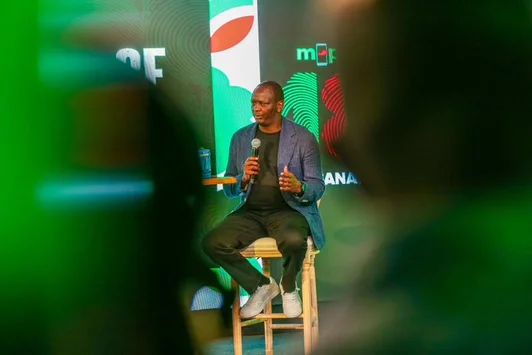
Sitoyo Lopokoiyit is set to take over Absa’s private and personal banking business across Africa on April 1, 2026. The move answers a key question many industry watchers are asking: why would a leading fintech executive transition into traditional banking now? The short answer lies in timing. African retail banking is at a crossroads—reshaped by regulation, digital competition, and rapidly evolving customer expectations. Lopokoiyit’s appointment signals that Absa is preparing for a more tech-driven, customer-first future.
His entry into Absa is not just another executive shuffle. It represents a strategic bet on digital expertise at a time when banks must compete with agile fintech platforms while maintaining regulatory trust and financial stability.
Sitoyo Lopokoiyit arrives from M-Pesa Africa, where he served as chief executive officer. Before that, he held the role of chief financial officer at Safaricom, helping guide the commercial strategy of one of Africa’s most influential mobile money platforms. Over the past decade, his career has been closely linked to the rise of digital finance, particularly in Kenya, where mobile money evolved into a backbone of everyday commerce.
Under his leadership, digital payment ecosystems scaled across borders, processing billions in mobile transactions annually. That experience matters. Retail banking across Africa is no longer defined by physical branches alone. It is increasingly shaped by mobile apps, data analytics, and seamless financial services integrated into daily life.
Lopokoiyit understands what drives digital adoption: simplicity, trust, accessibility, and speed. Those pillars will likely shape his approach at Absa.
Absa’s private and personal banking division is more than just another business unit. It is central to the group’s growth ambitions across multiple African markets. The division serves affluent customers and mass retail clients while overseeing deposits, lending, insurance cross-selling, and investment products.
This is where revenue margins are protected and long-term relationships are built. It is also where competitive pressure is most intense. Digital lenders, mobile money platforms, and fintech startups continue to chip away at traditional banking advantages.
By appointing Lopokoiyit, Absa appears to be reinforcing its retail banking strategy with leadership that understands both digital ecosystems and large-scale financial operations. The decision reflects a recognition that future retail growth depends on blending legacy banking strength with fintech agility.
Retail banking across Africa is entering a period shaped by stricter regulation and sharper digital competition. Regulators are demanding stronger consumer protection, tighter compliance standards, and greater transparency. At the same time, customers expect instant services, low fees, and mobile-first solutions.
This dual pressure is redefining what success looks like. Banks must balance innovation with risk management. They must offer competitive digital products without compromising governance and capital requirements.
Lopokoiyit’s background uniquely positions him to navigate that balance. His fintech experience provides insight into scaling technology platforms. His financial leadership experience equips him to manage regulatory and capital realities within a complex banking group.
Customer behavior has shifted dramatically over the past decade. Younger consumers increasingly prefer mobile transactions over branch visits. Small businesses expect integrated payment, lending, and savings tools within a single digital interface. Affluent clients demand personalized financial planning supported by data-driven insights.
Retail banking is no longer transactional. It is experiential. Banks must anticipate needs rather than react to them.
Absa’s move suggests it is responding to these shifts proactively. Bringing in a leader from a mobile money powerhouse reflects an understanding that customer loyalty now hinges on convenience and digital reliability.
The appointment also highlights a broader industry trend: the blending of fintech and traditional banking leadership. Rather than viewing fintech as competition alone, established banks are increasingly integrating digital-native expertise into their executive teams.
This shift underscores a new reality. Retail banking success in 2026 and beyond will likely depend on partnerships, platform thinking, and data-driven personalization. The lines between telecom-led financial services and legacy banks continue to blur.
For Absa, appointing Sitoyo Lopokoiyit may signal a more aggressive push into digital retail transformation across its African footprint. For the broader industry, it reinforces the idea that leadership experience in mobile money and fintech is no longer optional—it is strategic.
When Lopokoiyit officially steps into the role in April 2026, he will inherit both opportunity and complexity. Absa’s retail ambitions are significant, but so are the challenges. Competition from digital lenders, economic volatility in certain markets, and evolving regulatory frameworks will test execution.
However, the alignment between his background and Absa’s current needs appears deliberate. His experience scaling digital platforms could accelerate product innovation. His understanding of consumer finance dynamics may strengthen cross-selling strategies and deepen customer engagement.
The move reads less like a routine appointment and more like a strategic pivot. At a decisive moment for African retail banking, Absa has chosen a leader whose career mirrors the sector’s digital transformation.
Whether this signals a new era of hybrid banking dominance remains to be seen. What is clear is that Sitoyo Lopokoiyit joins Absa at a time when retail banking is being redefined—and the stakes could not be higher.










Comment