
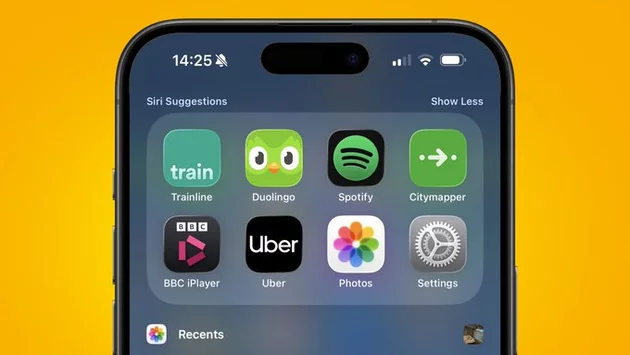
Siri Suggestions may not look flashy, but it answers a common question many iPhone users ask: does Apple actually do AI well? The short answer is yes, just not in the way rivals like Google and Samsung showcase it. Instead of headline-grabbing tools, Apple focuses on subtle machine learning that saves time. Siri Suggestions works behind the scenes to predict what you need before you ask. It has existed since iOS 9, long before Apple Intelligence entered the conversation. That history makes it easy to overlook. Yet for many users, it has become one of the most reliable AI features on the iPhone.
Apple has always preferred invisible intelligence over attention-seeking features, and Siri Suggestions reflects that mindset perfectly. The tool studies usage patterns, location, and time of day to surface relevant actions. It might suggest an app, a contact, or a document exactly when it feels natural. Unlike generative AI, there is no prompt or waiting period. Everything happens instantly and quietly in the background. This approach aligns with Apple’s privacy-first messaging. Most processing stays on-device, which limits data exposure. As a result, the feature feels less intrusive and more trustworthy.
Siri Suggestions appears in several places across iOS, often without users realizing it. It powers the app tray you see when swiping down to open Search. It also influences sharing suggestions, highlighting contacts you frequently message. In Mail, it can recognize dates, flights, and reservations and suggest calendar entries. On the Lock Screen, it may recommend apps based on location or routine. These small moments add up over time. Each suggestion reduces friction by removing extra taps. That efficiency is where Apple’s machine learning quietly shines.
The Search screen is where Siri Suggestions delivers its most impressive results. The app tray often predicts needs with surprising accuracy. After work hours, commuting apps tend to appear right on cue. Late at night, learning or fitness apps resurface when routines demand attention. Over the past year, this accuracy appears to have improved significantly. Many users report the right app appearing most of the time. That consistency builds trust in the system. It also reinforces how valuable predictive AI can be when executed well.
Siri Suggestions succeeds because it reduces cognitive load rather than adding complexity. Users do not need to think about commands or prompts. The phone adapts naturally to behavior and habits. This kind of AI encourages less screen time, not more engagement. It contrasts sharply with feature-heavy assistants that demand interaction. For productivity-focused users, this design feels refreshing. Every saved second compounds over weeks and months. That practical value explains why some users rely on it without even noticing.
Despite the strengths of Siri Suggestions, the broader Siri experience remains outdated. Voice interactions still struggle with context, follow-ups, and natural conversation. Competitors now offer real-time translation and advanced photo editing. Siri, by comparison, often feels rigid and limited. This gap makes the success of Siri Suggestions even more striking. It proves Apple has strong machine learning talent. The issue lies in how that intelligence is surfaced. A smarter backend deserves a more capable front-facing assistant.
For Apple, the challenge is no longer about capability but presentation. Siri Suggestions proves predictive AI works when thoughtfully designed. Apple now needs to extend that intelligence into voice interactions. A modern Siri should combine quiet predictions with conversational depth. Integration with Apple Intelligence could bridge that gap if executed well. Users expect assistants to understand intent, not just commands. Without a redesign, Siri risks falling further behind. The groundwork exists, but execution will decide the outcome.
Siri Suggestions may be underrated, but it represents Apple’s strongest AI argument today. It shows how machine learning can feel helpful rather than overwhelming. The feature demonstrates accuracy, restraint, and real-world usefulness. These qualities matter more than flashy demos in daily life. If Apple applies the same discipline to Siri itself, the assistant could finally evolve. Until then, Siri Suggestions remains a quiet reminder of what Apple gets right. Sometimes, the best AI is the one you barely notice.
Siri Suggestions Shows Apple’s Quiet AI Stren... 0 0 0 3 2
2 photos

𝗦𝗲𝗺𝗮𝘀𝗼𝗰𝗶𝗮𝗹 𝗶𝘀 𝘄𝗵𝗲𝗿𝗲 𝗽𝗲𝗼𝗽𝗹𝗲 𝗰𝗼𝗻𝗻𝗲𝗰𝘁, 𝗴𝗿𝗼𝘄, 𝗮𝗻𝗱 𝗳𝗶𝗻𝗱 𝗼𝗽𝗽𝗼𝗿𝘁𝘂𝗻𝗶𝘁𝗶𝗲𝘀.
From jobs and gigs to communities, events, and real conversations — we bring people and ideas together in one simple, meaningful space.




Comments