
Alerts
-
5 minutes, 8 seconds
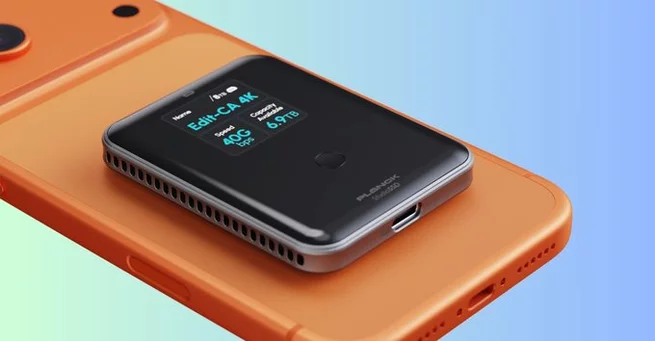
ShiftCam Planck Studio SSD is a new mobile storage solution designed for creators who need fast, reliable space on the go. Announced at CES 2026, the device answers common questions around portable SSD speed, capacity, and safety by combining up to 8TB of storage, USB4 performance, and built-in tracking. It attaches directly to the back of a phone using magnets, making it easier to manage large files while shooting or editing. ShiftCam positions it as a serious tool for production teams, not just casual users. Pricing, availability, and real-world use cases are already drawing attention. For mobile-first creators, this SSD aims to remove storage anxiety entirely.
Designed for phones, laptops, and cameras, the ShiftCam Planck Studio SSD focuses on speed and flexibility. The drive supports transfer speeds of up to 3,700MB/s, which is fast enough for high-bitrate video and large photo libraries. A USB-C port with full USB4 support ensures compatibility with modern devices across Apple and Android ecosystems. ShiftCam says this allows creators to move footage directly from a phone to a laptop without bottlenecks. The SSD is clearly built for professional workflows rather than simple backups. That emphasis helps it stand out in a crowded portable storage market.
Storage options and pricing place the Planck Studio SSD firmly in the premium category. ShiftCam is offering two versions at launch: a 4TB model priced at $399 and an 8TB model priced at $599. Both variants are expected to ship in early March. While the cost is higher than traditional portable SSDs, the company is betting that convenience and features justify the price. For creators who regularly shoot in ProRes or 4K formats, the extra capacity could quickly pay off. The pricing also signals ShiftCam’s focus on professional users.
A built-in display adds practical, at-a-glance information during transfers. The small screen shows the device name, current transfer speed, and remaining storage capacity. This eliminates guesswork when juggling multiple drives on set or during travel. Having visual confirmation directly on the SSD is a subtle but useful feature. It reinforces the idea that this product is designed for real-world production environments. Few mobile SSDs offer this level of immediate feedback.
Magnetic phone mounting makes the ShiftCam Planck Studio SSD easier to use and harder to misplace. The drive snaps onto the back of a phone much like a MagSafe battery pack or wireless charging brick. This design keeps the SSD physically connected during file transfers, reducing cable clutter and accidental drops. Similar solutions exist, but ShiftCam’s approach feels more integrated. The magnetic attachment also encourages creators to treat the SSD as part of their phone setup. That convenience could be a major selling point.
Tracking support through Apple and Google networks adds a layer of security rarely seen in SSDs. If the Planck Studio SSD is lost, users can locate it using Apple’s Find My or Google’s device finder network. This feature directly addresses a common fear among creators working in public spaces or while traveling. Losing a drive no longer means losing it forever. The inclusion of cross-platform tracking boosts trust and practical value. It also aligns well with modern expectations around smart accessories.
Overall, the ShiftCam Planck Studio SSD reflects a growing shift toward creator-first hardware. By blending high-speed storage, magnetic design, and built-in tracking, ShiftCam is clearly targeting professionals who rely on phones as primary production tools. The device is not cheap, but it offers a combination of features that few competitors match. For mobile filmmakers, photographers, and content teams, this SSD could simplify workflows significantly. CES 2026 has introduced many gadgets, but this one directly solves a real problem. That clarity of purpose may be its biggest strength.










Comment