
Alerts
-
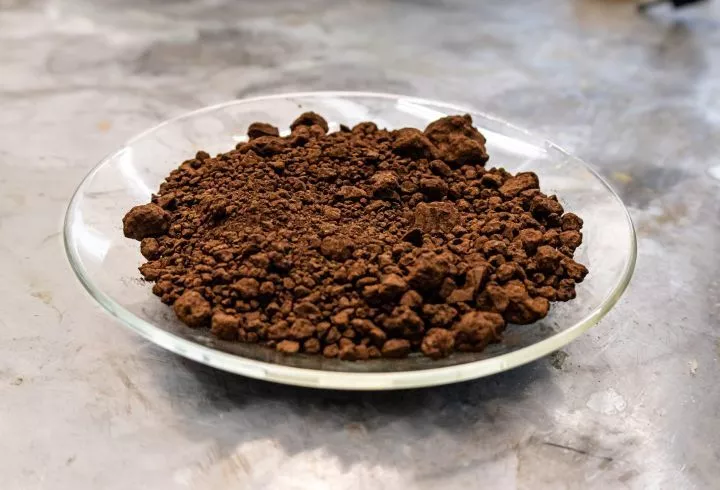
Over 3 billion tons of red mud — the caustic byproduct of aluminum refining — sit in open-air ponds worldwide. For most, it's an environmental liability. But for Sumedh Gostu, co-founder and CEO of Fast Metals, that red sludge is a goldmine of critical minerals.
"It is a very rich resource," Gostu told TechCrunch. "If you attack with the right chemistry, it can be very profitable."
Red mud gets its vivid vermillion color from rusted iron, the most abundant compound. But the waste also contains valuable titanium, aluminum, and rare-earth elements like scandium. Until now, separating those minerals from iron oxide has been too costly. Fast Metals claims to have cracked the code.
Gostu developed most of the extraction process during his doctoral studies at the Colorado School of Mines. But one puzzle piece remained — until a conversation with co-founder Anthony Staley revealed an unexpected solution: another waste stream from the same refineries.
"We were like, 'oh wait, there's a waste stream which can make the whole process very economical, and it's lying right there,'" Gostu said.
Fast Metals applies this secondary waste stream plus additional chemicals to red mud in six distinct stages. Each stage precipitates a different mineral, all of which can be sold.
"Iron pays for the OpEx, and the other stuff is profit," Gostu explained.
The profit potential is substantial:
Fast Metals recently closed a $4.3 million pre-seed round led by New Climate Ventures, with participation from Azolla Ventures, Astor Swiss, and Rio Tinto’s accelerator, Founders Factory.
The startup has signed a commercial contract with mineral processor Metalox to treat one ton of red mud and refinery waste per week, starting later this year. With the fresh capital, Fast Metals will scale its process and move toward commercialization.
This innovation could transform not only the economics of aluminum refining but also reduce the environmental burden of billions of tons of stored red mud — all while supplying critical minerals needed for clean energy and high-tech applications.










Comment