
Alerts
-
3 minutes, 24 seconds
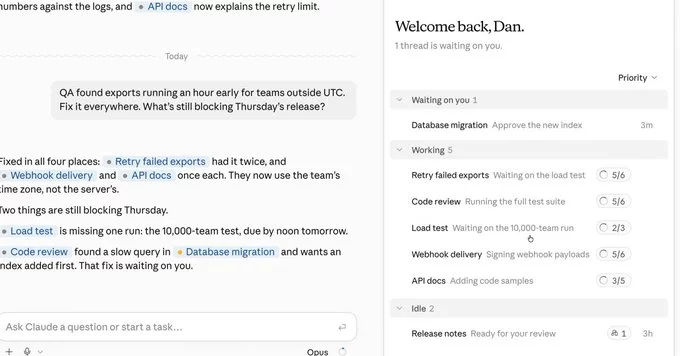
Claude Code projects are a way to run a team of Claude Code agents rather than a single assistant. Instead of one agent handling every task in a session, a project lets several agents work together under one organised structure.
The purpose is straightforward: users gain control over a team of Claude Code agents. That team can take on work that would be awkward for one agent to manage alone, because responsibilities can be spread across the agents in the project.
Key points about Claude Code projects include:
Because a project centres on a team, it also raises questions about how the agents relate to one another and how the user directs them. Those questions are covered in the sections that follow, which look at multiple agents in one team, coordination between agents, and user control over the team.
In a Claude Code project, the team is not a single agent. Instead, the team consists of multiple Claude Code agents working together. This changes how work is approached: rather than one agent handling every part of a task, several agents can be involved in the same project at once.
The structure matters because it affects how work is divided. Each agent is a distinct member of the team, and together they form the group that carries out the project's work. The project is therefore built around a team of agents, not around one agent acting alone.
Keeping this in mind helps clarify the sections that follow. Coordination between agents and the user's control over the team both depend on understanding that the team is made up of multiple Claude Code agents. A single agent is not the unit of work here; the team of agents is.
The agents in a Claude Code project do not work in isolation. Each one coordinates with the others, so the team functions as a single unit rather than a collection of separate tools.
That coordination matters because the agents divide up the work. One agent might handle a particular part of a task while another takes on a different part, and the project keeps them aligned as they go. You do not have to manually pass information from one agent to the next or reconcile their output yourself.
Because the agents coordinate with each other, the team can take on work that would be awkward to hand to a single agent. The project gives them a shared context and a shared goal, and they work toward it together.
For you, this means less time spent managing handoffs and more time spent on the work itself. You set the direction, and the agents sort out how to move forward as a group.
Claude Code projects don't hand the keys to the agents. The user stays in charge of the team, deciding which coordinating agents exist and what they're allowed to do. That control is the point: multiple agents working in parallel are only useful if someone can direct them, and in a Claude Code project that someone is you.
Because each coordinating agent operates under your direction, you can shape the team around the task at hand rather than accepting a fixed set of workers. You choose the agents, you set their roles, and you adjust the lineup as the work changes.
This keeps the project predictable. Instead of a swarm of agents acting on their own, you have a group you assembled and can reshape at any time. The coordination described earlier — agents passing work between each other — happens within boundaries you define, not outside them.
In short, the team is yours to command. Claude Code supplies the mechanism for multiple agents to collaborate; the user supplies the intent, the structure, and the final say over who is on the team.










Comment