
Alerts
-
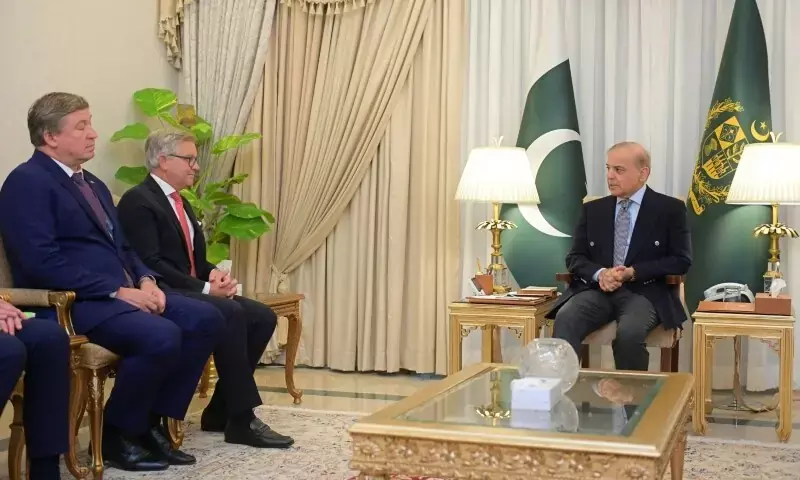
ISLAMABAD: European Union Commissioner for Internal Affairs and Migration Magnus Brunner called on Prime Minister Shehbaz Sharif on Tuesday to discuss strengthening Pakistan-EU cooperation in migration and mobility, one of the eight pillars of the Pakistan-EU Strategic Engagement Plan 2019. Welcoming Commissioner Brunner on his first visit to Pakistan, the prime minister underscored the importance Pakistan attaches to its partnership with the EU. He reaffirmed Pakistan’s commitment to further strengthening cooperation across all pillars of the Pakistan-EU Strategic Engagement Plan. The prime minister highlighted Pakistan’s sustained efforts to curb irregular migration and combat migrant smuggling and human trafficking through legislative reforms, institutional strengthening, effective enforcement and international cooperation. He emphasised that efforts to address irregular migration should be complemented by practical opportunities for safe, orderly and regular migration. PM Shehbaz noted that expanding legal pathways for Pakistani skilled workers and professionals would help meet the labour market needs of European countries while reducing prospective migrants’ vulnerability to smuggling networks. Brunner appreciated the measures taken and cooperation extended by the government of Pakistan. He expressed confidence that these efforts would contribute to expanding legal migration pathways and promoting mutually beneficial labour mobility between Pakistan and the European Union. Naqvi, EU commissioner discuss border security Separately, Naqvi and Brunner held a meeting in Islamabad, during which they discussed enhancing cooperation in border security, legal migration and border management. The meeting was followed by delegation-level talks. Brunner appreciated Pakistan’s measures against illegal migration, describing the 64 per cent reduction in illegal migration to Europe resulting from the country’s efforts as commendable. He said the Federal Investigation Agency (FIA) had demonstrated professional competence despite limited resources, which was commendable. He added that the decline in illegal migration would pave the way for legal migration. Naqvi said Pakistan had adopted a zero-tolerance policy towards illegal migration. “After a 64 per cent reduction in illegal migration, our next target is its complete elimination,” the interior minister said, describing illegal migration as a serious global issue. The two sides also discussed the promotion of legal migration and enhancing opportunities for skilled workforce between Pakistan and the European Union. Both sides agreed to further strengthen cooperation in immigration, institutional coordination and border management, and to work together on the EU’s Eastern Corridor Initiative to eliminate illegal migration. They also discussed increasing mutual cooperation to enhance the capacity of Pakistan Coast Guards and agreed to increase collaboration to promote border security and legal migration. Brunner assured Pakistan of all possible cooperation in this regard. The meeting was attended by the interior secretary, special and additional interior secretaries, FIA director general, Federal Constabulary inspector general, NCCIA director general, passports director general, Islamabad chief commissioner and other officials. Last month, Naqvi said Pakistan had recorded a 64pc reduction in illegal migration to Europe, describing the achievement as challenging despite limited resources. He said Pakistan’s next target was to eliminate illegal migration completely, stressing the need to expand legal migration opportunities, adopt modern technology and strengthen institutional capacity. In February, Pakistan and three European countries, Italy, Spain and Greece, reached a consensus on promoting legal pathways to “effectively combat illegal migration”. The three countries endorsed Naqvi’s proposal to establish legal pathways as a strategy to combat illegal migration and human smuggling during a conference.






Comment