
-
5 minutes, 47 seconds
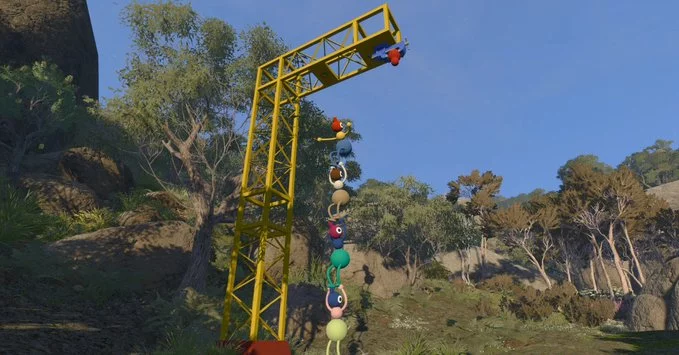
Curious about Panic’s gaming strategy and why the publisher keeps betting on unusual ideas instead of safe sequels? The answer lies in creativity. The studio behind hits like Untitled Goose Game is doubling down on strange, memorable concepts rather than predictable follow-ups. Its next big project, Big Walk, pushes that philosophy even further with a cooperative multiplayer experience designed for exploration, mischief, and social interaction. Instead of repeating past success, the company believes its future depends on embracing weirdness.
Few expected a quirky puzzle game about a troublesome goose to become a global hit. Yet Untitled Goose Game proved that originality can resonate with millions of players. Developed by House House and published by Panic, the title turned a simple concept into an unforgettable experience. Players spent hours sneaking around villages, solving puzzles, and honking their way through hilarious scenarios.
Rather than building a direct sequel, the creators decided to try something completely different. That decision led to the development of Big Walk, a cooperative adventure where groups of players explore vast landscapes together. The game supports up to twelve participants simultaneously, encouraging communication, teamwork, and playful experimentation. Instead of chaos caused by one goose, the fun now comes from groups navigating the world together.
At its core, Big Walk focuses on exploration and social interaction rather than traditional competition. Players wander through large environments, discovering puzzles and secrets while communicating with teammates. The design encourages organic collaboration rather than scripted missions or strict objectives. That freedom creates unpredictable and often hilarious moments during gameplay.
Multiplayer games often prioritize fast-paced action or competitive ranking systems. Panic’s approach flips that expectation by making the journey itself the highlight. Walking, talking, and figuring things out together becomes the central mechanic. This relaxed design philosophy reflects a growing trend toward cooperative experiences that prioritize creativity and connection.
According to Cabel Sasser, cofounder of Panic, the company intentionally avoids rigid formulas for choosing projects. Instead, the team focuses on ideas that feel exciting, unusual, and creatively fulfilling. That mindset has guided the publisher through several unconventional ventures over the years. From indie titles to experimental hardware, Panic consistently explores ideas that other studios might overlook.
This philosophy explains why the studio resisted the temptation to create a direct sequel to its most successful game. While fans often request more of the same experience, Panic prefers to surprise players with something entirely new. By supporting developers who take risks, the company helps expand what games can be.
Panic’s unusual approach extends beyond publishing games. The company also developed the distinctive handheld console known as Playdate. Featuring a bright yellow design and a mechanical crank controller, the device quickly became a symbol of creative experimentation in gaming hardware.
Much like its game publishing strategy, the console emphasizes fun and originality rather than raw technical power. Developers create small, imaginative titles specifically designed for the device’s unique controls. The success of the handheld shows that audiences still crave playful, unconventional ideas in gaming.
Modern gaming often revolves around blockbuster franchises and predictable formulas. However, Panic’s gaming strategy proves that unexpected concepts can stand out in a crowded market. Players remember experiences that feel different, especially when those experiences encourage creativity and humor.
Projects like Big Walk demonstrate how collaborative exploration can redefine multiplayer gameplay. By focusing on social interaction and discovery, the game offers something fresh compared to traditional competitive titles. That difference may ultimately be what attracts players searching for new kinds of adventures.
Panic’s willingness to embrace the weird continues to shape its identity within the gaming industry. Whether through strange geese, cooperative wandering, or experimental consoles, the publisher thrives by doing the unexpected. If that strategy continues to resonate with players, the future of Panic’s gaming ambitions could be just as whimsical—and successful—as its past.

2.5K articles

1.4K articles

34 articles

28 articles














Comment