Alerts

-
3 minutes, 11 seconds
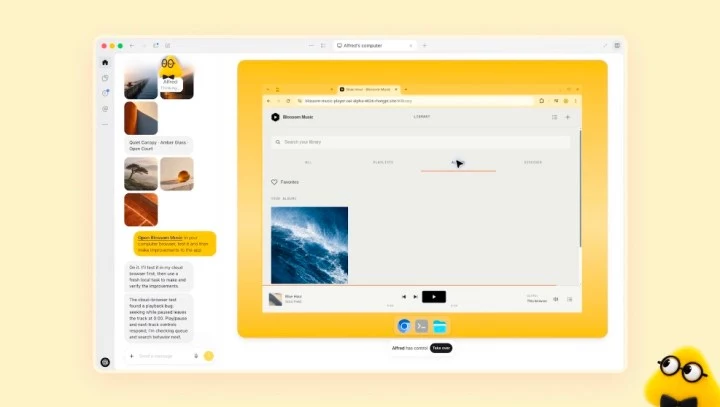
OpenAI has launched Dots, a bubbly agentic avatar that gives the company's AI agents a visible, animated presence. The reveal marks OpenAI's latest step into agentic AI, the emerging category of systems that don't just answer questions but take actions on a user's behalf.
Rather than a static icon or a text-only interface, Dots is designed as a character: bubbly in both look and manner, an avatar meant to make an autonomous agent feel less like a background process and more like something you interact with. That framing matters, because agentic tools are often abstract. A visual persona can signal when an agent is working, waiting, or acting, giving users a clearer mental model of what the software is doing on their behalf.
The launch also fits OpenAI's broader pattern of shipping agentic capabilities alongside familiar, approachable interfaces. By wrapping an agent in a friendly avatar, the company appears to be betting that personality and presence will help users trust systems that operate with more autonomy than a standard chatbot. Dots is now part of OpenAI's growing agent lineup.
Dots is OpenAI's new agentic avatar. Rather than a faceless assistant that waits for instructions, Dots is built to act on your behalf, and it comes wrapped in a distinctly bubbly character.
That personality is not just decoration. It shapes how the product feels to use. Where earlier assistants could seem clinical or purely functional, Dots leans into a warmer, more expressive presence, giving users something closer to a companion than a command line.
The "agentic" label matters just as much as the avatar. Dots is designed to take initiative and carry out tasks, not simply answer questions. Put the two halves together and you get OpenAI's attempt to make automation feel approachable: a capable agent with a friendly face.
For OpenAI, Dots represents a bet that the next wave of AI products will be judged not only on what they can do, but on how natural they feel to have around. The bubbly avatar is the clearest signal of that intent.
Dots is not just another chatbot wrapper. It is an agentic system, meaning it can take actions and carry out tasks rather than simply answering questions. This places it squarely within OpenAI's broader agentic strategy, which extends beyond text to visual, avatar-driven interaction.
OpenAI has been investing in agentic avatar efforts, where AI representatives act on a user's behalf in digital spaces. Dots aligns with that direction by functioning as an autonomous agent rather than a passive assistant.
Key points of alignment include:
In short, Dots shows how OpenAI is merging agentic capability with avatar-based interaction, moving AI from answering to doing.
Dots is more than a playful side project. By releasing a bubbly avatar that can act on a user's behalf, OpenAI is signalling that agentic AI is moving from developer demos into consumer-facing products. The launch suggests the company wants users to grow comfortable with software that does things for them, not just answers them.
It also raises the stakes for rivals building their own assistants. A friendly face can make automation feel less intimidating, which may accelerate adoption across everyday tasks.
At the same time, the arrival of Dots invites scrutiny. Once an avatar can take actions, questions of trust, oversight and accountability become harder to ignore.
For now, the message is clear: OpenAI sees avatars as a front door to agents, and it is betting that charm will help carry the technology into the mainstream.









Comment