Alerts

-
3 minutes, 30 seconds
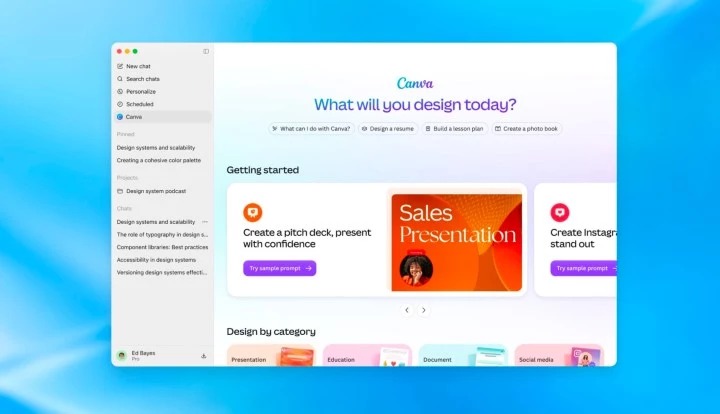
OpenAI is expanding ChatGPT's plug-ins, giving them app-like interfaces and new automation capabilities. The move turns plug-ins from simple add-ons into something closer to full applications that live inside the chat.
According to the announcement, the update has two main parts:
Together, these changes point to a broader shift: ChatGPT is becoming a platform where third-party developers build experiences, not just a chat window that answers questions. The plug-ins are no longer limited to fetching information or performing one-off actions — they can now offer their own interfaces and run sequences of steps with less back-and-forth from the user.
For anyone who has followed ChatGPT's plug-in system since it launched, this is the clearest signal yet that OpenAI wants the chat to serve as a hub for apps and automated workflows alike.
Plug-ins are no longer limited to simple text responses. With this update, they can now present app-like interfaces directly inside ChatGPT, turning what was once a conversational exchange into something closer to using a dedicated application.
This shift matters because it changes how users interact with third-party tools. Instead of reading a reply and then leaving ChatGPT to complete a task elsewhere, users can engage with a plug-in's interface in the same window where they are already working.
The result is a more fluid experience. Tasks that once required moving between ChatGPT and a separate service can now stay within a single conversation, with the plug-in handling the visual and interactive elements.
For users, this means ChatGPT increasingly feels less like a chat window and more like a platform capable of hosting the tools they rely on.
Automations are the second building block OpenAI introduced, and they address a different problem from app-like interfaces. Rather than simply presenting a tool inside ChatGPT, automations let ChatGPT carry out tasks across connected tools.
The distinction matters. An app-like interface gives ChatGPT a surface to work with; an automation gives it the ability to move between surfaces. A task that once required a user to prompt ChatGPT, copy the output, open another service, and paste the result can instead be handled as a connected sequence spanning multiple tools.
This is what makes multi-step tasks the natural target for automations. Work that unfolds across several stages, and several applications, is exactly the kind of work that resists a single prompt. By chaining connected tools together, ChatGPT can carry that work forward rather than stopping at the edge of one conversation.
For users, the practical shift is from asking ChatGPT to produce something to having ChatGPT do something. The connected tools supply the reach; the automation supplies the sequence.
The expansion broadens what ChatGPT can do through its plug-in ecosystem. Rather than relying on a single chat window for every request, users gain access to app-like interfaces and automations that extend the assistant's reach into more complex work.
The practical effect is a wider range of tasks ChatGPT can help complete. App-like interfaces give plug-ins a more structured, interactive presence, while automations allow multi-step tasks to be handled with less manual back-and-forth. Together, these changes make the plug-in ecosystem a more capable layer on top of the core chat experience.
For everyday users, that means fewer reasons to leave ChatGPT to get something done. A task that once required switching between separate tools may now be possible within the same conversation.
It also signals where OpenAI is investing: not just in the underlying model, but in the surrounding ecosystem that determines how useful ChatGPT feels day to day. Users who lean on plug-ins should expect that ecosystem to keep growing in scope and ambition.










Comment