OpenAI Brain Drain: 12 Top Minds Join Meta’s AI Push
In 2025, OpenAI experienced a major talent exodus—losing at least 12 high-profile executives and researchers, most notably to Meta’s newly expanded Superintelligence Lab. Among them: core architects of ChatGPT, GPT-4, and the experimental o1 model. This wave of departures has raised urgent questions about OpenAI’s internal stability, strategic direction, and ability to retain top AI talent amid intensifying industry competition.
Summer Exodus Sends Shockwaves Through AI World
The most concentrated wave of exits hit in mid-2025, when at least seven OpenAI researchers bolted for Meta. That group included Shengjia Zhao—now Meta’s Chief Scientist for Superintelligence—and Jason Wei, known for his work on reasoning models like o1. All cited Meta’s “talent-dense” environment and freedom to build “from a clean slate” as key motivators. Their departures weren’t just symbolic; they represented a direct transfer of institutional knowledge from OpenAI’s foundational AI breakthroughs to one of its fiercest rivals.
Perception, Reasoning, and the Full AI Stack Walks Out
Meta didn’t just poach abstract theorists—it targeted specialists across the AI stack. Jiahui Yu, who led OpenAI’s Perception team, brought critical expertise in multimodal inputs (images, audio, sensors) that power products like GPT-4o. Hongyu Ren, another GPT-4o core contributor, followed shortly after. Meanwhile, Hyung Won Chung and Zhiqing Sun joined as senior research leads. Together, this cohort gives Meta a near-complete replication of OpenAI’s most advanced R&D capabilities—just under a different roof.
Leadership Vacuum Deepens at OpenAI
It wasn’t only researchers who left. OpenAI also parted ways with its Chief People Officer and Chief Communications Officer in 2025—roles critical for internal culture and public trust. These exits compound leadership losses from 2024, when CTO Mira Murati, Chief Research Officer Bob McGrew, and VP of Research Barret Zoph all stepped down. Today, CEO Sam Altman stands as one of only two remaining members of OpenAI’s original 11-person founding team, underscoring how dramatically the company’s core identity has shifted.
Meta’s Billion-Dollar AI Gambit Pays Off
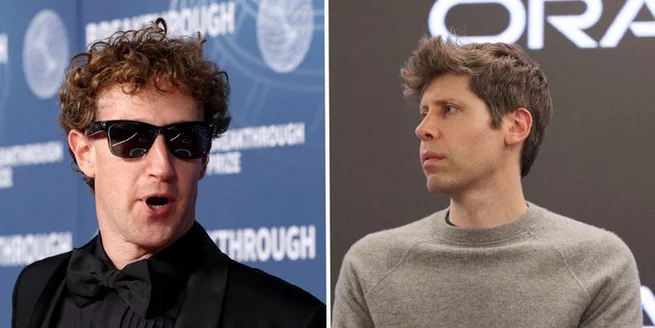
Meta’s aggressive recruitment spree is no accident. Since unveiling its Superintelligence Lab with a billion-dollar commitment, the company has prioritized luring elite AI talent—even from direct competitors. With Shengjia Zhao now reporting directly to Mark Zuckerberg and AI chief Alexandr Wang, Meta is signaling that its superintelligence initiative isn’t just aspirational—it’s operational. And by hiring the very minds behind OpenAI’s biggest wins, Meta is betting that proven expertise beats theoretical promise.
Why Researchers Are Jumping Ship
Insiders point to growing frustration within OpenAI over commercial pressures, productization mandates, and a perceived drift from pure research. In contrast, Meta’s pitch—autonomy, long-term vision, and minimal product deadlines—resonates deeply with scientists focused on foundational AI. “Building something truly new requires freedom,” one departed researcher noted anonymously. “Right now, that freedom feels more available at Meta.”
What This Means for the AI Race
OpenAI’s brain drain isn’t just a personnel issue—it’s a strategic vulnerability. Every researcher who leaves takes with them tacit knowledge, experimental insights, and years of institutional momentum. Meanwhile, Meta is assembling what may become the most formidable AI research team outside national labs. As the 2025 superintelligence race heats up, talent—not just funding or compute—will decide who leads next-generation AI. And right now, Meta is winning that battle.






Array