
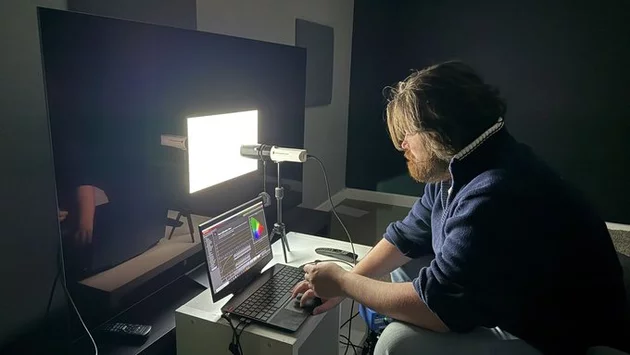
If you’ve been debating between OLED and LED TVs, chances are you’ve heard the dreaded warning: “OLEDs suffer from burn-in!” But after a rigorous three-year, 18,000-hour stress test by Rtings, that fear may be overblown. In fact, the study shows that LED TVs—especially budget-friendly edge-lit models—are more likely to fail prematurely than their OLED counterparts. So, are OLED TVs actually more reliable than LED? The evidence suggests yes, under real-world usage.
Yes, burn-in is real. But according to Rtings’ controlled experiment, permanent image retention only appeared on OLED panels under extreme, unrealistic conditions: static images displayed continuously at peak brightness for thousands of hours. For the average viewer who switches between streaming, sports, and occasional gaming, the risk is minimal. Most test OLEDs showed no visible burn-in after three years of heavy—but varied—usage, debunking the myth that OLEDs degrade quickly in typical homes.
Surprisingly, the biggest reliability concerns came from LED (LCD) TVs, not OLEDs. Edge-lit LED models—common in mid-range and budget lines—showed higher failure rates due to backlight dimming, clouding, and panel degradation. Some stopped functioning entirely before hitting the 18,000-hour mark. In contrast, even entry-level OLEDs held up remarkably well, suggesting that OLED technology has matured significantly since its early days.
One of the study’s most eye-opening findings? There’s no clear link between a TV’s price and how long it lasts. High-end LED models sometimes failed just as often as cheaper ones, while mid-tier OLEDs outperformed them all. This challenges the assumption that spending more automatically buys better durability. Instead, panel type—and how you use your TV—matters far more than the sticker price.
The test simulated real-life viewing by rotating content types: movies, news, video games, and live TV. This variety prevented static elements from lingering long enough to cause damage. For most households, this mirrors actual habits—binge-watching a series one night, catching the news the next, and gaming on weekends. As long as you avoid leaving paused screens or fixed-score graphics on for hours daily, OLED burn-in remains a fringe concern.
With 2025 bringing even more advanced OLED models—like LG’s C5 and Sony’s A95L—consumers can feel more confident choosing OLED for both picture quality and reliability. The long-term data supports what early adopters suspected: modern OLEDs are built to last. Meanwhile, LED TV buyers should be cautious about ultra-cheap edge-lit options, which may not survive beyond a few years of regular use.
While no display technology is perfect, this three-year stress test flips the script on old assumptions. Burn-in fears shouldn’t deter you from OLED if you’re a typical viewer. On the contrary, OLED TVs now lead in both visual performance and long-term reliability—especially when compared to the inconsistent track record of many LED models. If you’re upgrading this holiday season, OLED may be the smarter, more future-proof choice.
OLED vs LED TVs: Reliability Tested Over 3 Ye... 0 0 0 5 2
2 photos

𝗦𝗲𝗺𝗮𝘀𝗼𝗰𝗶𝗮𝗹 𝗶𝘀 𝘄𝗵𝗲𝗿𝗲 𝗽𝗲𝗼𝗽𝗹𝗲 𝗰𝗼𝗻𝗻𝗲𝗰𝘁, 𝗴𝗿𝗼𝘄, 𝗮𝗻𝗱 𝗳𝗶𝗻𝗱 𝗼𝗽𝗽𝗼𝗿𝘁𝘂𝗻𝗶𝘁𝗶𝗲𝘀.
From jobs and gigs to communities, events, and real conversations — we bring people and ideas together in one simple, meaningful space.




Comments