Alerts

-
4 minutes, 10 seconds
Organizations across industries still rely heavily on employees to manually gather, organize, and report performance metrics from various digital platforms. This process is often repetitive, time-consuming, and prone to errors. What if an AI-powered system could handle these tasks automatically, removing the need for human intervention in reporting roles?
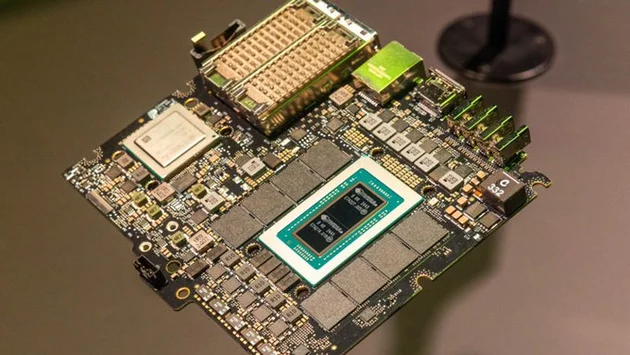
A recent review tested exactly this scenario using the Nvidia GB10 motherboard paired with structured AI workflows. The results suggest that businesses could significantly reduce reliance on manual reporting staff without sacrificing accuracy or efficiency.
Data collection and reporting roles are particularly vulnerable to automation. Tasks like compiling performance metrics, generating reports, and formatting data for management often follow predictable patterns. This makes them ideal candidates for AI-driven solutions.
By leveraging the Nvidia GB10, the review demonstrated that AI could execute these repetitive processes with minimal human oversight. Sequential workflows allowed the system to handle requests across multiple sources and time frames while maintaining consistency.
The Nvidia GB10 motherboard isn’t just a standard workstation component—it’s a powerful engine for AI tasks. Equipped with advanced GPUs and memory, it can run complex local AI models that were previously confined to cloud servers.
In testing, the AI system processed long, unstructured emails requesting metrics from different platforms, converted them into structured queries, and delivered accurate reports. This demonstrates the motherboard’s ability to handle enterprise-level data workflows without frequent errors or delays.
One key factor in the successful implementation of AI reporting is the use of sequential workflows. These workflows break down reporting tasks into manageable steps, allowing the system to handle errors or exceptions effectively.
For businesses, this approach provides a scalable solution. IT teams can test and refine processes locally before rolling them out across departments, reducing risk and ensuring smooth automation. Over time, AI workflows could replace hundreds of hours of manual labor while maintaining or even improving report quality.
Critics often worry that automation will compromise accuracy. However, the Nvidia GB10 review showed that AI could produce reports with a level of consistency difficult for human employees to maintain over long periods.
Automating reporting tasks also frees up staff for higher-value activities. Instead of spending hours compiling metrics, employees could focus on analysis, strategy, or creative problem-solving—areas where human judgment remains essential.
The potential of AI-powered hardware like the Nvidia GB10 goes beyond reporting. Any repetitive, structured task could be automated, reshaping how companies operate. Businesses that adopt these technologies early may gain a competitive edge by increasing efficiency and reducing operational costs.
For employees in reporting roles, this shift is a signal to adapt skills toward data interpretation, AI supervision, and workflow optimization. Companies can benefit from blending AI efficiency with human insight, creating a smarter, faster, and more adaptable workforce.










Comment