
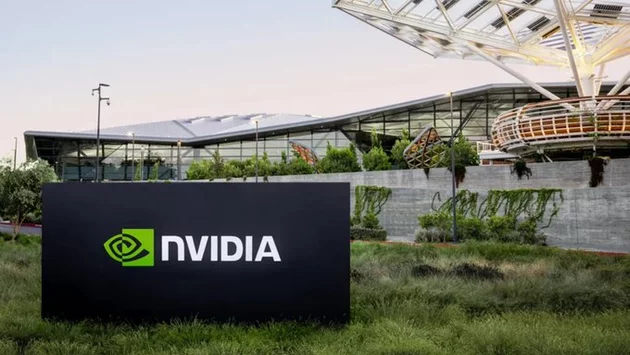
In a strategic pivot that answers mounting investor questions, Nvidia is reportedly stepping back from its ambition to directly challenge cloud giants like AWS, Microsoft Azure, and Google Cloud. Instead of launching a full-fledged public cloud service to rival the hyperscalers, the company is refocusing its DGX Cloud initiative within its core engineering division. This move—confirmed by internal leadership changes in mid-December 2025—signals a shift toward enabling AI infrastructure rather than owning it end-to-end.
According to The Information, Nvidia has folded its DGX Cloud unit into its broader engineering and operations organization, now under the oversight of Senior Vice President Dwight Diercks, who leads software engineering. This restructuring suggests DGX Cloud will serve more as a developer and enterprise toolset than a standalone cloud platform. The goal? To support open-source AI innovation and give developers seamless access to Nvidia’s powerful GPUs—without Nvidia managing data centers at hyperscaler scale.
Going head-to-head with Amazon, Microsoft, and Google in the cloud infrastructure race would have required massive capital investment and operational scale—areas where Nvidia, despite its chip dominance, lacks decades of cloud expertise. By retreating from direct competition, Nvidia avoids a costly and likely losing battle. Instead, it doubles down on its core strength: supplying the AI hardware and software stack that powers those very cloud providers.
Ironically, while Nvidia backs off from the cloud layer, pressure is mounting at the silicon level. Amazon’s Trainium and Inferentia chips, Google’s TPUs, and even custom AI accelerators from Microsoft are eroding Nvidia’s near-monopoly in data center AI. This strategic refocus may actually strengthen Nvidia’s position—by deepening integrations with cloud partners rather than competing against them, the company ensures its GPUs remain indispensable across the ecosystem.
The December 2025 executive reshuffle wasn’t just about DGX Cloud—it marked a broader recalibration of Nvidia’s AI roadmap. Several key personnel shifted roles or exited the company, signaling a leaner, more focused approach to AI infrastructure. CEO Jensen Huang, known for bold long-term bets, appears to be prioritizing adaptability over empire-building. The message is clear: Nvidia wants to fuel the AI revolution, not run the data centers where it happens.
For AI developers and enterprises, this shift could mean smoother access to Nvidia’s full stack—CUDA, AI Enterprise, and DGX systems—without being locked into a proprietary cloud. By embedding DGX Cloud deeper into its engineering DNA, Nvidia can iterate faster on tools that accelerate model training and deployment. The emphasis on open-source collaboration also aligns with growing industry demand for flexible, interoperable AI solutions.
Nvidia’s stock, which soared through 2024 on AI euphoria, has leveled off in late 2025 as growth expectations cool. The cloud strategy retreat may reassure investors wary of capital-heavy diversification, but it also underscores a maturing market. The company’s value now hinges less on speculative expansion and more on sustainable innovation—delivering next-gen chips like Blackwell and refining its software moat.
Nvidia’s recalibration reflects a savvy understanding of today’s AI landscape: the real power lies not in owning every layer, but in being the irreplaceable foundation. By choosing partnership over competition with cloud hyperscalers, Nvidia secures its role as the engine of AI—wherever that engine is deployed. In a world hungry for compute, that might be the smartest play of all.
Nvidia Cloud Strategy Shifts Away from Hypers... 0 0 0 6 2
2 photos

𝗦𝗲𝗺𝗮𝘀𝗼𝗰𝗶𝗮𝗹 𝗶𝘀 𝘄𝗵𝗲𝗿𝗲 𝗽𝗲𝗼𝗽𝗹𝗲 𝗰𝗼𝗻𝗻𝗲𝗰𝘁, 𝗴𝗿𝗼𝘄, 𝗮𝗻𝗱 𝗳𝗶𝗻𝗱 𝗼𝗽𝗽𝗼𝗿𝘁𝘂𝗻𝗶𝘁𝗶𝗲𝘀.
From jobs and gigs to communities, events, and real conversations — we bring people and ideas together in one simple, meaningful space.




Comments