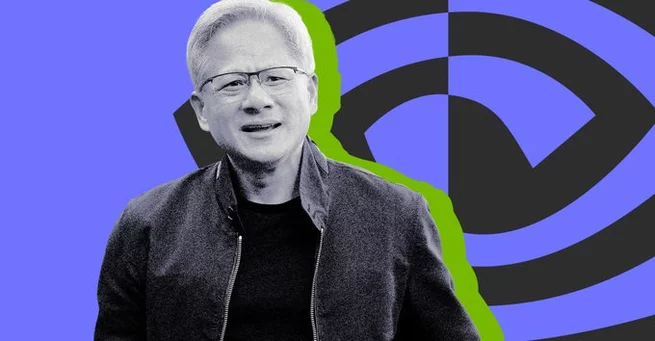
Nvidia CEO Jensen Huang has publicly pushed back against claims that he is unhappy with OpenAI, addressing growing speculation around one of the most talked-about partnerships in artificial intelligence. Many readers are asking: Is Nvidia still investing in OpenAI? Has the rumored $100 billion deal collapsed? Huang’s latest comments offer clarity, reaffirming Nvidia’s commitment while resetting expectations around the scale and timing of the investment.
Speaking to reporters during a recent appearance in Taipei, Jensen Huang dismissed suggestions of tension between Nvidia and OpenAI as unfounded. He described reports of dissatisfaction as “nonsense,” emphasizing that Nvidia’s relationship with the AI company remains strong and productive. The remarks come after weeks of uncertainty sparked by earlier announcements that Nvidia could invest up to $100 billion in OpenAI.
Huang’s comments were measured but direct, signaling confidence rather than concern. While he clarified that the final figure would not reach the previously speculated amount, he left little doubt about Nvidia’s intention to play a significant role in OpenAI’s future. For investors and industry watchers, the message was clear: the partnership is alive, active, and evolving.
One of the biggest questions surrounding the deal has been its sheer scale. When asked directly whether Nvidia would invest more than $100 billion, Huang responded plainly that it would not be “anything like that.” This clarification helped cool exaggerated expectations while still underscoring the seriousness of Nvidia’s plans.
Importantly, Huang framed the investment in relative terms rather than absolute numbers. He indicated that the OpenAI deal would likely become the largest investment Nvidia has ever made. That distinction matters, especially for a company with a long history of strategic spending across hardware, software, and AI infrastructure.
Huang used the opportunity to strongly endorse OpenAI’s work and leadership. He praised the company as one of the most consequential forces shaping modern technology and highlighted his positive working relationship with OpenAI CEO Sam Altman. Such statements reinforce the idea that this partnership goes beyond money and is rooted in shared long-term goals.
From Nvidia’s perspective, OpenAI represents a powerful driver of demand for advanced AI computing. Large-scale models require enormous processing power, an area where Nvidia continues to dominate. Supporting OpenAI aligns closely with Nvidia’s broader strategy to remain central to the AI ecosystem as adoption accelerates across industries.
According to Huang, Sam Altman is currently finalizing the investment round, and Nvidia will “absolutely be involved.” While specific figures and timelines were not disclosed, Huang made it clear that Nvidia’s participation is not symbolic. He described the planned contribution as a “great deal of money,” reinforcing expectations of a deep financial and strategic commitment.
This approach reflects how major AI partnerships are increasingly structured. Rather than headline-grabbing numbers announced upfront, companies are opting for phased investments that align with growth milestones, technical needs, and market conditions. Nvidia’s stance appears consistent with that trend.
Nvidia’s continued interest in OpenAI fits neatly into its larger AI roadmap. The company has positioned itself as the backbone of modern artificial intelligence, supplying the chips and platforms that power everything from data centers to generative models. By backing OpenAI, Nvidia strengthens its role not just as a hardware provider, but as a strategic partner shaping the future of AI development.
This also sends a signal to the broader market. Despite increased competition and scrutiny around AI spending, Nvidia is doubling down on high-impact collaborations. Huang’s confidence suggests the company sees sustained demand ahead, rather than a cooling-off period.
While Huang’s comments walked back earlier dollar figures, they likely reassured investors concerned about instability or conflict. Clear communication helps reduce uncertainty, especially when dealing with investments of this magnitude. The AI sector thrives on confidence, and public alignment between two influential leaders carries weight.
For the wider tech industry, the situation highlights how quickly narratives can shift. Rumors of dissatisfaction gained traction, but direct statements from leadership quickly reframed the story. As AI continues to dominate headlines, transparency from executives will remain critical in shaping public and market perception.
Taken together, Jensen Huang’s remarks paint a picture of continuity rather than disruption. Nvidia is not backing away from OpenAI, nor is it scaling down its ambitions in artificial intelligence. Instead, it is refining expectations, reaffirming trust, and moving forward with what could become its most significant investment to date.
As the funding round progresses, attention will turn to concrete details. Until then, Nvidia’s position is unmistakable: OpenAI remains a key partner, the relationship is strong, and a major investment is still very much on the table.
Nvidia CEO Denies OpenAI Rift as Investment P... 0 0 0 14 2
2 photos

Access our platform effortlessly on-the-go through our user-friendly mobile apps.






Comment