Nvidia Autonomous Driving Strategy Challenges Tesla
Autonomous driving technology is entering a new phase, and Nvidia autonomous driving strategy is drawing major attention. Xinzhou Wu, who leads Nvidia’s automotive division, believes beating Tesla and other competitors doesn’t require billions of miles of driving data. Instead, success depends on advanced sensors and intelligent AI capable of reasoning about real-world driving situations. Nvidia is now positioning itself as a major force in the race for self-driving cars.
Nvidia’s Vision for the Future of Autonomous Driving
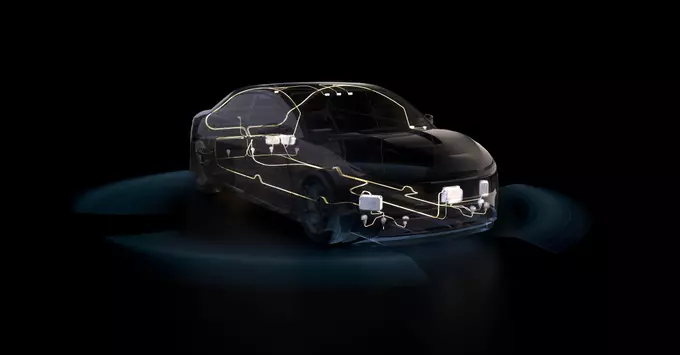
Nvidia has spent years building technology that powers modern artificial intelligence systems. Now the company is pushing deeper into autonomous driving by offering powerful hardware and software platforms to automakers. At the center of this effort is the DRIVE Hyperion platform, designed to enable advanced driver-assistance and fully autonomous features.
Rather than building its own car, Nvidia focuses on supplying the technology stack. This includes AI chips, sensor processing systems, and training tools that help vehicles understand the road around them. Automakers can integrate this platform into their vehicles to accelerate development of autonomous capabilities.
Wu believes this strategy allows Nvidia to scale quickly across multiple car brands instead of relying on a single vehicle lineup.
A Demonstration of Nvidia’s Hands-Free Driving System
To showcase the company’s progress, Wu recently took Nvidia CEO Jensen Huang on a ride in a vehicle equipped with Nvidia-powered autonomous technology. The demonstration took place in a Mercedes sedan fitted with MB.Drive Assist Pro, a hands-free driving system partially developed with Nvidia technology.
During the drive, the car navigated busy city traffic and typical urban obstacles. The route included construction zones, narrow lanes created by traffic cones, and double-parked vehicles. Despite these challenges, the system handled traffic signals, intersections, and pedestrians with notable confidence.
According to Nvidia representatives, the demonstration completed the entire route without requiring the driver to disengage the system.
Why Nvidia Says Massive Data Isn’t Necessary
One of the most striking aspects of Nvidia’s approach is its belief that collecting enormous driving datasets may not be the only path to success. Tesla has famously relied on billions of miles of real-world driving data gathered from its vehicles worldwide.
Wu argues that intelligent AI systems combined with high-quality sensors can achieve similar or even better results. Instead of relying purely on experience, Nvidia’s AI focuses on reasoning and understanding the environment.
This means the system interprets traffic patterns, predicts movement, and adapts to unexpected situations more intelligently. Supporters of this method believe it could significantly reduce the time required to develop reliable autonomous vehicles.
Advanced Sensors and AI Working Together
Sensors play a critical role in Nvidia’s autonomous driving system. Cameras, radar, and lidar technologies collect data about the vehicle’s surroundings. This information feeds into powerful AI models that analyze everything happening around the car in real time.
The company’s computing platform processes massive amounts of sensor data instantly. This allows the vehicle to identify pedestrians, detect obstacles, and interpret traffic signals with greater accuracy.
By combining these sensors with AI capable of reasoning, Nvidia aims to create systems that respond to complex driving situations more safely than traditional automated driving models.
Nvidia’s Bid for Leadership in Autonomous Driving
For years, Nvidia quietly supplied chips and computing platforms to the automotive industry. That behind-the-scenes role is beginning to change. The company is now openly pursuing a leadership position in the autonomous driving market.
Automakers increasingly want advanced AI capabilities built directly into their vehicles. Nvidia believes its expertise in artificial intelligence, data processing, and simulation gives it a strong advantage in this evolving market.
If successful, Nvidia’s technology could power self-driving systems across multiple global car brands.
The Next Phase of the Self-Driving Race
Competition in the autonomous driving industry remains intense. Companies are exploring different strategies to achieve reliable self-driving vehicles at scale. Nvidia’s approach challenges the idea that massive real-world driving datasets are the only path forward.
Instead, the company is betting on smarter AI systems combined with advanced sensor technology. This approach could dramatically change how autonomous vehicles are developed.
As AI technology continues evolving, Nvidia’s strategy may reshape the future of self-driving cars and push the industry closer to truly autonomous transportation.













Comment