Alerts

-
4 minutes, 12 seconds
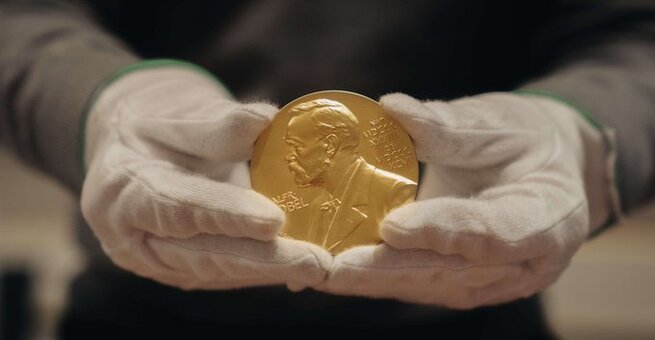
Modern smartphones and quantum computers share a surprising link — research from the 1980s that just won the Nobel Prize in Physics. The 2025 Nobel Prize in Physics goes to early research that led to today’s quantum computers, honoring three physicists whose groundbreaking work made the impossible, possible.
On Tuesday, the Royal Swedish Academy of Sciences announced that John Clarke, Michel H. Devoret, and John M. Martinis received the prestigious award for pioneering quantum mechanics research that laid the foundation for today’s quantum technology. Their discovery not only reshaped theoretical physics but also paved the way for innovations found in everything from smartphones to supercomputers.
In the 1980s, Clarke, Devoret, and Martinis built a circuit with no electrical resistance to explore a phenomenon called quantum tunneling — the ability of atoms and subatomic particles to move through barriers that classical physics said were impenetrable.
Before their work, quantum tunneling existed mostly as theory. But their physical circuit demonstrated that tunneling could happen in real-world systems. That experiment became a cornerstone for modern transistors and, decades later, the rise of quantum computing as we know it today.
The Nobel Prize in Physics is shared between John Clarke (University of California, Berkeley), Michel H. Devoret (Yale University), and John M. Martinis (University of California, Santa Barbara).
“I’m speaking on my cell phone and I suspect that you are too, and one of the underlying reasons that the cell phone works is because of all this work,” Clarke said in a call with reporters after learning of his win. He described the recognition as “completely stunning,” according to Reuters.
Clarke, who began his career at UC Berkeley in 1969, remains an emeritus professor. Over the decades, the team’s experimental breakthroughs have continued to influence the design and efficiency of quantum processors, superconducting circuits, and communication systems worldwide.
The link between the trio’s research and modern computing lies in superconducting circuits, which serve as the backbone of quantum computers. By reducing electrical resistance and preserving quantum states longer, these circuits enable calculations that classical computers can’t perform.
Companies like Google, IBM, and Intel have since expanded on this foundational work to build scalable quantum systems. Without the early breakthroughs by Clarke, Devoret, and Martinis, today’s progress in quantum computing — from error correction to qubit stability — would have remained out of reach.
This year’s Nobel Prize in Physics isn’t just about honoring past discoveries — it’s a celebration of how early scientific curiosity can redefine entire industries. The 1980s research that once seemed purely academic now powers the algorithms, semiconductors, and communication tools shaping the digital era.
As quantum computing moves closer to commercial reality, this recognition underscores a timeless truth: innovation often starts decades before the world realizes its value.









Comment