
Trending
Trending Hashtags
Alerts
-
3 minutes, 20 seconds
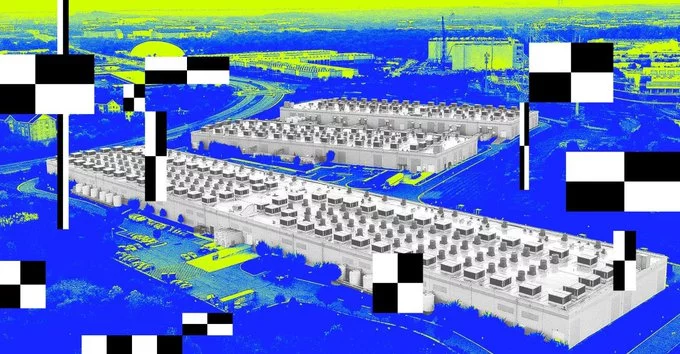
California has introduced new legislation that will force data centers operating in the state to disclose more information about their water and electricity use. The move responds to growing concern over the environmental footprint of the facilities that power cloud computing and artificial intelligence, which can consume enormous volumes of both resources.
Under the new rules, operators will no longer be able to keep their consumption figures private. The legislation is designed to bring greater accountability to an industry whose rapid expansion has outpaced public understanding of its demands on California's grid and water supply.
Supporters argue the measure is a necessary first step toward regulating a sector that has quietly become one of the state's most resource-intensive. By requiring disclosure, lawmakers hope to give regulators, researchers, and the public the data needed to assess the true cost of the state's data center boom — and to shape future policy accordingly.
Under the new law, data centers operating in California must report detailed information about both their water and electricity consumption. The disclosure requirements are designed to give regulators and the public a clearer picture of how these facilities use resources.
Specifically, data centers will be required to report:
These reporting obligations apply to data centers covered by the legislation, which targets large facilities that meet specified thresholds. By requiring both water and electricity figures, the law ensures that consumption is measured consistently across the state rather than being disclosed voluntarily or in inconsistent formats.
The collected data will give policymakers a standardized dataset for understanding the environmental footprint of California's growing data center industry, and it forms the foundation for the transparency measures described elsewhere in this article.
Data centers are among the most resource-intensive facilities in modern infrastructure, yet their consumption of water and electricity has historically been difficult for the public to assess. This legislation changes that by requiring operators to report their usage, creating a clearer picture of how these facilities affect local communities and the environment.
Transparency matters because communities deserve to know how much water and power data centers draw from shared resources, especially in regions facing drought or grid strain. Without disclosure, residents, policymakers, and researchers have no reliable way to evaluate the tradeoffs between the economic benefits of data centers and their environmental footprint.
Public information on water and electricity consumption also enables better planning. When usage data is available, regulators and utilities can make informed decisions about infrastructure, sustainability targets, and resource allocation. It also gives operators an opportunity to demonstrate accountability and progress on efficiency.
In short, disclosure turns an opaque industry into one that can be measured, compared, and held to account.
For operators, the law turns energy and water use into a public record. Facilities must disclose electricity consumption, water usage, and backup generator testing, which means efficiency is no longer an internal metric but a comparable one. Data centers that have invested in cooling optimization or renewable contracts gain a visible advantage; older, less efficient sites face reputational and regulatory pressure.
The broader effect falls on California's resource management. As data center demand grows, state and local planners gain the data needed to weigh new construction against grid capacity and water availability. That evidence can shape permitting, utility planning, and incentive programs.
The trade-off is administrative burden. Operators must build reporting systems and verify figures, and smaller colocation providers may struggle with compliance costs. Still, the legislation positions California as a test case: if disclosure drives measurable efficiency, other states may follow, making this a template for how growing digital infrastructure is held accountable for the resources it consumes.










Comment