
Alerts
-
5 minutes, 14 seconds
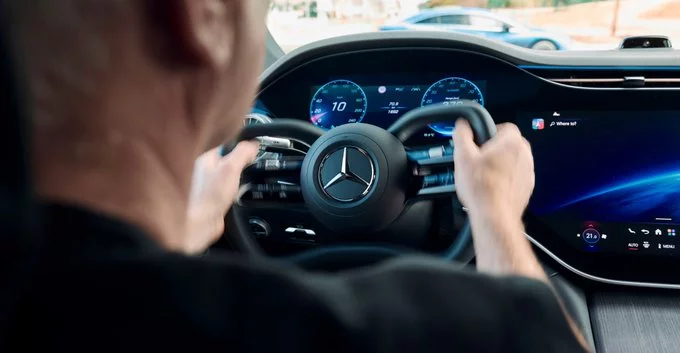
Mercedes steer-by-wire is officially coming to the Mercedes-Benz lineup, starting with the flagship Mercedes-Benz EQS. The system replaces the traditional mechanical steering column with electronic controls, raising questions about safety, performance, and driver experience. At the same time, the company is introducing a bold steering yoke instead of a standard wheel. This marks a major shift in how drivers interact with vehicles, especially in the growing electric vehicle space.
Steer-by-wire technology eliminates the physical connection between the steering wheel and the wheels. Instead, inputs are sent electronically, allowing software to interpret and adjust steering behavior in real time. This means smoother handling, customizable steering sensitivity, and fewer mechanical limitations. Automakers have been exploring this innovation for years, but adoption has been slow due to safety concerns and regulatory hurdles.
For Mercedes, the move signals confidence in the maturity of the technology. Advanced redundancy systems are built in, ensuring that backup systems can take over if anything fails. This is crucial for maintaining driver trust and meeting strict safety standards. As vehicles become more software-driven, steer-by-wire is expected to play a key role in future mobility.
Alongside steer-by-wire, Mercedes is introducing a steering yoke—a design more commonly associated with aircraft than cars. The yoke replaces the traditional circular wheel with a flat, rectangular shape. This change is intended to improve visibility of the dashboard and create a more futuristic driving environment.
However, the design has sparked debate. Some drivers may find it less intuitive, especially during tight maneuvers or parking. Others see it as a natural evolution, particularly in vehicles with advanced driver assistance systems. Mercedes appears to be betting that drivers will adapt quickly, especially as automation reduces the need for constant steering input.
The EQS is already known for its advanced technology and luxury features, making it an ideal platform for introducing steer-by-wire. The system allows for variable steering ratios, meaning the car can adjust how much the wheels turn based on speed. At low speeds, drivers can make sharper turns with minimal effort, while at high speeds, the system provides greater stability.
This flexibility enhances both comfort and safety. It also opens the door for new interior designs, as the absence of a mechanical steering column frees up space. Mercedes can now experiment with cabin layouts that were previously impossible, further differentiating the EQS from competitors.
One of the biggest challenges for steer-by-wire is ensuring reliability. Without a direct mechanical link, the system must rely entirely on electronics. Mercedes has addressed this by incorporating multiple layers of redundancy, including backup power supplies and fail-safe mechanisms. These features are designed to keep the vehicle controllable even in the event of a system failure.
Regulators are also paying close attention. Steer-by-wire systems must meet rigorous standards before they can be widely adopted. Mercedes’ decision to launch this technology suggests that it has met or exceeded these requirements, setting a precedent for other automakers.
Mercedes steer-by-wire represents more than just a new feature—it’s a glimpse into the future of automotive design. As vehicles become increasingly digital, the role of hardware is diminishing. Software-driven systems like steer-by-wire offer greater flexibility, improved performance, and new possibilities for innovation.
For drivers, this means a fundamentally different experience behind the wheel. While the transition may take time, the potential benefits are significant. From enhanced comfort to cutting-edge design, the EQS is positioning itself at the forefront of this transformation.
As the automotive industry evolves, Mercedes is making it clear that it intends to lead the way.










Comment