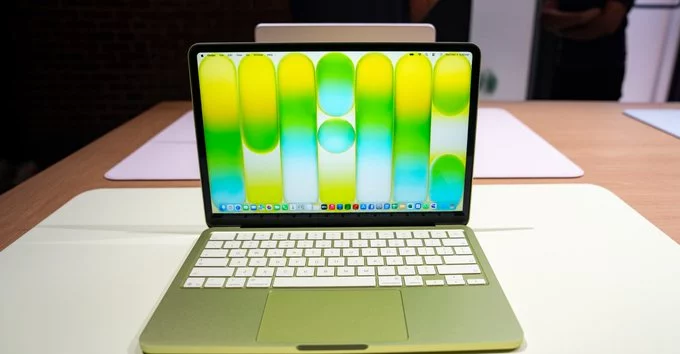
MacBook Neo is now official, and yes — it starts at just $599. Powered by the same A18 Pro chip first seen in the iPhone 16 lineup, this new 13-inch laptop marks Apple’s most affordable modern MacBook in years. Buyers get 8GB of RAM, up to 512GB storage, and a colorful new design. But there are tradeoffs. Here’s everything you need to know about specs, features, compromises, and whether the MacBook Neo is worth your money in 2026.
At $599, MacBook Neo fills a price gap that had slowly widened in Apple’s laptop lineup. For years, older M-series models occupied that entry tier. Now, the Neo becomes the new baseline MacBook for students, casual users, and budget buyers.
Earlier this week, Apple revealed that the latest MacBook Air will start at $1,099 for a 512GB configuration. That pricing shift leaves a $500 difference between the Air and the Neo. Clearly, Apple is segmenting its audience more aggressively — premium performance on one side, affordability on the other.
This strategic move also positions the Neo directly against midrange Windows and Chromebook laptops. For buyers comparing specs at the $600 mark, Apple now has a serious contender.
The biggest surprise is under the hood. Instead of an M-series processor, the MacBook Neo runs on the A18 Pro chip — originally introduced in Apple’s flagship iPhones two years ago.
That might sound unusual, but it’s not necessarily a downgrade. The A18 Pro remains a powerful and efficient chip optimized for battery life and everyday performance. Tasks like web browsing, streaming, document editing, and light creative work should run smoothly.
However, users expecting heavy-duty video editing or professional workloads may hit limitations. This isn’t designed to replace a MacBook Pro. It’s built for efficiency, portability, and affordability.
Despite the lower price, Apple didn’t strip everything back. The MacBook Neo includes:
13-inch display (2408 x 1506 resolution)
8GB RAM (non-upgradable)
256GB or 512GB storage
Magic Keyboard
Multi-touch trackpad
1080p front camera
Two USB-C ports (USB 3 and USB 2)
Headphone jack
New side-firing speakers with spatial audio and Dolby Atmos
The display resolution is sharp for its size, and the inclusion of spatial audio support adds a premium touch. For entertainment and virtual meetings, this device checks key boxes.
Still, 8GB RAM with no upgrade option could be limiting long-term. Power users may need to think carefully before committing.
One notable distinction exists between storage tiers. The 512GB model includes Touch ID. The 256GB base model does not.
That’s an unusual move for Apple, which typically standardizes biometric authentication across models. Buyers choosing the cheaper configuration lose fingerprint authentication entirely.
Additionally, neither model includes Thunderbolt ports or MagSafe charging. Fast charging also appears absent, as the Neo ships with a modest 20W charger. These omissions help explain the aggressive pricing.
Apple is leaning into personality with the Neo. It launches in four color options:
Silver
Indigo
Blush
Citrus
Each model includes a color-matched keyboard, giving the laptop a cohesive, modern look. This playful palette differentiates it from the more subdued MacBook Air line.
Design-wise, the Neo appears targeted toward students and younger buyers who value expression as much as performance.
Lower pricing inevitably means compromises.
There’s no Thunderbolt connectivity, no MagSafe, no RAM upgrade path, and no fast charging. Professional creators who rely on external high-speed drives or multiple displays may feel constrained.
Compared to higher-end MacBooks, performance ceilings will also be lower due to the mobile-focused chip architecture. That said, many everyday users may never notice the difference.
The key question becomes: what do you actually need your laptop to do?
MacBook Neo makes sense for students, writers, remote workers, and casual users who prioritize affordability and battery life. It’s also appealing for families buying a secondary computer.
If your workflow revolves around web apps, cloud storage, streaming, and light productivity, this machine should perform reliably for years. The A18 Pro chip remains efficient and capable for mainstream use.
On the other hand, if you run demanding creative software or multitask heavily with large files, stepping up to a MacBook Air may be the safer long-term investment.
This launch signals a broader shift in Apple’s product strategy. By introducing a budget laptop powered by a former iPhone flagship chip, Apple is leveraging its silicon ecosystem more creatively.
It also strengthens vertical integration. Apple controls both chip and hardware design, allowing it to reuse proven processors in new form factors. That flexibility helps the company compete in lower price brackets without developing entirely new silicon.
Meanwhile, the higher starting price of the M5 MacBook Air reinforces a premium tier. The gap between entry and midrange MacBooks is now clearer than ever.
MacBook Neo isn’t trying to be everything. It’s designed to be accessible, colorful, and capable for everyday computing at a price Apple hasn’t offered in years.
At $599, it dramatically lowers the barrier to entry for macOS users. The A18 Pro chip provides solid efficiency, and the design choices feel intentional rather than compromised.
Still, buyers must weigh limitations like fixed 8GB RAM, missing Touch ID on the base model, and reduced port options. For the right audience, though, the MacBook Neo could become one of Apple’s most important laptops of the decade.






Comment