

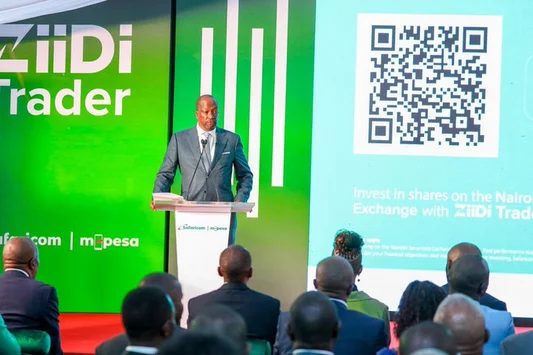
M-Pesa Share Trading Reshapes the NSE Landscape
M-Pesa share trading is rapidly transforming how Kenyans access the stock market. New data shows daily transactions at the Nairobi Securities Exchange have surged nearly fourfold since mobile trading launched. For many first-time investors, buying shares now feels as simple as sending money on a phone. That accessibility is reshaping market dynamics, making trading faster, more active, and increasingly driven by retail participation rather than institutions.
The rollout of mobile-based investing has shifted the perception of stock ownership in Kenya. What once felt exclusive is becoming mainstream, especially among younger investors. The impact is visible not just in transaction volume but also in how prices move and how frequently trades occur.
Explosive Growth in NSE Transactions
Daily deals on the Nairobi Securities Exchange jumped to 26,169 this week, up from just 6,761 before early February. The sharp increase followed the launch of mobile share trading powered by M-Pesa through the Ziidi Trader platform. That represents a staggering 3.8x increase in activity within days.
Such rapid growth is rare for traditional stock markets, which typically expand gradually. Analysts say the sudden spike highlights the pent-up demand among retail investors who were previously locked out by complexity, paperwork, or high entry barriers. Mobile integration has removed those friction points almost overnight.
This surge is not just a statistical anomaly. It marks a structural shift in how participation happens on the NSE. Instead of relying heavily on institutional orders, the market is seeing a constant flow of smaller, frequent trades.
Retail Investors Take the Lead
Mobile trading’s most defining impact is the rise of everyday investors. On February 9 alone, over half of all equity deals were executed via mobile. Around 7,962 trades out of 14,300 came through M-Pesa channels. By count, that’s roughly 55 percent of total market activity.
However, the value tells a different story. Mobile trades accounted for only about 2 percent of total turnover. That gap reveals the true narrative: the market isn’t being flooded with massive capital inflows. Instead, it’s being energized by participation.
This shift mirrors trends seen globally when fintech platforms democratize investing. Smaller trades dominate transaction numbers, while large institutions still control most capital. Over time, though, participation often precedes deeper capital flows.
Why Mobile Trading Is a Game Changer
For years, investing on the NSE required navigating brokers, paperwork, and physical verification processes. Many potential investors found the process intimidating or inconvenient. Mobile trading flips that experience by embedding investing into everyday financial habits.
By leveraging mobile money infrastructure, share trading now fits naturally into Kenya’s digital finance ecosystem. Users already familiar with sending and receiving funds can easily extend that behavior to buying stocks. The psychological barrier to entry has dropped significantly.
Convenience is only part of the story. Mobile access also improves transparency and immediacy. Investors can react faster to market news, monitor portfolios in real time, and execute trades without delays.
A More Active and Dynamic Market
Historically, the NSE has experienced long periods of low activity. Certain stocks would remain at fixed price levels for weeks, sometimes months, waiting for institutional action. That pattern is beginning to change.
With thousands of smaller trades flowing daily, the market is becoming more dynamic. Prices are adjusting more frequently, and the trading tape shows greater movement. The presence of many small investors introduces continuous demand and supply, creating a more responsive market environment.
Market observers say this could improve price discovery over time. When more participants engage actively, share prices tend to reflect broader sentiment rather than a handful of large trades.
Opportunities for First-Time Investors
The rise of M-Pesa share trading is opening doors for a new generation of investors. Many first-timers are starting with modest amounts, testing the waters before committing larger sums. This gradual entry reduces risk while building financial literacy.
Retail participation can also foster long-term investment culture. Investors who begin with small trades often evolve into consistent market participants. Over time, this can deepen liquidity and strengthen the exchange’s resilience.
Financial educators see an opportunity here. As more Kenyans explore stock ownership, the need for accessible financial education grows. Platforms that combine ease of access with learning tools could shape the next phase of market evolution.
What This Means for the Future of the NSE
The surge in mobile trading signals a pivotal moment for Kenya’s capital markets. If sustained, increased retail participation could redefine how the NSE grows and competes globally. Markets with strong retail bases often benefit from higher liquidity and stronger domestic investor confidence.
Still, the long-term impact will depend on maintaining trust and stability. User-friendly platforms must be matched with investor protections and education. Ensuring transparency and reliability will be critical as more first-time traders enter the market.
If the current momentum continues, M-Pesa-powered investing could mark the beginning of a more inclusive financial era. The exchange may evolve from a quiet, institution-led market into a vibrant, people-powered ecosystem.
A Turning Point for Kenya’s Investing Culture
M-Pesa share trading isn’t just increasing transaction counts — it’s redefining who participates in the stock market. The shift from institutional dominance to widespread retail engagement represents a cultural change as much as a financial one.
As participation broadens, the NSE is becoming more reflective of everyday investors. Small trades, once rare, are now shaping daily activity and influencing price movement. That evolution could have lasting implications for Kenya’s financial landscape.
What began as a convenience feature may ultimately reshape the future of investing in the region. And if current trends hold, the rise of mobile share trading could be remembered as the moment the stock market truly went mainstream.


Array