


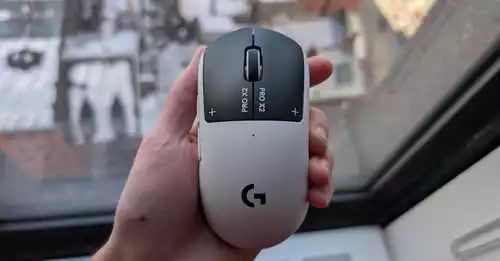
Gamers searching for the fastest and most customizable mouse now have a new contender: the Logitech Superstrike. Designed for competitive play, this premium gaming mouse introduces analog sensors, adjustable actuation, and haptic feedback to redefine what responsiveness feels like. Priced in the high-end category, it targets esports enthusiasts and serious players who demand precision and speed. Early impressions suggest it may shape the future of gaming peripherals thanks to features rarely seen in mice until now.
A Bold Leap in Gaming Mouse Technology
The Logitech Superstrike marks a significant evolution in gaming hardware. While most mice still rely on mechanical switches, this model adopts analog sensor technology to detect clicks using induction rather than traditional microswitches. That change alone promises reduced latency and greater consistency during rapid inputs.
This innovation brings technology typically seen in enthusiast keyboards into the mouse space. For players who rely on split-second reactions—especially in competitive shooters or fast-paced action games—every millisecond matters. By shifting the underlying detection method, Logitech is clearly aiming to push performance boundaries rather than iterate incrementally.
Industry watchers believe this shift could spark a wave of copycat designs if the technology proves successful. Historically, breakthroughs in gaming peripherals spread quickly once proven viable, and this could be another turning point.
Analog Sensors Enable Faster, Smarter Clicks
At the heart of the Superstrike lies its analog sensor system. Unlike mechanical switches that rely on physical contact points, these sensors measure input pressure and movement digitally. The result is faster click recognition and more precise input tracking.
One standout benefit is the introduction of adjustable actuation. Players can tweak how much pressure is needed to register a click, tailoring the experience to their playstyle. Those with a lighter touch can set near-zero actuation for lightning-fast response, while others can increase resistance to avoid accidental clicks.
Customization at this level feels closer to tuning a keyboard than a mouse. That’s a major shift in how gaming mice are designed, moving from static hardware toward software-driven personalization.
Rapid Trigger Brings Keyboard Innovation to Mice
Another headline feature is rapid trigger functionality. Borrowed from modern analog keyboards, rapid trigger allows buttons to reset instantly after being released. This enables faster repeated inputs without waiting for a full mechanical reset.
For competitive players, this could be a game-changer. Rapid tapping for strafing, firing bursts, or executing combos becomes smoother and more reliable. Instead of relying on muscle memory to compensate for hardware limits, the mouse actively supports faster input loops.
Such cross-category innovation highlights how gaming gear ecosystems are blending. Features once limited to keyboards are now reshaping how mice operate, blurring traditional boundaries in gaming hardware design.
Haptic Feedback Replaces Traditional Clicks
Perhaps the most surprising element is the removal of conventional switches altogether. Instead, the Superstrike uses haptic feedback to simulate the tactile sensation of clicking. The buttons still move physically, but the “click” is generated electronically.
This design opens the door to unprecedented control over click feel. Players can increase haptic intensity for stronger feedback or reduce it for quieter operation. In silent mode, the mouse nearly eliminates click noise, appealing to streamers or shared environments.
However, customization comes with trade-offs. Stronger haptics may impact battery life, while silent operation removes physical confirmation of clicks. These compromises will likely divide users based on their priorities.
Designed for Competitive Gamers First
Logitech has clearly positioned the Superstrike as a premium esports tool. Its high price point reflects that focus, targeting dedicated players rather than casual users. For professionals and enthusiasts, though, the investment may feel justified if performance gains translate into measurable advantages.
Longtime gaming hardware reviewer Cameron Faulkner noted early skepticism about incremental mouse upgrades in recent years. Yet innovations like analog sensors and haptics appear substantial enough to stand out in a crowded market.
That perception matters. Gaming mice often struggle to differentiate beyond weight reductions or polling rate increases. By introducing fundamentally new interaction models, Logitech may have found a rare breakthrough.
What This Means for the Future of Gaming Mice
If widely adopted, the Superstrike’s approach could reshape the gaming mouse landscape. Analog inputs, customizable actuation, and haptic feedback all point toward a more software-defined future. Hardware may increasingly behave like modular platforms rather than static tools.
Competitors will likely watch closely. When one major innovation proves viable, others tend to follow quickly. If players embrace these features, expect rapid evolution across the industry over the next few years.
For now, the Superstrike stands as a bold experiment. It pushes the category forward while challenging long-held assumptions about how a mouse should feel and perform.
A Risky but Exciting Step by Logitech
With the Superstrike, Logitech is taking a calculated risk. Radical changes in familiar devices can polarize users, especially when they alter tactile experiences gamers rely on daily. Yet innovation rarely happens without bold moves.
Early reactions suggest curiosity and excitement are high, even among skeptical gamers. Whether it becomes a mainstream success or a niche favorite, the Superstrike has already sparked a conversation about what the next generation of gaming mice should deliver.
For players seeking cutting-edge performance and deep customization, the Logitech Superstrike may represent a glimpse into the future—one where gaming hardware feels more adaptable, responsive, and personal than ever before.


Array