Alerts

-
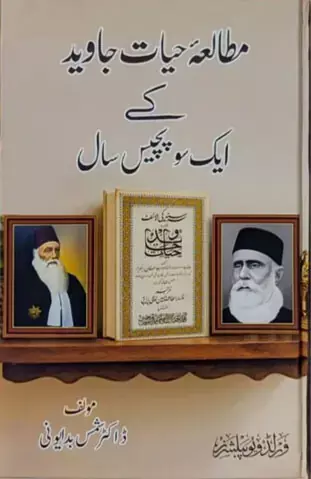
EVEN 128 years after his death, Sir Syed Ahmed Khan lives on. Born on Oct 17, 1817, Sir Syed passed away in 1898, but he has been endowed with Hayaat-i-Javed, or the eternal life, it seems. True to its name, Hayaat-i-Javed (1901), Sir Syed’s biography penned by Altaf Husain Hali, too, along with Sir Syed, has lived for over 125 years. Though Hayaat-i-Javed was received well, both Sir Syed and his biography could not escape scathing remarks from doubters. Shibli No’mani’s sardonic comments, criticising Hayaat-i-Javed, have become almost proverbial and today one can hardly read or review the book without recalling Shibli, who said it was ‘kitaab-ul-manaaqib’ (book of virtues) and ‘mudallal maddahi’ (eulogy supported by reasoning). Despite the criticism, the book is considered a milestone when it comes to biography writing in Urdu and is very much a part of Urdu’s literary canon because of its impact and lasting value. But in many of the review articles on Hayaat-i-Javed an objective and research-based approach to see its actual intent and real literary value was missing, says Dr Shams Badauni, a veteran Indian scholar. To address this lacuna, he has published a book that collects some rare and contemporaneous reviews on Hayaat-i-Javed, along with some not-so-old ones. But his book is not just another run-of-the-mill job that puts together a few articles, pasted with a limping, half-cooked intro, as is the norm. Rather, Mutal’a-iHayaat-i-Javed Ke Aik Sau Pachchees Saal, or 125 years of the study of Hayaat-i-Javed, is an editing work that can teach a few lessons to the young researchers on how to compile and edit literary works, using the principles of textual criticism. In addition to his research-based annotations, Badauni has written two prefaces and both are research papers unto themselves, sifting through the heaps of the material on Hali, Sir Syed and Hayaat-i-Javed. Dr Badauni thinks Hayaat-i-Javed also serves as an intellectual history of the 19th-century Muslims in the subcontinent, as well as Sir Syed’s life and his achievements. He says its study is in fact a study of the history of evolution of Muslim thought in the subcontinent. Badauni’s first preface discusses Hayaat-i-Javed in detail, chronicling how and when it was written and published. It describes the earlier attempts at writing Sir Syed’s biography and says his first biography was written by G. F. I. Graham (1840-1928) in English, published in 1885. Qazi Sirajuddin Ahmed (1867-1925), a scholar from Rawalpindi and editor of Chaudhveen Sadi, had finished writing Sir Syed’s first-ever biography in Urdu in 1892, but it remained unpublished. Badauni’s second preface discovers the nature of the association and collaboration between Sir Syed and Hali, something that has hardly been touched by Hali and the readers going through his 900-plus-page book remain unaware of how and when Sir Syed and Hali met for the first time, nor has Hali said anything about what inspired him to join Sir Syed’s historic Aligarh Movement. This preface provides the readers with relevant details, which is quite rare info. Giving the printing history, Badauni says Hayaat-i-Javed, first published in April 1901, is divided into two parts and the second part is meandering, bloated and repetitive, not as organised as the first one. The first part, having 320 pages, covers biographical details in little over 300 pages. The second part had 558 pages and indices took another 100 pages or so, but indices and a few subheadings were axed from the second edition (1903). The earliest reviews on Hayaat-i-Javed were penned by Moulvi Abdul Haq, Abdul Haleem Sharar, Waheeduddin Saleem, Zakaullah and Sir Abdul Qadir and were positive, Abul Kalam Azad showed a few reservations in his review though. The editor and contributors of Oudh Punch, a humour magazine from Lucknow, were already lampooning Sir Syed and they found new material in the shape of Hayaat-i-Javed to satirise both Hali and Sir Syed. Habibur Rahman Shervani in his article said Sir Syed was not qualified to write tafseer, nor was Hali when reviewing it. What aggrieved Hali was not the negative reviews, but the cold reception from Aligarh, which was, perhaps, intended to avoid further controversies on religious issues that had sparked during Sir Syed’s life. Shams Badauni dug up all these rare, century-old pieces and included them in the book. He has included some other important articles on Hayaat-i-Javed by distinguished critics as well as some additional writings that help fully understand the book and its scope. The book, published in September 2026 by Delhi’s Arshiya Publications, has been reprinted by Lahore’s World View Publishers. Published in Dawn, October 19th, 2026








Comment