Alerts

-
9 minutes, 15 seconds
For a pasta manufacturing business, choosing an automatic pasta machine is only the beginning of production planning. The real challenge is creating a complete manufacturing setup that can handle today's requirements while remaining flexible enough for tomorrow's growth.
Pasta manufacturers may begin with a limited product range and later expand into different shapes, pack sizes, markets, or production volumes. A well-planned production line should therefore provide more than output. It should support product flexibility, efficient material movement, controlled drying, and packaging that can adapt as the business develops.
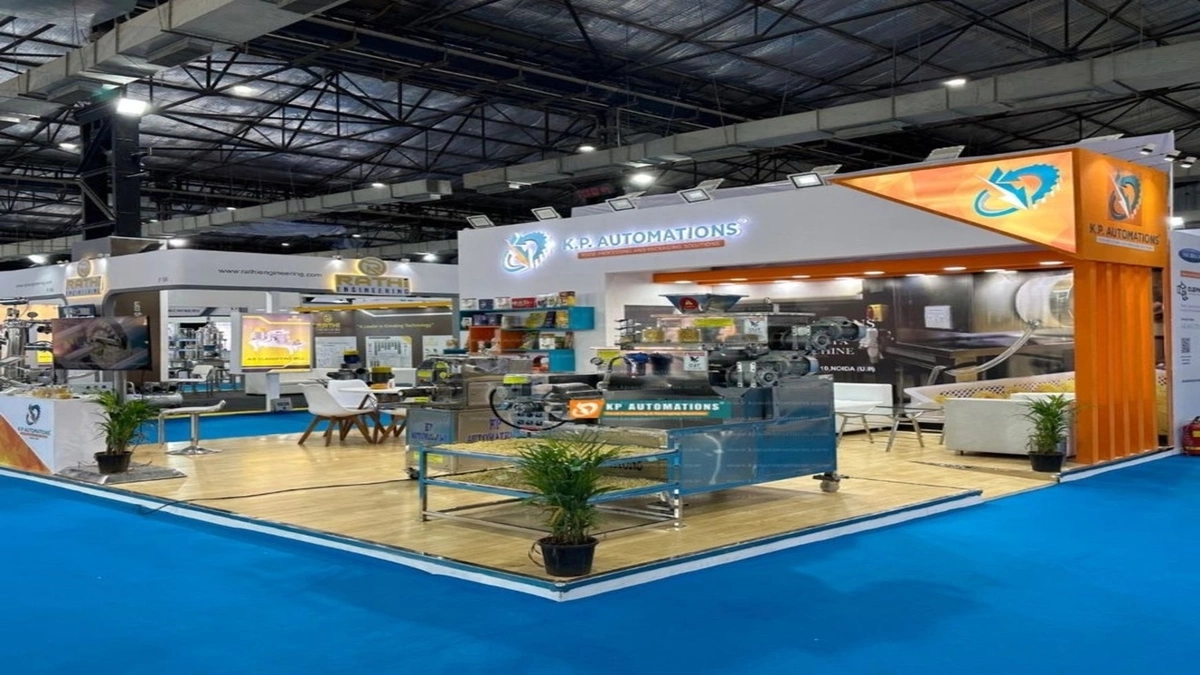
KP AUTOMATIONS provides pasta machinery for commercial and industrial applications, including pasta-making equipment, drying systems, automation, and packaging solutions.
A pasta factory is made up of several connected operations.
The process can include:
Raw Material Handling → Dough Preparation → Extrusion → Shaping → Drying → Cooling → Packaging
Each stage has a direct relationship with the next.
If an automatic pasta machine is selected without considering the dryer, the production line may become unbalanced. Similarly, packaging capacity should be considered alongside the amount of finished pasta the upstream equipment can supply.
For this reason, manufacturers should plan the production line as a complete system rather than purchasing individual machines independently.
One of the first questions for a pasta manufacturer should be: Which products will the factory produce?
Different pasta shapes require different dies and production considerations.
Depending on the machine configuration, manufacturers may produce products such as:
KP AUTOMATIONS offers both short-cut and long-cut pasta production solutions, giving manufacturers options for different product categories.
This product decision should be made before finalizing the complete production setup because extrusion, drying, handling, and packaging requirements can vary between products.
An automatic pasta machine can automate important parts of the pasta-making process, including dough preparation, extrusion, and shaping.
KP AUTOMATIONS describes its automatic systems as food-processing equipment designed to transform ingredients such as semolina or flour and water into shaped pasta with reduced manual intervention.
The extrusion stage is particularly important because the dough must pass through the appropriate die to create the required pasta profile.
For a manufacturer planning multiple products, flexibility in die selection can become commercially valuable.
Instead of designing a factory around only one pasta shape, a flexible production system can allow the business to serve different market requirements.
Consumer preferences are not always identical across markets.
One customer may require macaroni, another may prefer penne, while a different market may have stronger demand for spaghetti or other long-cut formats.
This makes product flexibility an important consideration when purchasing pasta machinery.
A manufacturer should ask:
Answering these questions early can help prevent limitations later.
After extrusion and shaping, the pasta must move into the drying stage.
An industrial pasta dryer provides a controlled environment for reducing moisture and preparing pasta for subsequent handling and packaging.
The drying system should be selected according to the production line, pasta type, and operating requirements.
A manufacturer producing different pasta formats should also consider whether the dryer provides sufficient process flexibility.
The objective is not simply to remove moisture. The dryer needs to fit into the complete manufacturing sequence.
KP AUTOMATIONS offers different drying solutions, including room, static, and continuous systems.
A pasta continuous dryer is particularly relevant when production is designed around a continuous material flow.
Rather than relying on separate manual drying batches, continuous systems move pasta through controlled drying zones as production progresses.
A continuous dryer can therefore connect the upstream extrusion process with downstream cooling and packaging.
This can create a smoother production sequence:
Extrusion → Pre-Drying → Continuous Drying → Cooling → Packing
For manufacturers operating larger production lines, maintaining this flow can simplify material handling and reduce unnecessary interruptions.
KP AUTOMATIONS' continuous drying solution uses conveyor-based movement and controlled drying zones with PLC-based control.
An automatic pasta dryer can provide manufacturers with greater control over the drying stage.
Automated drying allows operating conditions to be managed systematically rather than depending entirely on manual adjustments.
Important considerations can include:
When different pasta products are manufactured, drying parameters may need to be adjusted according to the product.
The ability to manage these conditions can make the drying stage more adaptable within a multi-product factory.
Machine selection and factory layout should not be treated as separate decisions.
An efficient pasta production facility needs sufficient space for machinery, material movement, operators, maintenance access, utilities, and finished-product handling.
A basic production flow might be arranged as:
Raw Material Area
↓
Mixing & Extrusion
↓
Shaping
↓
Pre-Drying
↓
Industrial Pasta Dryer
↓
Cooling
↓
Finished Product Holding
↓
Pasta Packing Machine
The exact arrangement will depend on the selected machinery and factory conditions.
However, the general objective should be to minimize unnecessary movement and create a logical product flow.
A factory may not operate at its initial production level forever.
A business might begin with a compact production setup and later expand into additional products or larger markets.
KP AUTOMATIONS offers pasta machines across different production categories, including compact systems and higher-capacity commercial and industrial equipment.
For example, its compact series includes 50 kg/hr and 100 kg/hr machines, while its mid-size range includes 200 kg/hr, 300 kg/hr, and 500 kg/hr configurations.
This range illustrates why production planning should consider both present requirements and possible future development.
A manufacturer should consider whether the factory has enough space and infrastructure for future equipment additions.
A production line does not end when the pasta leaves the dryer.
The finished product needs to be weighed, filled, sealed, and prepared for distribution.
A pasta packing machine can automate this stage.
Depending on the selected configuration, packaging systems may support weighing, filling, pouch formation, and sealing.
KP AUTOMATIONS provides packaging solutions including VFFS and weighing/filling systems for pasta applications.
The packaging machine should be selected according to:
The goal is to create a packaging process that keeps pace with the rest of the factory.
A common mistake in production planning is focusing heavily on the capacity of one machine.
For example, purchasing a high-output automatic pasta machine does not automatically create a high-output factory.
The dryer must be able to handle the production flow.
Cooling must be appropriately designed.
Packaging must be capable of processing the finished product.
Material handling must also keep pace.
A practical production plan therefore considers the entire chain:
Extrusion Capacity + Drying Capacity + Cooling + Packaging Capacity
The weakest stage can eventually become the bottleneck.
This is why complete-line planning is particularly important for manufacturers investing in commercial or industrial pasta production.
Not every pasta manufacturer needs the same drying arrangement.
A batch-oriented production environment may benefit from a room or static drying approach.
Manufacturers looking for continuous material flow may prefer a pasta continuous dryer.
The decision should consider:
The right drying system is therefore the one that fits the complete manufacturing strategy.
Automation can reduce repetitive manual activities throughout the production process.
An automated pasta line can help operators manage mixing, extrusion, drying, and packaging while reducing unnecessary manual product movement.
However, automation does not mean that skilled operators are no longer required.
Operators remain important for:
A good production system should therefore be designed to make operator responsibilities clearer and more manageable.
Pasta is a food product, so equipment construction is an important consideration.
KP AUTOMATIONS states that its pasta machinery is constructed using food-grade stainless steel, alongside automation and precision engineering.
For manufacturers, appropriate machine construction can support hygienic production and routine cleaning.
However, equipment selection should always be combined with proper sanitation procedures, maintenance schedules, raw-material controls, and operator practices.
A flexible pasta factory should allow each stage to perform its role without unnecessarily restricting another stage.
The automatic pasta machine handles the initial transformation and shaping of the product.
The industrial pasta dryer manages controlled moisture removal.
The automatic pasta dryer approach adds automated control to this critical stage.
The pasta continuous dryer can support ongoing product movement for suitable continuous production environments.
Finally, the pasta packing machine prepares the finished product for storage, transportation, and sale.
Together, these systems form a connected manufacturing process.
KP AUTOMATIONS has been involved in food processing, packaging, engineering, and automation since 1998. The company states that it has installed more than 4,000 pasta machines globally.
Its portfolio covers pasta production, drying, dies and inserts, packaging, and automation, allowing manufacturers to consider multiple stages of their production requirements through one machinery partner.
The company also states that it provides custom-built pasta production solutions and technical and after-sales support.
For a new pasta factory or an existing facility being upgraded, this broader approach can be useful when different equipment stages need to work together.
Before investing in an automatic pasta machine, manufacturers should prepare a clear project specification.
Consider the following:
Having these answers ready can make discussions with machinery suppliers more productive.
A successful pasta manufacturing project is built around more than one machine.
An automatic pasta machine provides the foundation for automated dough processing, extrusion, and shaping. The industrial pasta dryer then provides controlled drying, while an automatic pasta dryer can support systematic management of the drying process. For continuous production environments, a pasta continuous dryer can connect drying with the broader production flow. Finally, a pasta packing machine prepares the finished product for the market.
The most effective approach is to consider all of these stages together.
By planning product flexibility, factory layout, drying, packaging, automation, and future expansion from the beginning, manufacturers can develop a production line that is better prepared for changing business requirements.
KP AUTOMATIONS provides pasta machinery and integrated production solutions for manufacturers looking to establish or upgrade commercial and industrial pasta production facilities.


Comment