Killing livestock should never be part of security operations

Killing livestock should never be part of security operations

The North Rift region has buried chiefs, officers and children for over a decade, from Baragoi to Samburu-Isiolo borderlands. Firm action against banditry is justified and necessary. No Kenyan should oppose an operation to recover stolen livestock and illegal firearms.

But the security operation in Waso Ward, Samburu East, from September 19, forces a hard constitutional question: When does legitimate security become collective punishment of the innocent?

On September 28, this crisis was described on X as not just a security operation, but an animal welfare crisis. The post noted, "You cannot restore security by punishing innocent livestock. We need rules of engagement that protect both people and animals." That framing captures the reality residents of Losesia and Nolng'erdeed are now living.

The facts are now before Parliament and are not in dispute. Following attacks along the Samburu Isiolo border, including an attack in Gotu where bandits killed two Anti-Stock Theft Unit officers, a police reservist and two civilians and stole police firearms, a multi-agency team of GSU and ASTU was deployed to Samburu East. The objectives were to recover livestock stolen from Isiolo and remove illegal firearms.

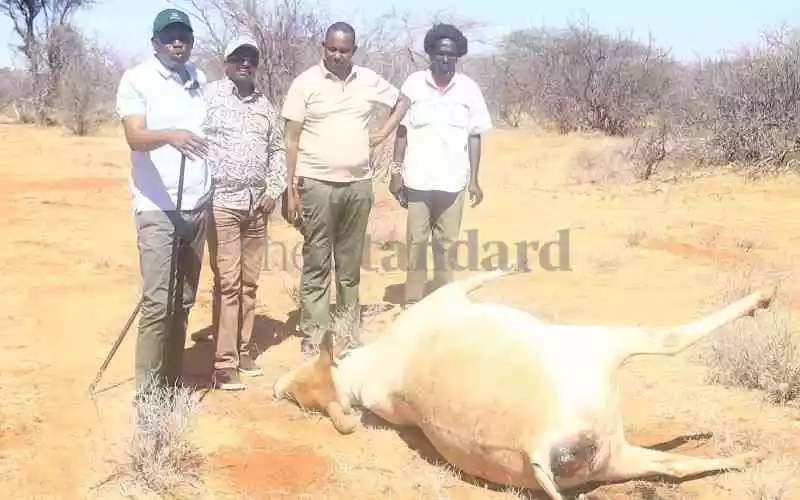
Yet what residents reported was starkly different. Instead of recovered Isiolo livestock and arrested bandits, they counted carcasses in their manyattas. Samburu Senator Lelegwe Ltumbesi told the Senate that 415 goats and 102 cattle were shot dead at Losesia and Nolng'erdeed between September 19 and 21, with two residents shot and wounded. Samburu East MP Jackson Lekumontare put the figure higher at more than 700 goats, 500 cattle and several donkeys, a figure yet to be independently verified. Even using the lower Senate figure of 517 animals, the loss is devastating.

This is where law, governance and leadership intersect, and why the operation must be interrogated beyond press statements.

Comment